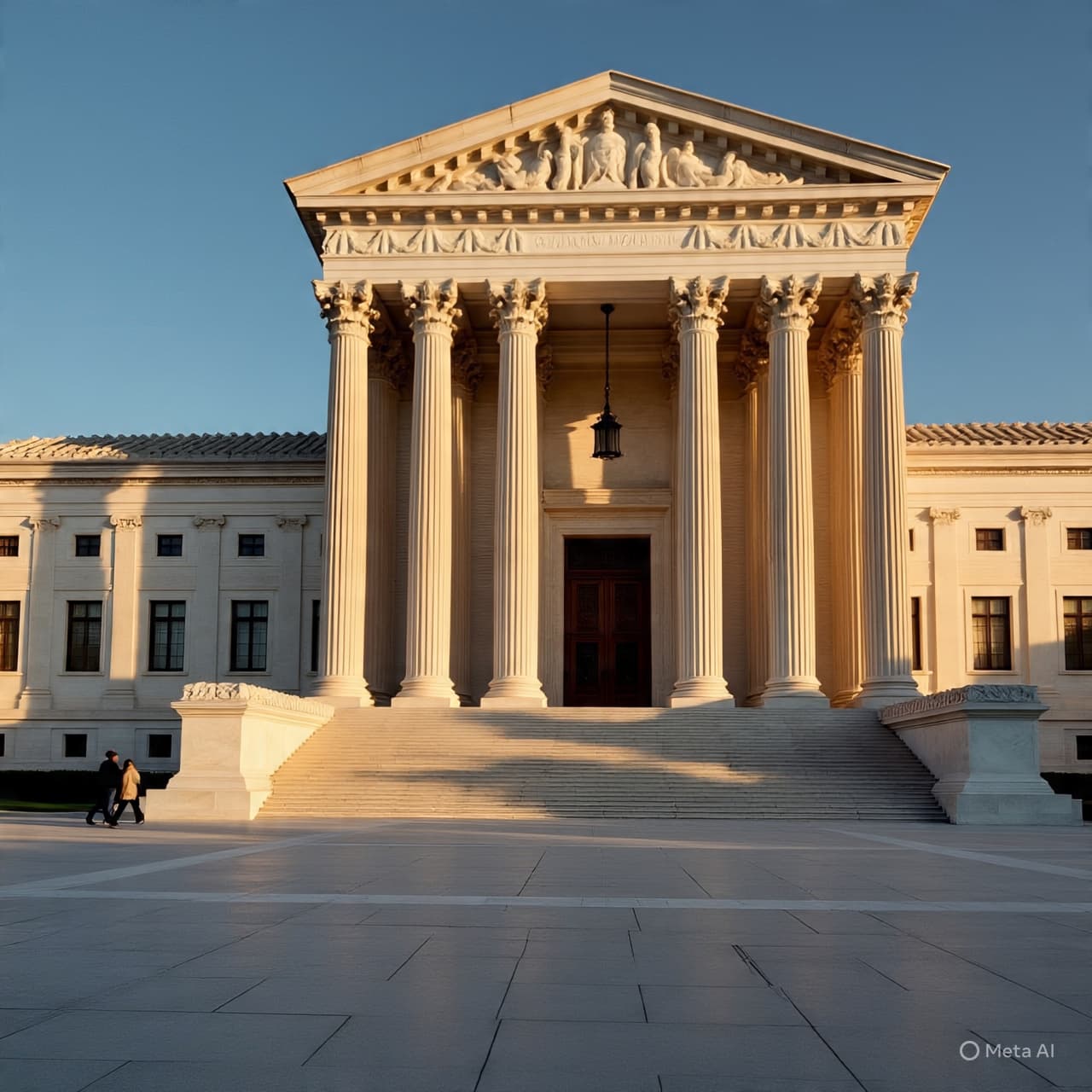
The first breath of April light spills over the marble steps of the Supreme Court, casting long, gentle shadows across the quiet lawns of Capitol Hill. Early morning joggers move with steady rhythm past ancient columns that have witnessed the slow unfolding of American history, their echoes blending with the distant rustle of spring leaves. Within these walls, today’s deliberations carry a weight that seems at once legal and existential — a question inscribed not merely on parchment and proceedings, but in the lived identity of millions.
At the heart of this moment is Solicitor General D. John Sauer, a figure who has walked the corridors of the high court with a familiar stride, arguing on behalf of the administration on one contentious issue after another. Today, however, he faces what many legal scholars call his steepest challenge yet: persuading the Supreme Court to uphold President Donald Trump’s executive order aimed at reinterpreting or ending birthright citizenship — a principle that has threaded through more than a century of constitutional practice. Sauer’s task is formidable, rooted not only in high legal theory but in historical precedent that stretches back to the post‑Civil War era and the landmark 1898 decision in United States v. Wong Kim Ark, which affirmed that nearly all children born on U.S. soil are citizens by virtue of the 14th Amendment.
Outside the courtroom, the city’s pulse feels both distant and deeply tied to what unfolds within. Flags flutter softly in the breeze, and passersby pause to read headlines on their phones or discuss the day’s news at coffee shop tables. The case — known to the justices and lawyers simply as Trump v. Barbara — isn’t confined to abstract legal argument; it grapples with the very definition of belonging, the breath that connects place of birth to the promise of citizenship. For more than a century, the United States has embraced a broad interpretation of the Citizenship Clause of the 14th Amendment, granting nationality to nearly all who enter the world on its soil, with few exceptions. Now that settled understanding stands at a crossroads.
Sauer’s argument seeks to narrow the interpretation of “subject to the jurisdiction thereof,” a phrase in the amendment that has long been understood to apply to children born to parents regardless of their immigration status. The administration contends that only those whose parents hold lawful permanent residency or citizenship should enjoy automatic citizenship — a position that would dramatically shift the legal landscape and challenge deeply rooted precedent. Even some within legal circles acknowledge the uphill nature of this battle; it requires persuading a panel of justices to question interpretations that have persisted for more than 125 years.
In the courthouse plaza, advocates and observers gather with signs and banners, their voices a tapestry of concern and conviction. Some speak of the stability and protection that birthright citizenship has afforded generations of Americans; others argue for sovereignty and control over borders. Regardless of stance, the quiet murmur of conversations carries an unspoken understanding: today’s deliberations reach beyond court transcripts and into the rhythms of everyday life for families and communities across the nation.
As the sun climbs and warms the stone façades of justice, the justices enter the chamber to hear arguments that could reshape American law and identity. Whether Sauer’s legal legacy will find its moment here remains uncertain, but the very act of wrestling with this constitutional question reflects the enduring tension between tradition and transformation. When the court’s decision arrives — expected in the months ahead — it may not simply adjudicate a policy; it may reaffirm or redefine the legal contours of belonging in a nation built on the promise that birth, in the eyes of the law, is the first step toward citizenship.
AI Image Disclaimer Illustrations are AI‑generated and serve as conceptual representations, not real photographs.
Sources : Reuters The Washington Post CNN AP News PolitiFact
Published by Banx Network. This article is part of the Banx decentralized media programme, powered by the BXE token on the XRP Ledger.