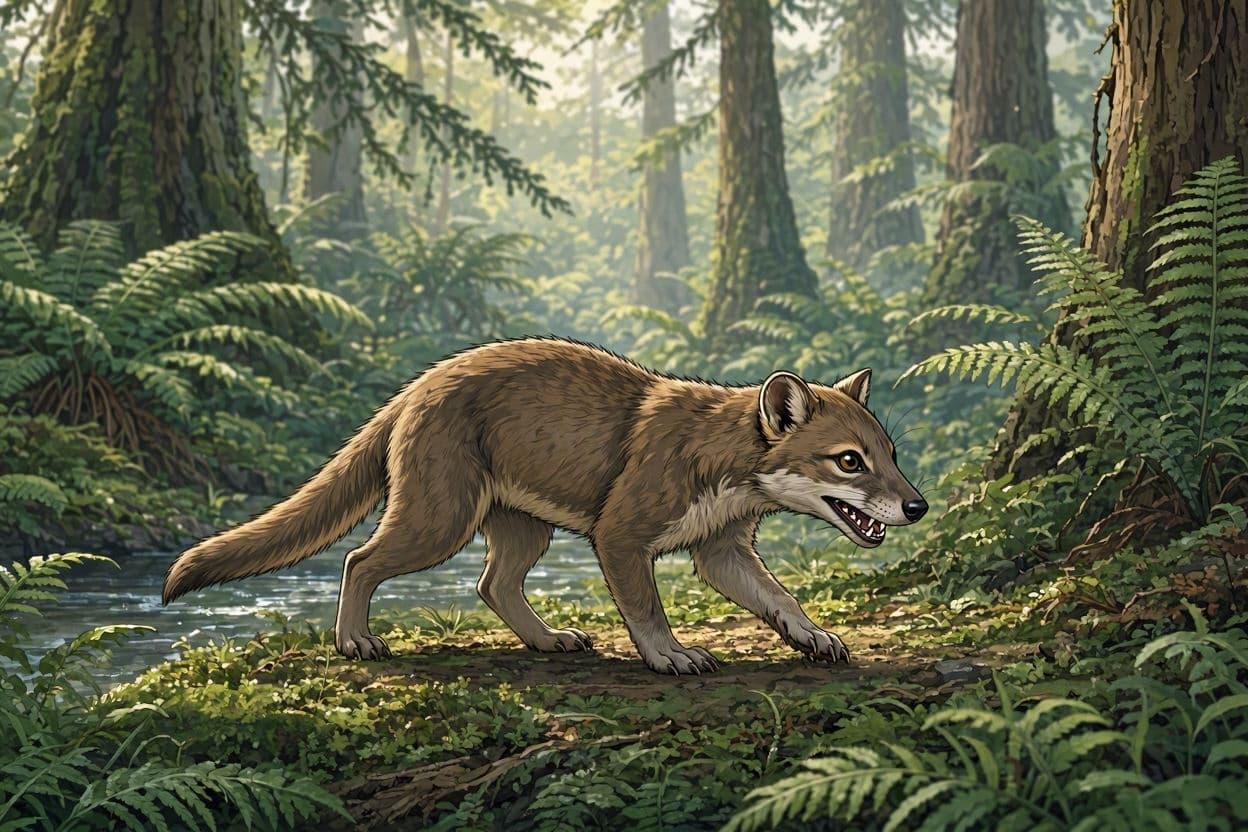
In the frozen silence of Antarctica, where ice sheets stretch endlessly toward the horizon, history lies buried beneath layers of time. It is a place that seems devoid of life to the casual observer, yet it holds secrets from an era when the continent was warm, verdant, and teeming with creatures both strange and familiar. The recent discovery of a 55-million-year-old footprint offers a tangible connection to this lost world, reminding us that even the most barren landscapes were once stages for vibrant drama.
The footprint, attributed to a small predatory mammal, provides rare physical evidence of terrestrial life in Antarctica during the Eocene epoch. At that time, the continent was connected to South America and Australia, forming part of a supercontinent that supported lush rainforests and a diverse array of wildlife. This find helps bridge the gap between fossilized bones and the actual behavior of these ancient animals, offering a glimpse into their movement and presence.
Such traces are exceptionally rare in the geological record, especially in regions that have undergone such dramatic climatic shifts. The preservation of a footprint requires specific conditions, including soft sediment that quickly hardens to retain the impression. Its survival through millions of years of glaciation and erosion is a testament to the fortunate quirks of geological history.
This discovery challenges the notion of Antarctica as a permanently frozen wasteland. It reinforces the understanding that the continent has experienced profound transformations, shifting from a tropical haven to an icy desert. For paleontologists, each new find adds depth to our narrative of Earth’s climatic evolution and the adaptability of life in the face of extreme change.
The predatory nature of the animal that left the mark suggests a complex food web existed in this ancient ecosystem. It implies the presence of prey species and a balanced environment capable of supporting higher-level consumers. This complexity contrasts sharply with the sparse biological activity seen in Antarctica today, highlighting the magnitude of the environmental shifts that have occurred.
Furthermore, the footprint contributes to our understanding of mammalian migration and distribution. During the Eocene, land bridges allowed species to move between continents, facilitating the spread of mammals across the globe. Tracing these movements helps scientists reconstruct the biogeographical history of the Southern Hemisphere and understand how current distributions came to be.
The emotional resonance of finding a footprint cannot be understated. It is a direct imprint of life, a moment frozen in time that invites us to imagine the creature that walked there. It humanizes the distant past, making it feel less like abstract data and more like a shared history with the natural world.
As researchers continue to explore Antarctica’s geological layers, more such treasures may await discovery. Each find serves as a puzzle piece in the larger picture of Earth’s history, reminding us of the planet’s dynamic nature and the resilience of life. It encourages a sense of wonder and curiosity about the stories hidden beneath the ice.
The 55-million-year-old footprint is more than a scientific artifact; it is a window into a warmer, greener Antarctica. It underscores the importance of paleontological research in understanding our planet’s past and informs our perspective on its future. As we uncover these ancient traces, we gain a deeper appreciation for the ever-changing story of life on Earth.
AI Image Disclaimer: The images included here are AI-generated visualizations intended to evoke the prehistoric atmosphere of Eocene Antarctica and the mystery of the discovered footprint.
Sources: Journal of Vertebrate Paleontology Antarctic Science National Geographic
Published by Banx Network. This article is part of the Banx decentralized media programme, powered by the BXE token on the XRP Ledger.