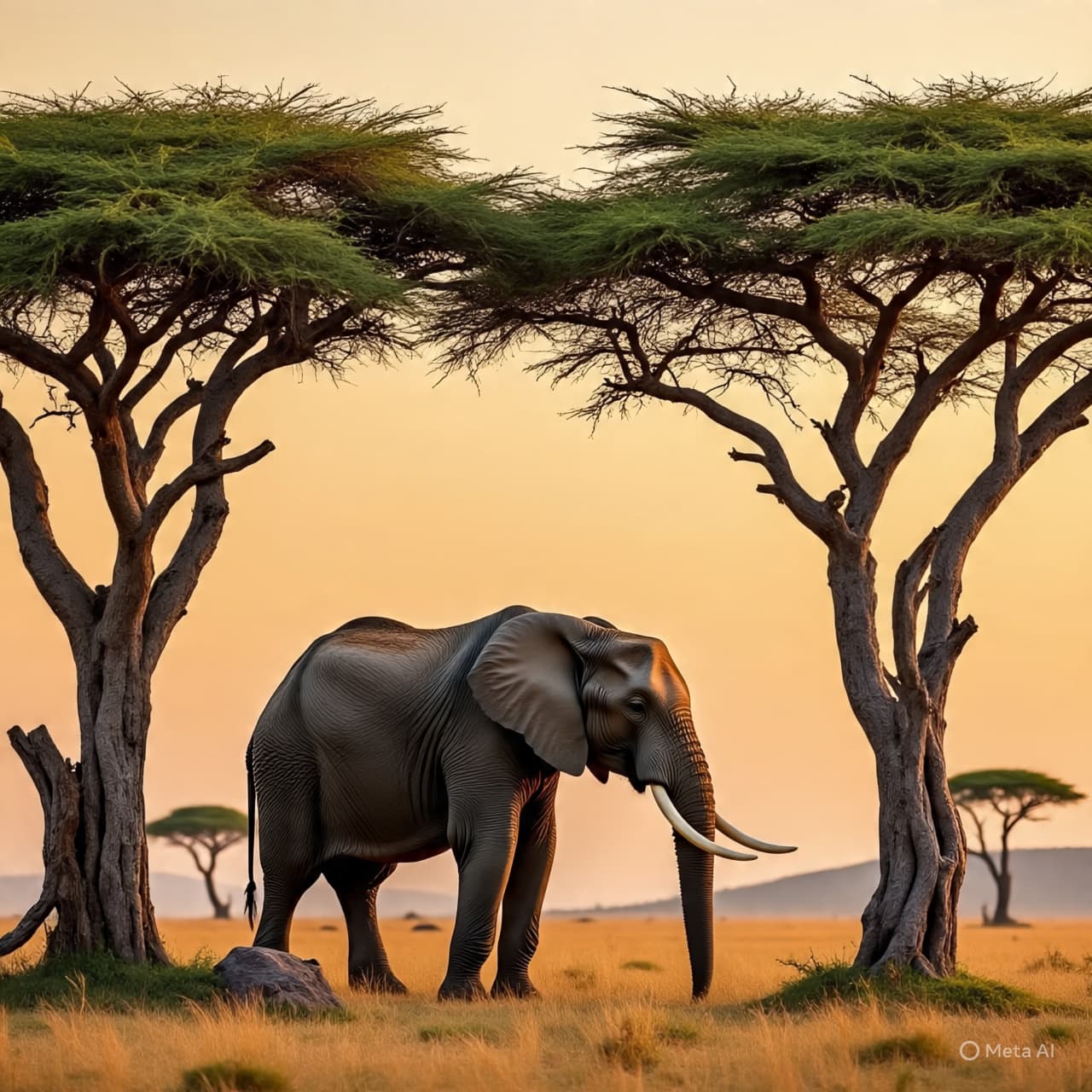
As the first light of dawn sweeps across the plains of Amboseli National Park, where Mount Kilimanjaro stands in silent watch, the footprints of a gentle giant are gradually fading into memory. For more than half a century, Craig the elephant walked these lands with an unhurried calm that seemed woven into the very rhythm of the savanna. His immense, ground‑sweeping tusks once glinted like ancient scrolls of wisdom in the African sun, symbols not just of raw strength but of a long, peaceful journey through life. In the quiet hours following his passing, the park and its many admirers around the world pause — not in shock, but in reverent reflection on the life of a creature who embodied both the fragility and tenacity of wildlife itself.
Craig, one of Africa’s last remaining super tuskers — male elephants with tusks each weighing more than 45 kilograms — died of natural causes at age 54, according to the Kenya Wildlife Service (KWS). His presence had become synonymous with successful efforts to protect elephants from the scourge of ivory poaching, a testament to decades of conservation work in Kenya’s protected landscapes.
Beyond the sheer size of his tusks, what set Craig apart was his serene disposition. Rangers, researchers, and visitors often spoke of his dignified calm, how he would pause as cameras clicked and lenses trained upon him. In a world where wildlife is too often reduced to statistics, he stood as a reminder of the living, breathing stories that unfold within these ecosystems — stories of survival, kinship, and quiet endurance.
Conservationists and local communities remember him not only for his grandeur but for the way he carried himself, a gentle ambassador of his kind. The Amboseli Trust for Elephants expressed gratitude to all who helped ensure that Craig “lived out his life naturally,” a phrase that carries the weight of years spent guarding this magnificent animal against threats both old and new.
In 2021, Craig’s global fame was recognized beyond the confines of the park when he was adopted by East African Breweries’ Tusker brand, highlighting a partnership between cultural identity and wildlife preservation. Through that connection, his image journeyed into households and hearts far from the dusty trails of Amboseli, making him not just a local icon but a shared symbol of Africa’s vast natural heritage.
His death leaves a quiet, tangible void in a landscape that blossomed with life around him. Yet his legacy lives on — in the calves he sired, in the strengthened conservation efforts that helped him thrive, and in the countless tourists, photographers, and wildlife lovers who came to know his calm gaze against the backdrop of endless horizon.
As the sun dips below the acacia‑lined horizon, and the elephants of Amboseli trumpet into the cooling dusk, Craig’s story becomes part of the enduring tapestry of Africa’s wild places. It is a narrative of resilience, of shared stewardship between humans and the natural world, and of the quiet splendor that comes from protecting what is precious before it disappears.
AI Image Disclaimer “Visuals are created with AI tools and meant for conceptual representation, not actual photographs.”
Sources Associated Press via multiple outlets (AP News) Stamford Advocate / affiliate reporting Nation Africa reporting Independent reporting Who Owns Africa wildlife coverage
Published by Banx Network. This article is part of the Banx decentralized media programme, powered by the BXE token on the XRP Ledger.