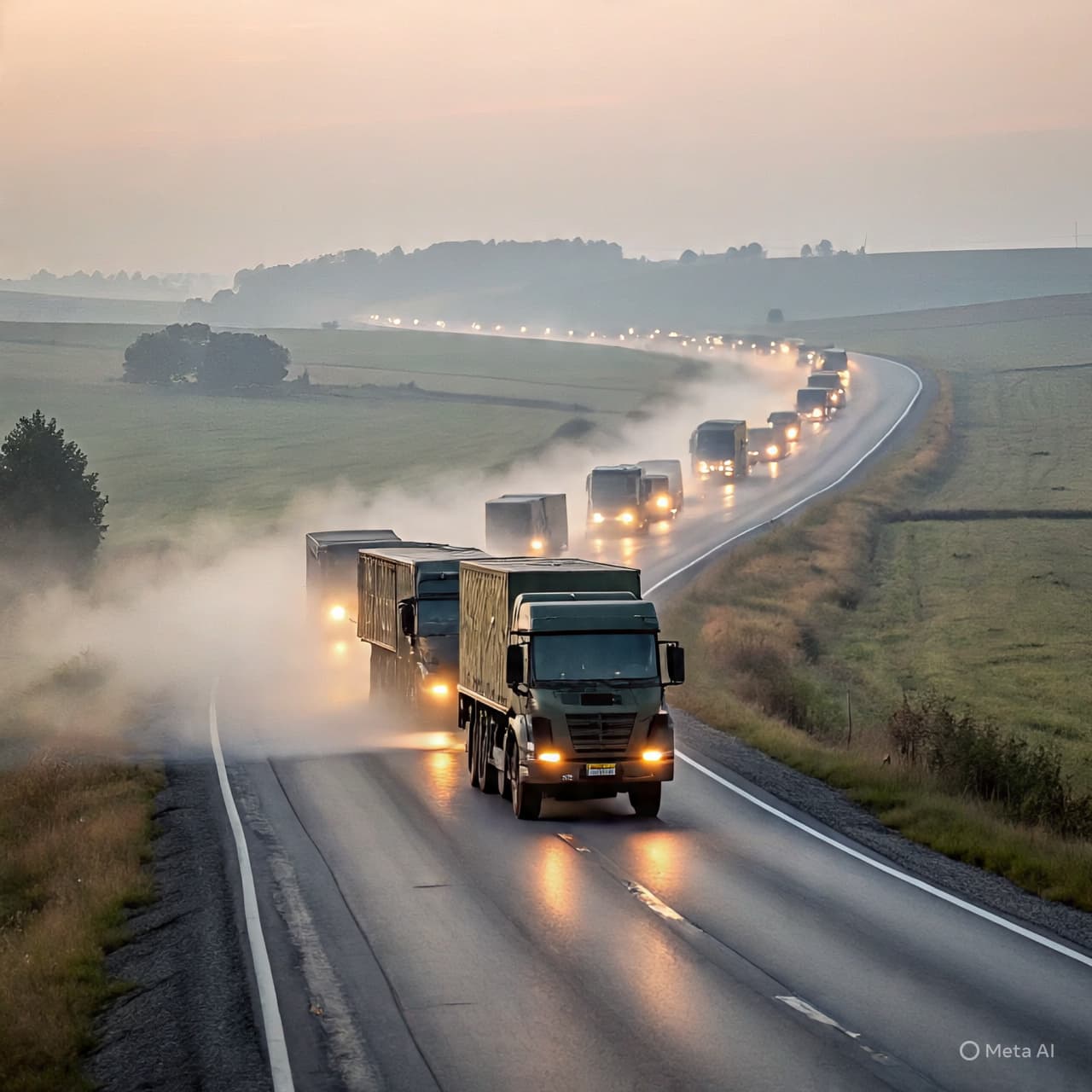
The early morning fog clings to the autobahns and rolling plains of Europe, softening the edges of highways and military bases alike. Trucks rumble quietly along roads that, for most of their history, carried commerce and travelers, yet now carry the weight of strategic urgency. Across capitals and corridors of power, officials are engaged in a conversation both practical and symbolic: the European Union is debating a “military Schengen,” a framework designed to ease and accelerate troop movements across national borders in times of crisis.
For decades, the Schengen Area transformed civilian mobility, allowing citizens to move freely across borders without checkpoints. The proposed military counterpart seeks to do the same for soldiers, vehicles, and equipment, reducing delays caused by customs inspections, legal constraints, and differing national regulations. Proponents argue that in an era marked by geopolitical uncertainty, rapid deployment can be decisive. In Brussels, defense ministers weigh maps, timelines, and treaties, imagining armored convoys gliding across borders, logistical challenges softened by uniform protocols and shared standards.
The discussion is as much about trust as it is about infrastructure. Nations must balance sovereignty with collective security, reconciling national defense prerogatives with shared European commitments. Military planners envision corridors where fuel, food, and equipment move seamlessly; engineers and legal experts map transport networks, from bridges and tunnels to railways and ports, ensuring that readiness does not falter in bureaucratic knots. The conversation echoes lessons from recent exercises, where delays at customs or differing vehicle standards exposed vulnerabilities that a “military Schengen” seeks to address.
Yet the proposal is more than logistical. It signals a shift in European defense culture, a quiet acknowledgment that collective preparedness requires shared frameworks, not just shared aspirations. Analysts note that such a system could allow rapid response to crises ranging from natural disasters to regional conflicts, reinforcing deterrence without escalating tensions. For officers and soldiers, the plan represents both efficiency and reassurance: a promise that when Europe calls, the machinery of movement will not be slowed by borders or red tape.
Implementation would require harmonized regulations, interoperable communications, and political will across member states. Obstacles remain—national priorities, legal frameworks, and public opinion—but the dialogue itself embodies a deeper reflection on Europe’s capacity to act together. Military exercises, simulations, and intergovernmental talks serve as laboratories for trust, coordination, and technical precision, testing not only equipment but the human networks that sustain readiness.
As sunlight breaks through the fog over motorways and barracks, the vision of a “military Schengen” unfolds quietly yet insistently. Convoys may still be distant, and debates ongoing, but the contours of a new European mobility regime emerge: a landscape where strategy, infrastructure, and diplomacy converge, and where borders, once definitive, can be bridged in service of shared security. In the measured rhythm of planning and negotiation, Europe rehearses the future it hopes never to need, yet prepares for it with deliberate care.
AI Image Disclaimer Illustrations are AI-generated and serve as conceptual representations, not actual photographs.
Sources European Union Official Statements Reuters Defense News Politico Europe Jane’s Defence Weekly
Published by Banx Network. This article is part of the Banx decentralized media programme, powered by the BXE token on the XRP Ledger.