On Earth, boiling water is a familiar ritual, governed by the steady pull of gravity that sends bubbles rising to the surface. But in the microgravity of space, this simple process transforms into a complex dance of physics that defies everyday intuition. Recent experiments have revealed that boiling liquids behave in unexpected ways when gravity is nearly absent, inviting reflection on the subtle forces that shape our physical world. It is a moment where the ordinary becomes extraordinary.
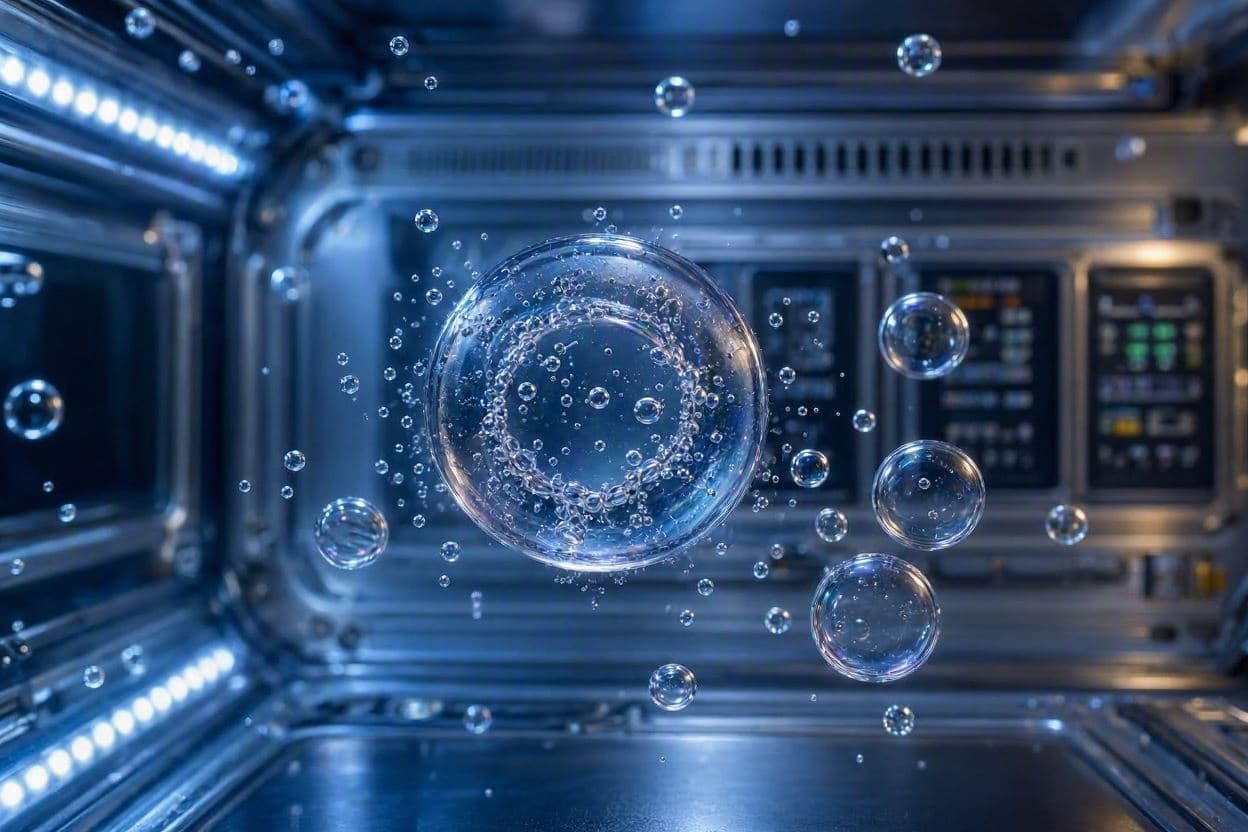
In microgravity, buoyancy—the force that drives hot, less dense fluid upward—virtually disappears. Without this driving force, vapor bubbles do not rise and escape. Instead, they coalesce into a single, large bubble that adheres to the heating surface, creating an insulating layer. Gravity guides flow. Absence changes rule.
This phenomenon, known as film boiling, significantly reduces the efficiency of heat transfer. For engineers designing cooling systems for spacecraft or future lunar bases, this presents a critical challenge that must be understood and managed. Efficiency ensures function. Design requires knowledge.
Scientists were surprised by the extent to which heat transfer was impaired, a finding that contradicts some existing models based on ground-based simulations. This discrepancy highlights the importance of conducting experiments in actual space environments. Models guide theory. Experiment reveals truth.
The implications extend beyond space travel, offering insights into fundamental fluid dynamics that can improve industrial processes on Earth. By understanding how fluids behave without gravity, researchers can develop better technologies for energy production and manufacturing. Insight improves tech. Knowledge aids industry.
As space exploration expands, the need for reliable thermal management systems becomes increasingly vital. The hope is that these findings will lead to more robust designs that can withstand the unique conditions of space. Reliability ensures safety. Design meets challenge.
Experiments in microgravity have shown that boiling liquid forms a large insulating bubble, reducing heat transfer efficiency. This finding challenges existing models and has important implications for spacecraft thermal management. The hope is for improved design of space-based cooling systems.
AI Image Disclaimer: Visuals associated with this article are AI-generated to illustrate the themes of space science and fluid dynamics.
Sources: ScienceAlert Phys.org NASA Yahoo News
Published by Banx Network. This article is part of the Banx decentralized media programme, powered by the BXE token on the XRP Ledger.