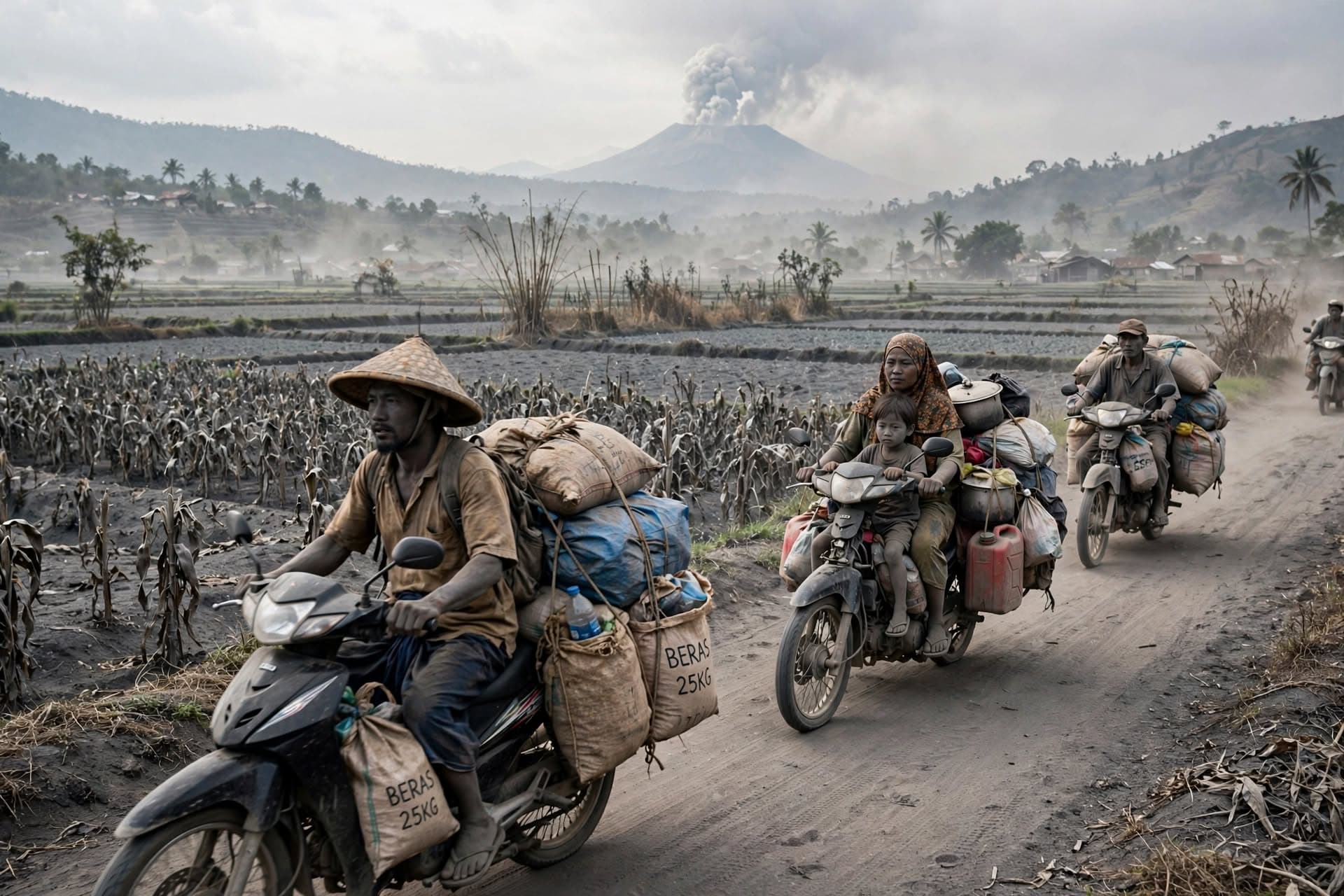
Maumere, Indonesia— Ash came first, then heat. At dawn on October 30, 2026, Mount Lewotobi Laki-Laki on Flores Island erupted again, throwing a column of ash nearly 2 kilometers into the sky and sending a fast pyroclastic flow down the southeast flank. The Center for Volcanology and Geological Hazard Mitigation raised the alert to the highest level and told everyone within 7 kilometers to leave.
The flow did what pyroclastic flows do. It hugged the ground, ripped through coffee and maize plots, scorched cacao trees, and buried irrigation channels. In villages below the peak, farmers had minutes. Some grabbed documents and ran. Others tried to save livestock. The hot gas cloud stopped just short of Boru village, but the ash kept falling.
BNPB said 1,200 people were moved by midday. The number was climbing. Trucks carried women and children to shelters in Larantuka and Maumere. Men stayed longer, watching the slope. Local officials reported roofs collapsing under wet ash weight in two hamlets.
"We heard a loud rumble, like a truck that never stops," said a farmer from Dulipali village, speaking from a shelter. "Then the sky turned grey. Our corn is gone." PVMBG officials said the eruption was preceded by a sharp rise in deep tremors overnight. That pattern matched previous eruptions of Lewotobi in November last year.
The problem is not just the mountain. It is the land around it. Flores farms sit close to the danger line because the soil is fertile. Families have built semi-permanent houses inside the 6-kilometer zone for generations. When the radius expands to 7 kilometers, whole dusuns become illegal to inhabit, but there is nowhere else to farm.
Antara News reported that Komodo International Airport in Labuan Bajo closed temporarily as ash drifted west. More than 80 flights were affected in the past year from similar ash events, and airlines were rerouting again. Road crews could not clear the main Wulanggitang-Ile Bura track because visibility was near zero.
At the shelter in Konga, food was short. Water had to be trucked in because ash contaminated open tanks. Health workers handed out masks but ran low by afternoon. The local disaster office said it needed more tents. The national government said it had released emergency funds, but delivery to Flores takes time.
By late October 30, 2026, the volcano was still restless. Seismographs showed continuous tremor. PVMBG warned of further pyroclastic density currents and lahars if rain falls. The exclusion zone remained at 7 kilometers. Farmers were not allowed back to check fields.
Published by Banx Network. This article is part of the Banx decentralized media programme, powered by the BXE token on the XRP Ledger.