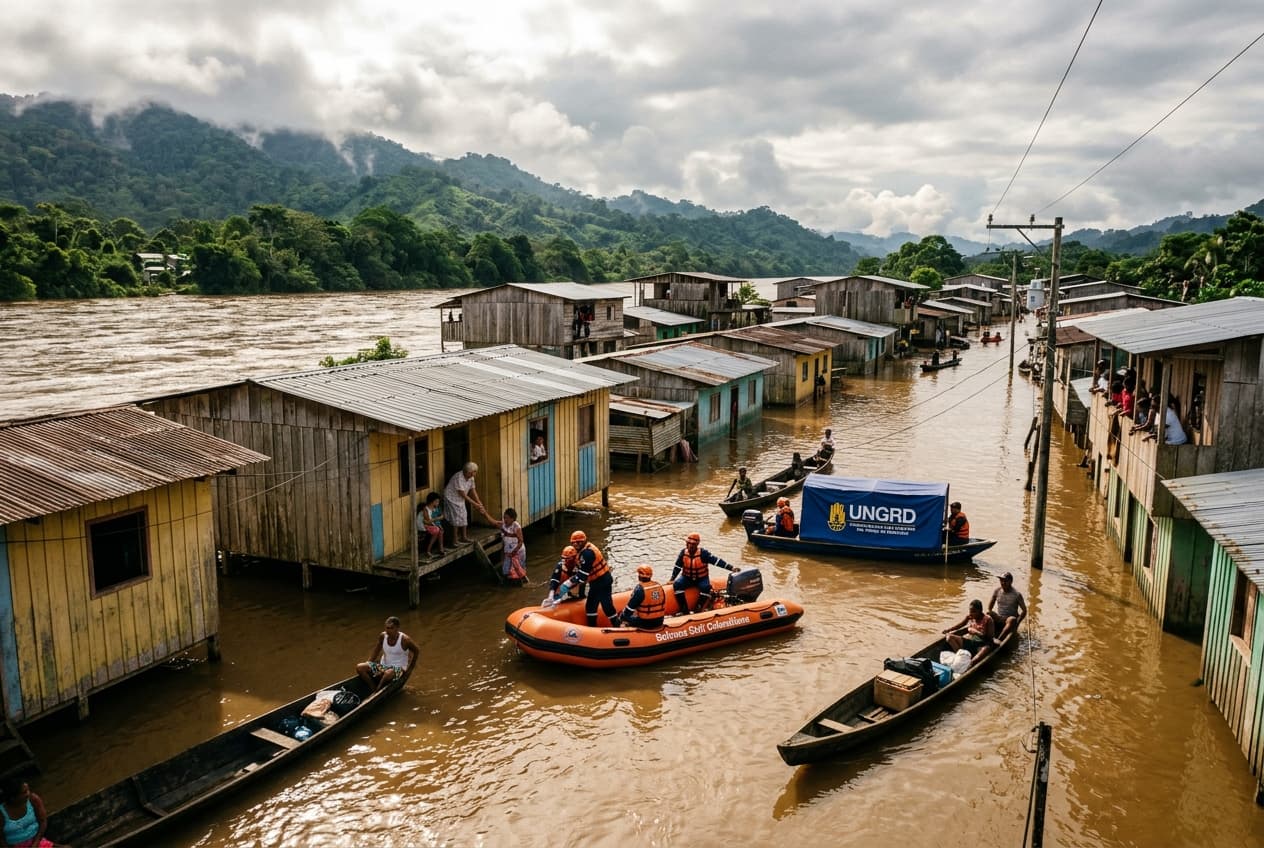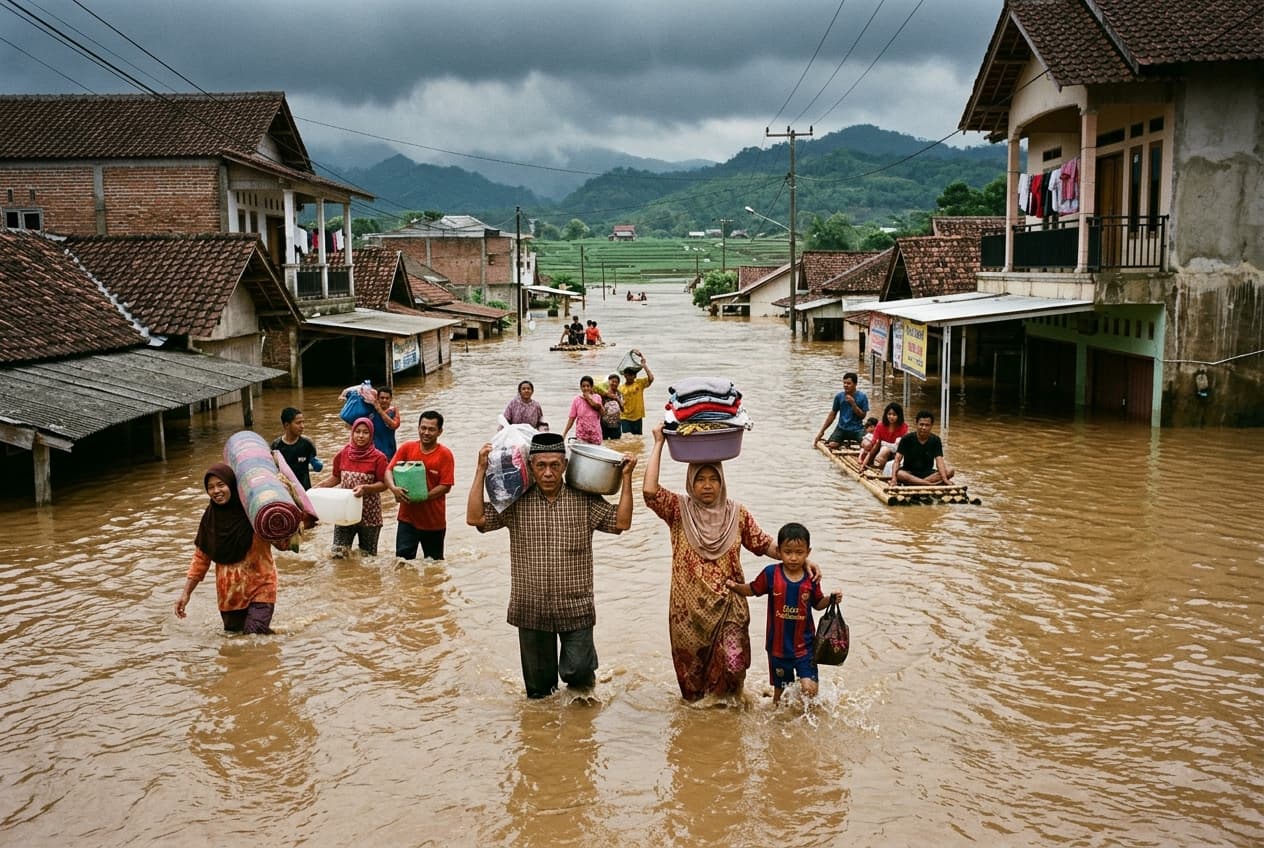
Bandung, Indonesia— Rain did not stop. For two days it hammered the hills above West Java, and on Tuesday the ground gave way. Rivers topped levees, slopes collapsed, and water pushed into homes. 136 people fled. One person was hurt.
The Meteorology, Climatology, and Geophysics Agency had flagged extreme precipitation for the region. The warning was accurate. Cianjur, Sukabumi, and parts of Bandung Regency took the worst. Rainfall gauges showed more than 150 millimeters in 12 hours. Drains choked.
In Cibeber, a mudslide ripped behind a row of houses at dawn. Red soil and broken bamboo slammed into kitchens. Residents heard a crack, then shouting. Local volunteers pulled a woman from debris with a leg injury. She was the only casualty reported.
By midday, water stood chest-high in three sub-districts. The Citarum's tributaries spilled over. The main road connecting Cianjur to Sukabumi was cut. Cars lined up for kilometers. No movement.
"Water came from two sides," said a village head in Cugenang. "From the river below and the hill above. We told people to go to the mosque on higher ground." He counted 42 families in his hall alone.
Indonesia's disaster agency BPBD set up evacuation posts in schools. ADINet data logged 136 displaced across five villages. Tents went up. Logs showed delayed delivery of clean water and blankets. That delay is familiar.
Deforestation on the upper slopes keeps making it worse. Hills stripped for vegetable plots hold no water. Concrete replaces rice fields in the lowlands. Every monsoon the same officials give the same briefings.
BMKG said more rain is forecast for the western highlands through the week. Soil is saturated. Another slide is likely. The agency urged residents near steep slopes to stay out at night.
Tonight pumps are running and families sleep on mats. The rivers are still high. No one has gone home.
Published by Banx Network. This article is part of the Banx decentralized media programme, powered by the BXE token on the XRP Ledger.