Key Highlights
- Over 20 trillion gallons of rain fell in the Southwest, causing severe flooding.
- Rescue operations are ongoing as communities face extensive damage.
- Evacuations and alternative voting plans are in place due to the flooding.
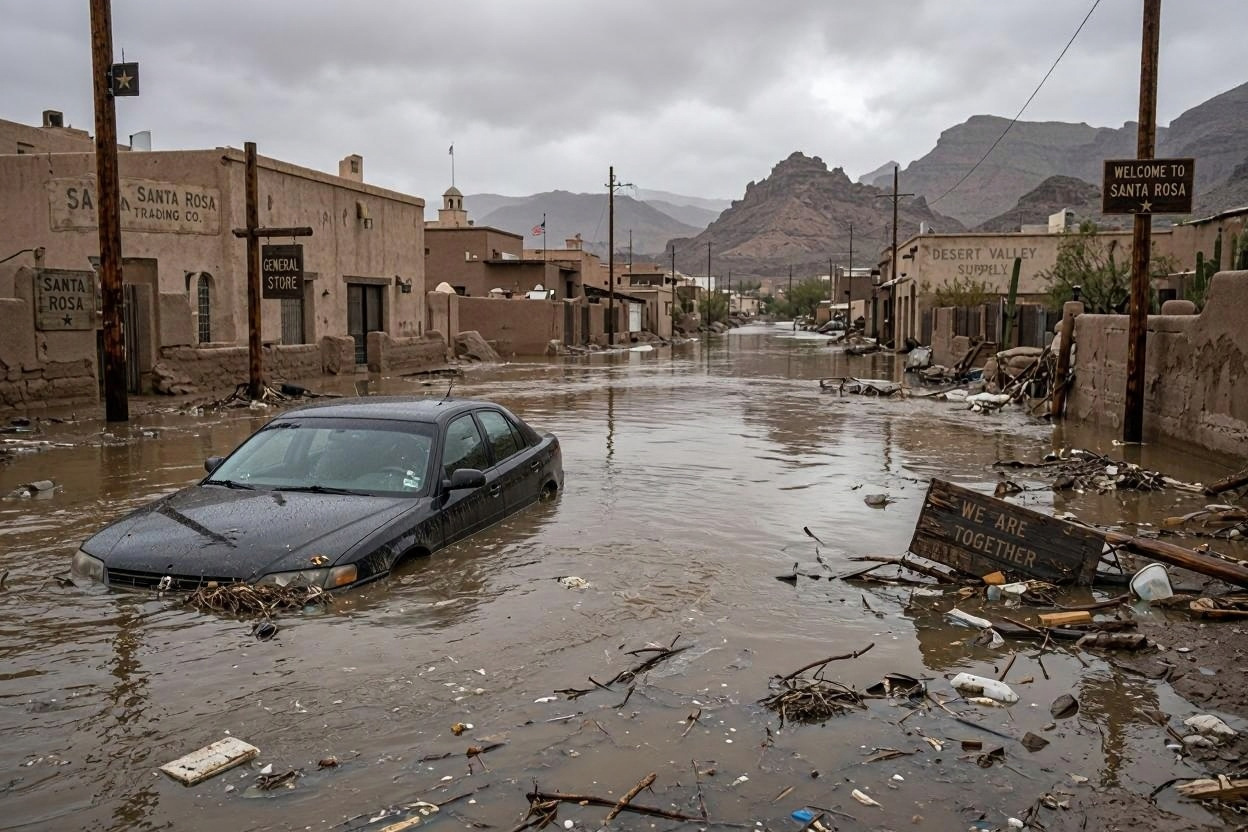
The Southwest is grappling with unprecedented flooding following two weeks of relentless storms that dumped over 20 trillion gallons of rain across the region. This staggering amount of rainfall, calculated by former NOAA chief scientist Ryan Maue, has transformed dry creek beds into torrents, overwhelming the land's capacity to absorb water. As skies began to clear on Monday, the risk of flooding remained high, and the arduous work of rescue and recovery was just beginning.
In Pagosa Springs, Colorado, a town with a history of flooding, the San Juan River crested at 16.81 feet on Sunday, just a foot below its historic level. The flooding inundated downtown streets, and dramatic scenes unfolded as an entire home was dislodged from its foundation and swept downstream, colliding with a pedestrian bridge. Nearby, a road bridge buckled under the pressure of the rising waters. Meanwhile, Flagstaff, Arizona, experienced its wettest November 1 on record, with rain falling almost continuously throughout the day. Tragically, a 73-year-old man from New York was swept into floodwaters and later found deceased, highlighting the dangers posed by the extreme weather.
Rescue operations have been extensive, with numerous individuals saved from floodwaters, some requiring helicopter assistance. In Durango, Colorado, residents living along the Animas River were ordered to evacuate, and police chief Brice Current reported that many individuals remained stranded. In Sedona, Arizona, floodwaters trapped residents in their homes and washed out sections of highways, prompting swiftwater rescue teams to spring into action. Meteorologist Aaron Hardin noted that the region was experiencing rainfall equivalent to two or three months' worth in just a short period.
The impact of the flooding has been profound, affecting not only homes but also civic functions. With Election Day approaching, officials in Colorado and Utah have implemented alternative voting plans for residents who have been evacuated or stranded. In San Juan County, Utah, residents will be allowed to vote electronically, ensuring that those affected by the flooding can still participate in the electoral process.
As the situation evolves, the National Weather Service has warned of the potential for isolated cloudbursts across the Four Corners region, where New Mexico, Arizona, Colorado, and Utah converge. The San Juan River in New Mexico is expected to crest between Tuesday and Wednesday, prompting further evacuations along its banks. The village of Chama, New Mexico, has already been evacuated due to road closures, and officials anticipate that cleanup and repair efforts could take weeks.
While the waters recede in some areas, they continue to rise in others, leaving behind a landscape marked by mud, damaged infrastructure, and homes displaced from their foundations. The desert will eventually dry out, but the scars left by this extraordinary weather event will linger for a long time, serving as a reminder of nature's power and unpredictability.
Published by Banx Network. This article is part of the Banx decentralized media programme, powered by the BXE token on the XRP Ledger.