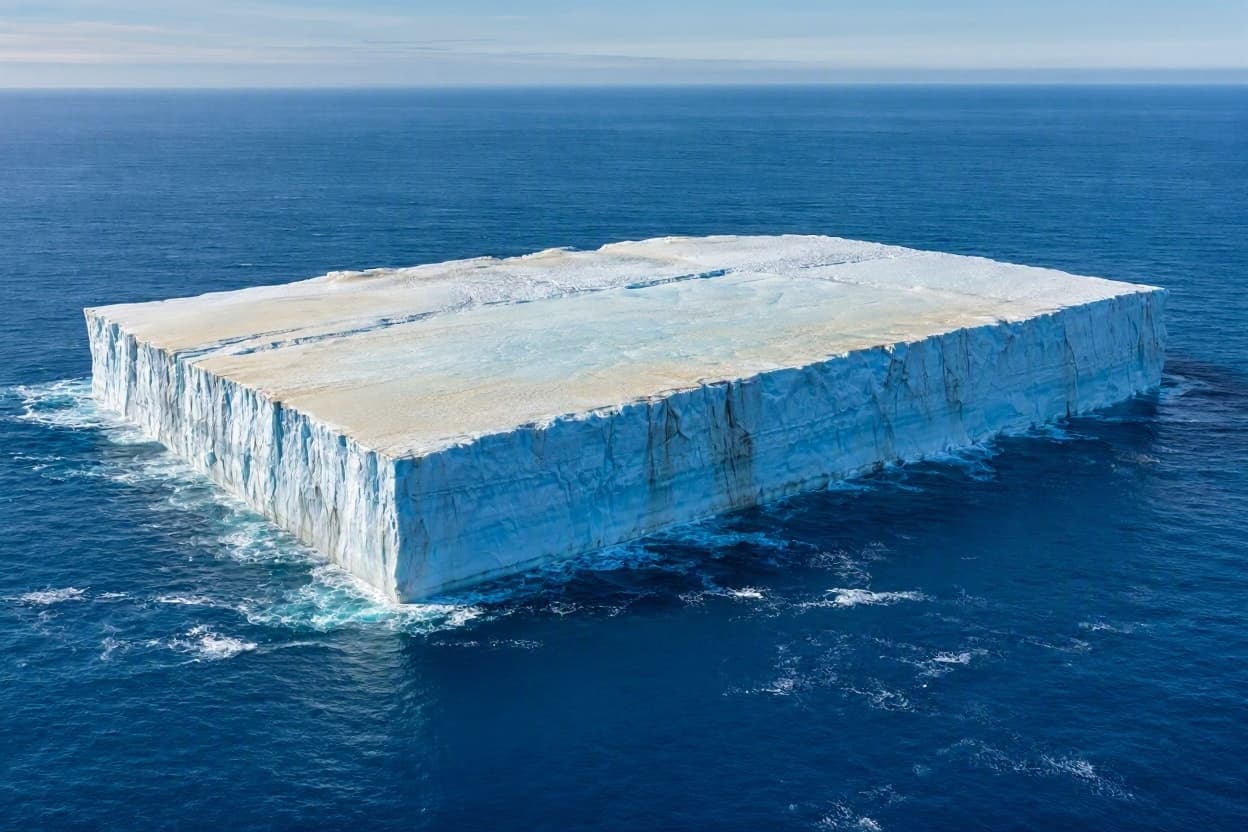
In the remote and icy reaches of the Arctic, silence is broken only by the cracking of glaciers and the whisper of the wind. Recently, that silence was shattered by a monumental event: a massive iceberg, comparable in size to the island of Manhattan, calved from the Greenland ice sheet. This floating giant, now adrift in the North Atlantic, is a stark visual representation of the changes occurring in our polar regions. It serves as both a marvel of nature and a sobering indicator of a warming world.
The iceberg, estimated to cover an area of approximately 60 square kilometers, broke away from a glacier in northwest Greenland. Calving is a natural process where chunks of ice detach from the edge of a glacier, but the frequency and scale of these events have increased in recent decades. Scientists monitor these occurrences closely, as they contribute to rising sea levels and alter ocean currents. The sheer size of this particular iceberg makes it a significant addition to the region’s ice traffic.
For local communities and shipping lanes, large icebergs pose navigational hazards. While this iceberg is currently in a remote area, its path will be tracked by satellite and aerial surveillance to ensure it does not threaten maritime operations. Historically, icebergs from Greenland have drifted south, sometimes reaching as far as Newfoundland, where they become tourist attractions and hazards alike.
The breakup also provides valuable data for climate researchers. By studying the structure and composition of the iceberg, scientists can learn more about the health of the Greenland ice sheet. The rate of calving is influenced by ocean temperatures and atmospheric conditions, both of which are affected by global climate change. Each event adds to the understanding of how quickly the ice is melting.
Visually, the iceberg is a spectacle. Its towering walls of blue and white ice reflect the sunlight, creating a surreal landscape in the middle of the ocean. Photographs and satellite images capture its grandeur, reminding viewers of the raw power of nature. Yet, behind the beauty lies a serious environmental narrative.
The loss of ice from Greenland contributes to global sea-level rise, threatening coastal communities worldwide. While one iceberg may seem insignificant in the grand scheme, it is part of a cumulative trend. The Greenland ice sheet holds enough ice to raise sea levels by several meters if it were to melt completely. Monitoring these changes is crucial for future planning and adaptation.
Public awareness of such events helps drive conversation about climate action. Seeing the tangible results of warming, such as massive icebergs, makes the abstract concept of climate change more real. It encourages individuals and governments to consider the long-term impacts of their actions on the planet.
As the iceberg drifts, it will slowly melt, returning its water to the ocean. Its journey is a temporary one, but the message it carries is enduring. It is a symbol of a changing Arctic, urging us to pay attention to the signals our planet is sending.
The Manhattan-sized iceberg breaking free from Greenland is a dramatic event that highlights the ongoing transformation of the Arctic. As it floats away, it leaves behind questions about our future and the responsibility we share to protect the fragile balance of our Earth.
AI Image Disclaimer: Please be aware that images used in this context are AI-generated and are intended for illustrative purposes only.
Sources: NASA Earth Observatory NOAA The Guardian Reuters
Published by Banx Network. This article is part of the Banx decentralized media programme, powered by the BXE token on the XRP Ledger.