Anchorage, United States—An operational charter flight carrying military contractors and engineering personnel ended in absolute tragedy across the rugged terrain of western Alaska. Federal investigators confirmed that Security Aviation Flight 45 went down during its second landing attempt at a remote military airstrip. Thick fog and severely degraded visibility plagued the approach vector as the twin-engine turboprop descended toward the facility. The aircraft impacted a steep coastal shore just short of the runway infrastructure, disintegrating upon impact. Emergency alert systems activated immediately, prompting a coordinated military search and rescue response from regional command.
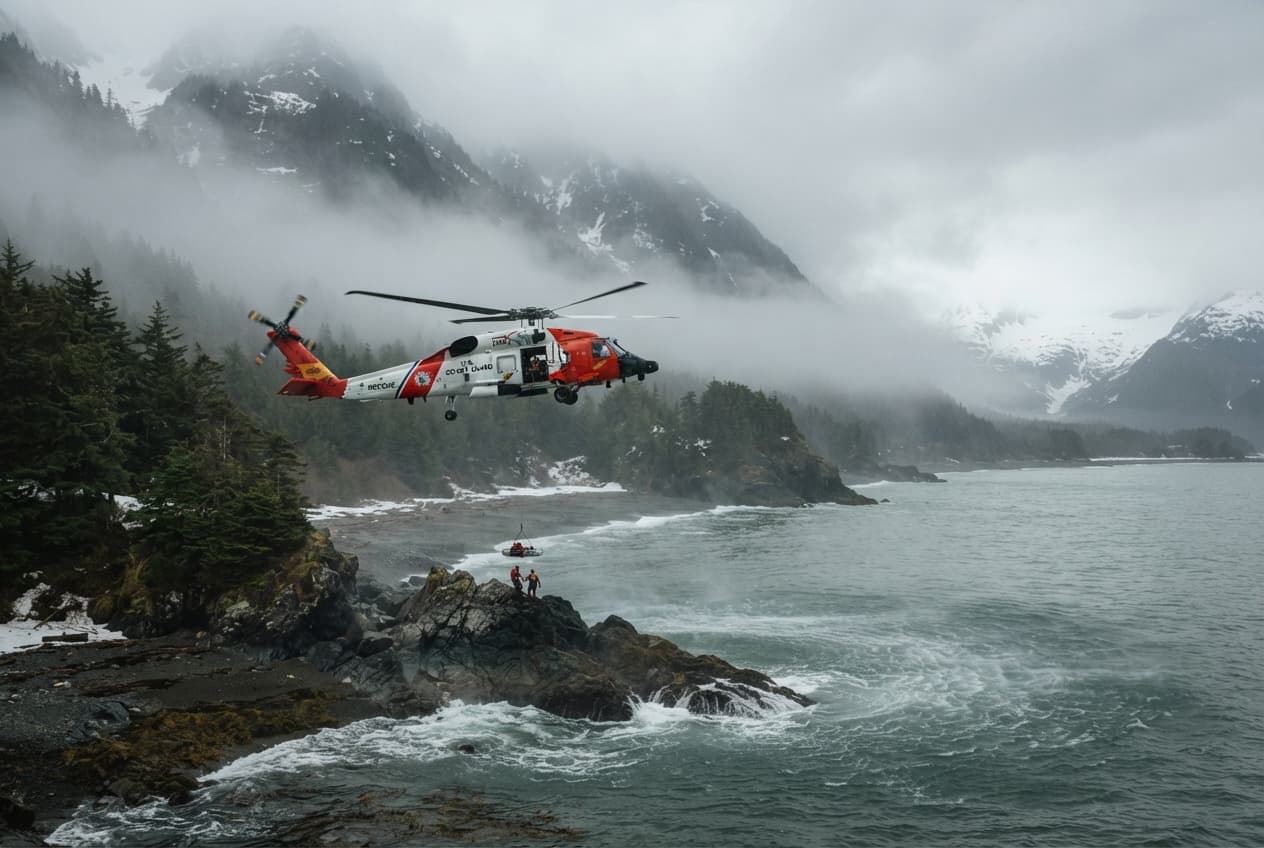
Rescue teams reaching the remote wreckage site confirmed that all eight occupants on board perished instantly. The manifest included two flight crew members alongside six passengers traveling to service critical defense communication assets. Personnel from the United States Army Corps of Engineers and private technical firms made up the core of the doomed charter group. Military commanders released formal statements expressing profound grief over the loss of personnel engaged in vital infrastructure work. Local community leaders in nearby settlements mobilized ground support networks to assist emergency recovery teams battling harsh environmental elements.
Investigators from the National Transportation Safety Board deployed specialists to the crash site to comb through the scattered wreckage. Technical teams began mapping the debris field and recovering onboard flight data instrumentation to piece together the final minutes. Aviation safety analysts noted that the challenging coastal weather patterns in the region frequently create hazardous microclimates for incoming pilots. Maintenance records for the aging aircraft frame are being scrutinized by federal inspectors to rule out mechanical malfunctions. Representatives from the charter operator pledged full cooperation with federal regulators during the ongoing evidentiary review.
Family notification procedures concluded across multiple states as military casualty assistance officers provided direct support to grieving relatives. Regional air carriers operating similar turboprop equipment in the state reviewed internal low-visibility landing protocols following the accident. Recovery crews continue airlift operations to transport personal effects and structural components out of the inaccessible coastal ravine. Federal aviation authorities indicated that a preliminary factual report outlining weather telemetry and air traffic communications will follow. Technical investigators remain stationed at the field office processing telemetry data recovered from the crushed cockpit avionics.
Published by Banx Network. This article is part of the Banx decentralized media programme, powered by the BXE token on the XRP Ledger.