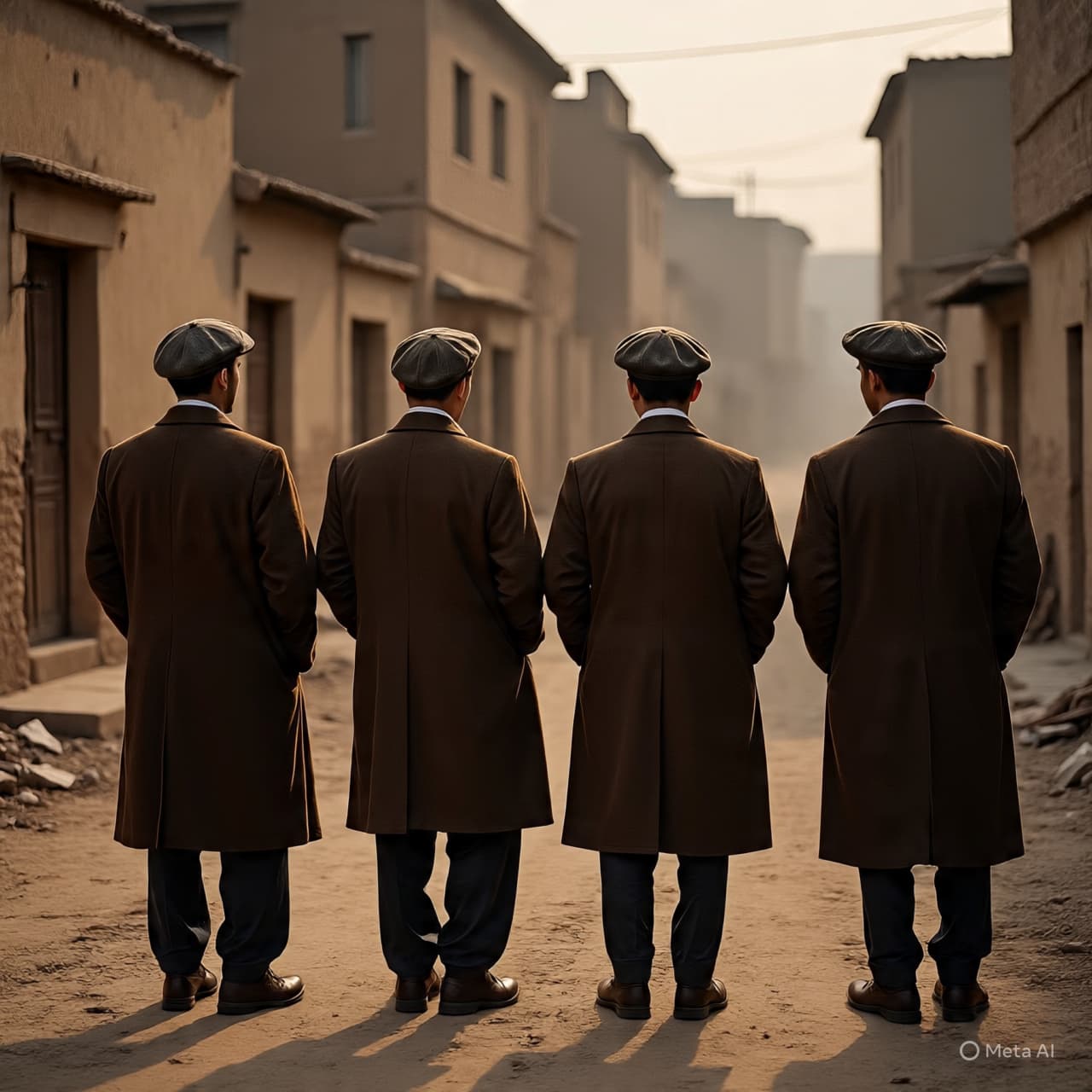
There are times when clothing becomes more than fabric — when a cap or a coat is more than mere attire. In a dusty street of Herat, four young men once strolled lightly under the Afghan sun, dressed in the sharp overcoats, flat caps and confident gait borrowed from a distant story: the world of “Peaky Blinders.” Today, that walk has become a quiet tread under suspicion, a reminder that identity — even sartorial — can be fraught in a place where culture and power intersect so sharply.
These young men had become local figures in their township: their photos circulated on social media; some called them the “Jibrail Shelbys.” Their attire, inspired by a British television drama, felt to them like homage — a playful, stylish expression of admiration. They said people smiled at them on the streets, sometimes asked for photos, and often responded with curiosity or wonder.
But to the moral enforcers of the Taliban’s Ministry for the Promotion of Virtue and Prevention of Vice, their style was a problem — a sign of “promoting foreign culture,” and thus, in their eyes, incompatible with “Islamic values and Afghan culture.”
The result: the four were detained — or, as Taliban statements later softened, “summoned, advised and released” — then told to undergo a “rehabilitation program.” In a video released by the ministry, one of the young men is shown expressing regret, reportedly saying that he had spread what they called “things against Sharia.”
For many Afghanistan watchers and human‑rights advocates, this incident is less about trench coats or flat caps — and more a symbol of a tightening grip. It follows a broader pattern: for months now, individuals and even barbers have been detained for supposedly “Western” haircuts, or for missing mosque prayers.
What was once fashion — a coat on a cool evening, a cap tilted just so — becomes political, loaded with meaning. The motivations may be simple admiration, nostalgia, or youthful expression. But under rules that now seek to shape how Afghans dress, speak, and move, even aesthetic choices carry risk.
Perhaps worst of all — the moment these men believed they were only sharing a harmless passion, something beautiful from afar — now they see how fragile that freedom has become. The “rehabilitation” serves as a warning: in the new order, conformity is not just encouraged — it is enforced.
As twilight closes in Herat, the silhouettes of four young men linger not on the dusty streets but in memory. Their overcoats and caps may fade with time, but the question remains: when personal taste becomes a crime, where does freedom go?
AI Image Disclaimer “Graphics are AI-generated and intended for representation, not real photography.”
Sources CBS News, Daily Pakistan Global, Amu TV, KabulNow, Bol News
Published by Banx Network. This article is part of the Banx decentralized media programme, powered by the BXE token on the XRP Ledger.