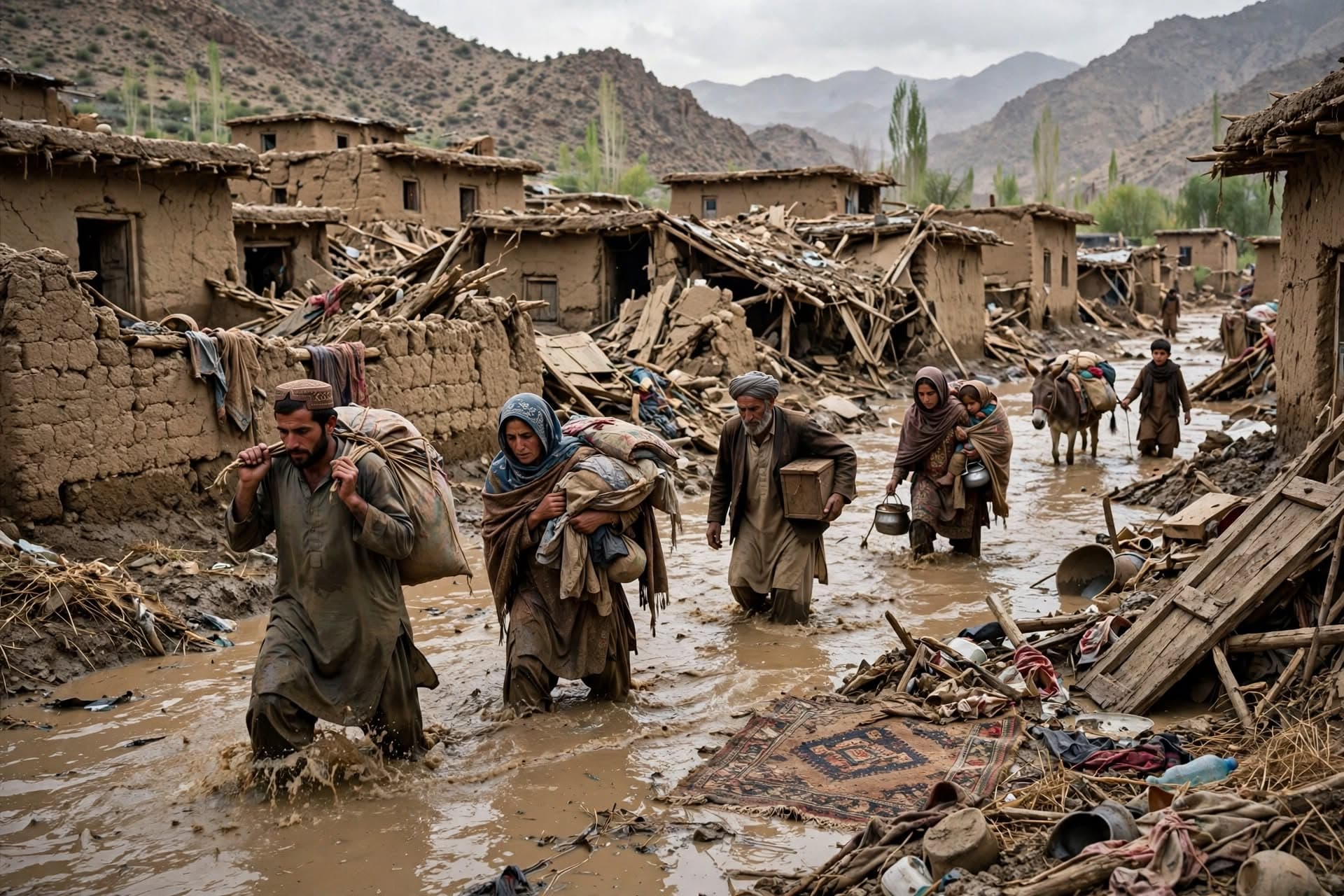
Jalalabad, Afghanistan— Flash floods tore through villages in eastern Afghanistan on October 18, 2026, killing more than twenty people and flattening mud-brick homes that stood in dry riverbeds.
Rain started late the previous night. It came hard. By morning, water surged down mountain gullies into Nangarhar and neighboring districts. Walls collapsed. Fields vanished under silt.
Local officials said at least 22 bodies had been pulled from debris by midday. The number kept moving. Women and children were among the dead. Dozens more were reported missing.
Rescue teams reached some areas on foot. Roads were washed out. A district official said two bridges were gone. That cut off access to three villages where damage was believed worst.
"The water came without warning. We ran," one resident told Reuters by phone from a hillside where families were sheltering. Another said his house filled in minutes.
The Afghanistan National Disaster Management Authority sent teams from Jalalabad. They carried stretchers, not heavy equipment. Digging was done by hand. Neighbors formed lines to move mud.
Aid groups said the terrain and ongoing rain made helicopter support difficult. Food and tents were staged in the provincial capital. Distribution had not started.
Eastern Afghanistan floods every year. Deforestation and poor drainage make it worse. This year’s rainy season arrived late and violent. Aid agencies had warned of exactly this kind of event.
Clinics reported injuries from collapsing roofs. Power was out in several areas. Officials said they were compiling a list of destroyed homes. It already ran past 100.
The rain was still falling in the highlands. Officials warned of another surge.
Published by Banx Network. This article is part of the Banx decentralized media programme, powered by the BXE token on the XRP Ledger.