
Key Highlights
- Seven confirmed dead due to flash flooding in Yemen.
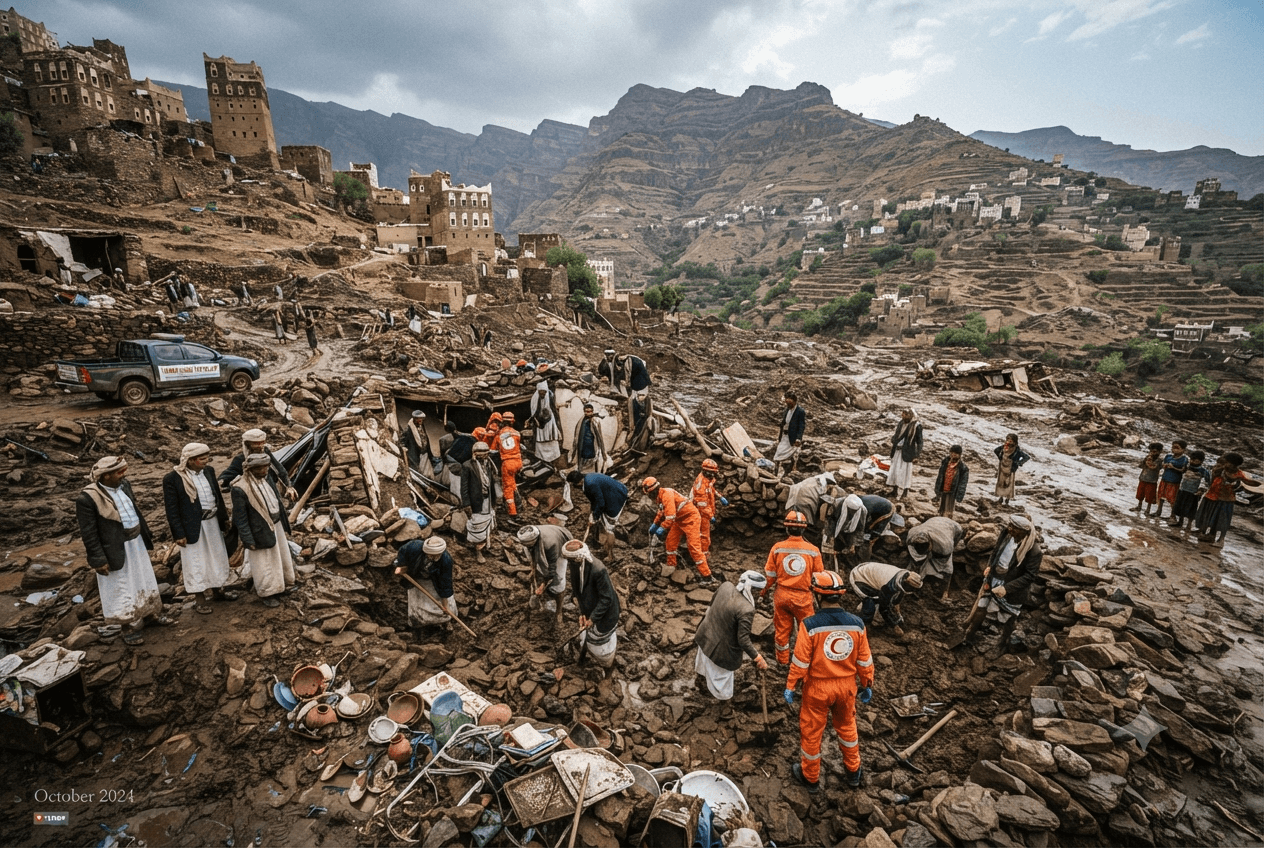
- Extensive damage reported in mountain villages, with rescue efforts ongoing.
- Humanitarian aid mobilized to assist affected communities.
Sana'a, Yemen—A sudden and devastating flash flood swept through mountain villages in Yemen, claiming the lives of seven residents and causing widespread destruction. The torrential rains, which came unexpectedly, transformed dry riverbeds into raging torrents, overwhelming local communities before they could react. Families rushed to higher ground as the floodwaters surged, destroying homes and sweeping away vehicles and livestock.
Rescue operations have been hampered by the challenging terrain, with teams from neighboring administrative zones struggling to navigate washed-out roads blocked by debris. Local villagers, equipped with basic tools, have joined the search for survivors, digging through the rubble of collapsed buildings. Reports from local health clinics confirm the fatalities, while many others have sustained serious injuries from debris and structural failures.
The impact on agriculture has been severe, with terraced fields washed away and irrigation systems compromised. This loss threatens the food security of families who rely on these crops for their livelihoods. Humanitarian workers are rushing to provide emergency medical supplies and clean water to the affected areas, as concerns grow over potential outbreaks of waterborne diseases due to compromised sanitation systems.
In response to the disaster, regional administrative councils convened an emergency meeting to allocate resources for recovery efforts. However, communication has been disrupted, with solar-powered towers failing due to secondary mudslides damaging transmission lines. Survivors have taken refuge in makeshift shelters, while community leaders organize night watches to monitor the rising water levels as rain continues to fall.
International relief agencies have pledged support, coordinating logistics and sending supplies to assist local rescue efforts. Cargo trucks loaded with blankets and high-energy food rations are en route to the disaster zone. Meteorologists have noted that unusual weather patterns contributed to the intense rainfall, raising concerns about future flooding events.
Medical facilities are overwhelmed, treating patients for a range of injuries, including deep lacerations and fractures. Doctors are working tirelessly under challenging conditions, rationing supplies to manage the influx of trauma cases. Public health officials are distributing water purification tablets to families displaced by the flooding, but the ongoing damage to infrastructure complicates relief efforts.
Engineers are assessing the structural integrity of key infrastructure, including a stone arch bridge that withstood the flood's force. Repair crews are working to clear debris to facilitate the movement of heavy relief vehicles. Local authorities are urging residents in vulnerable areas to evacuate as the threat of additional rainfall looms.
As dawn broke, community members gathered to mourn the victims, sharing what little resources they have left. Government disaster response coordinators have promised additional support, including tent settlements and food rations, but the recovery process is expected to face significant delays due to the ongoing rain and damaged roads.
The situation remains critical as rescue teams continue their efforts amid the challenging conditions, highlighting the urgent need for comprehensive disaster response and recovery strategies in the region.
Published by Banx Network. This article is part of the Banx decentralized media programme, powered by the BXE token on the XRP Ledger.



