
Key Highlights
- Four fatalities reported due to flash floods in Asir, Saudi Arabia.
- Over fifty millimeters of rain fell in under an hour, causing severe flooding.
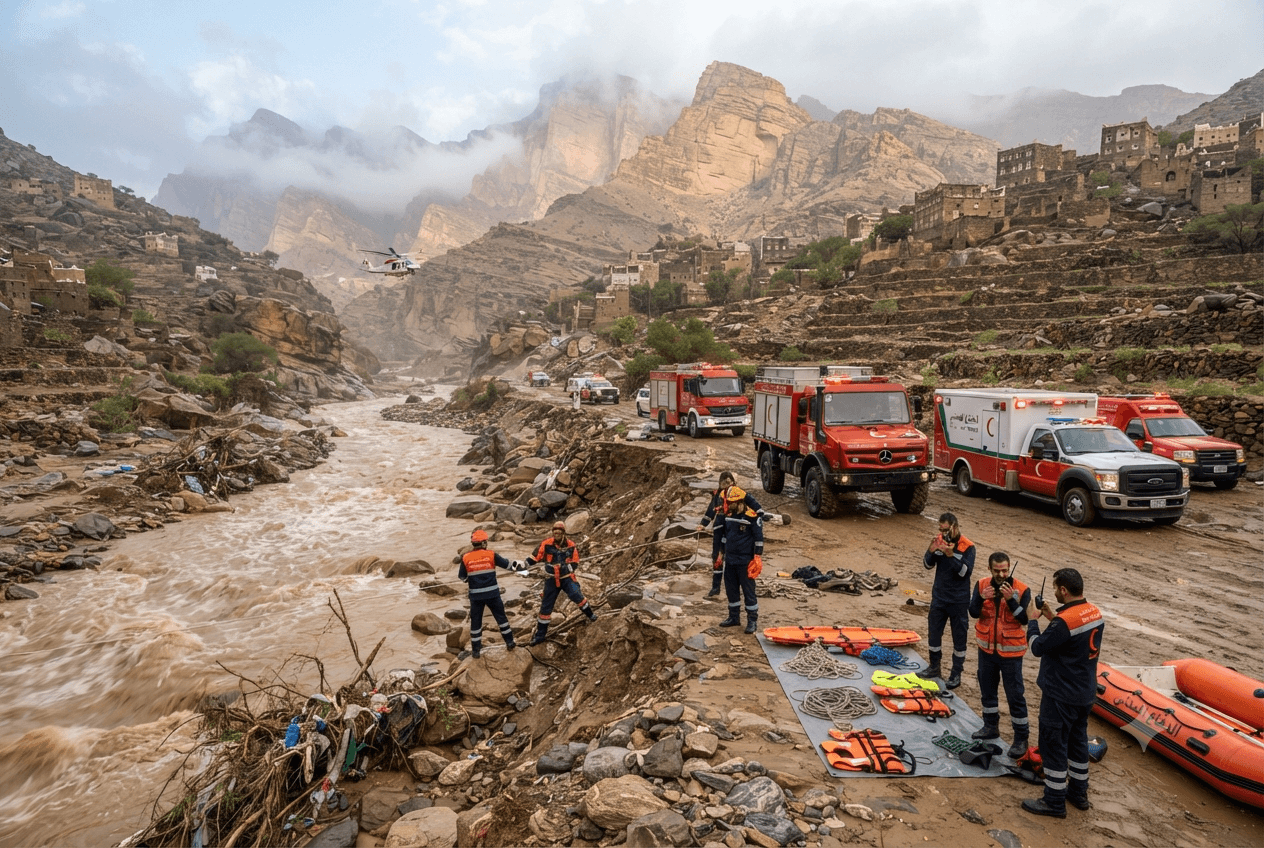
- Emergency services deployed swift-water teams for rescue operations.
Abha, Saudi Arabia—Raging flash floods swept multiple vehicles off mountain passes across the Asir region Monday afternoon, leaving four people dead after torrential downpours caught motorists unawares. The sudden cloudburst struck at approximately 2:30 PM local time, transforming dry wadi beds into roaring torrents of mud, rock, and debris within minutes.
Civil defense search and rescue squads deployed specialized swift-water teams and aerial drone units to locate vehicles submerged in deep canyon channels. Divers recovered four bodies from overturned cars trapped against bridge pylons several miles downstream from initial crossing points. The swift response of emergency services was crucial in managing the aftermath of the disaster, as they worked tirelessly to locate and assist those affected.
Meteorological stations recorded over fifty millimeters of rainfall in under an hour, overwhelming natural drainage basins and municipal stormwater systems in the highlands. Emergency dispatchers received hundreds of distress calls from trapped residents and stranded motorists on elevated highway shoulders. The rapid onset of the storm left little time for preparation, highlighting the need for improved weather forecasting and public awareness.
Transport authorities immediately closed high-altitude mountain passes and secondary routes intersecting known flood channels to prevent further vehicle crossings. Heavy earthmoving machinery was dispatched to clear massive boulders and sediment deposits blocking critical regional arterial roads. This proactive measure aimed to restore access and ensure safety for emergency responders and residents alike.
Hospital trauma centers activated emergency rosters to treat survivors rescued from flooded gullies suffering from hypothermia, exhaustion, and minor injuries. Regional civil defense directors issued urgent warnings urging the public to avoid valleys, riverbeds, and outdoor recreational areas during active storm warnings. The health and safety of the community remained a top priority as authorities worked to mitigate the risks associated with the ongoing weather conditions.
Environmental analysts noted that seasonal atmospheric instability combined with steep topographical gradients frequently produces high-velocity flash floods in southwestern provinces. Search teams continued sweeping downstream sediment banks late Monday night to verify that no additional motorists remained unaccounted for. The ongoing search efforts underscored the severity of the situation and the potential for further casualties.
Municipal engineering committees announced plans to review bridge clearance heights and expand drainage infrastructure capacity across vulnerable mountain communities. Recovery operations formally wound down after sunset as receding water levels exposed the full extent of property and vehicle damage. The community now faces the challenge of rebuilding and enhancing infrastructure to better withstand future storms.
Published by Banx Network. This article is part of the Banx decentralized media programme, powered by the BXE token on the XRP Ledger.



