
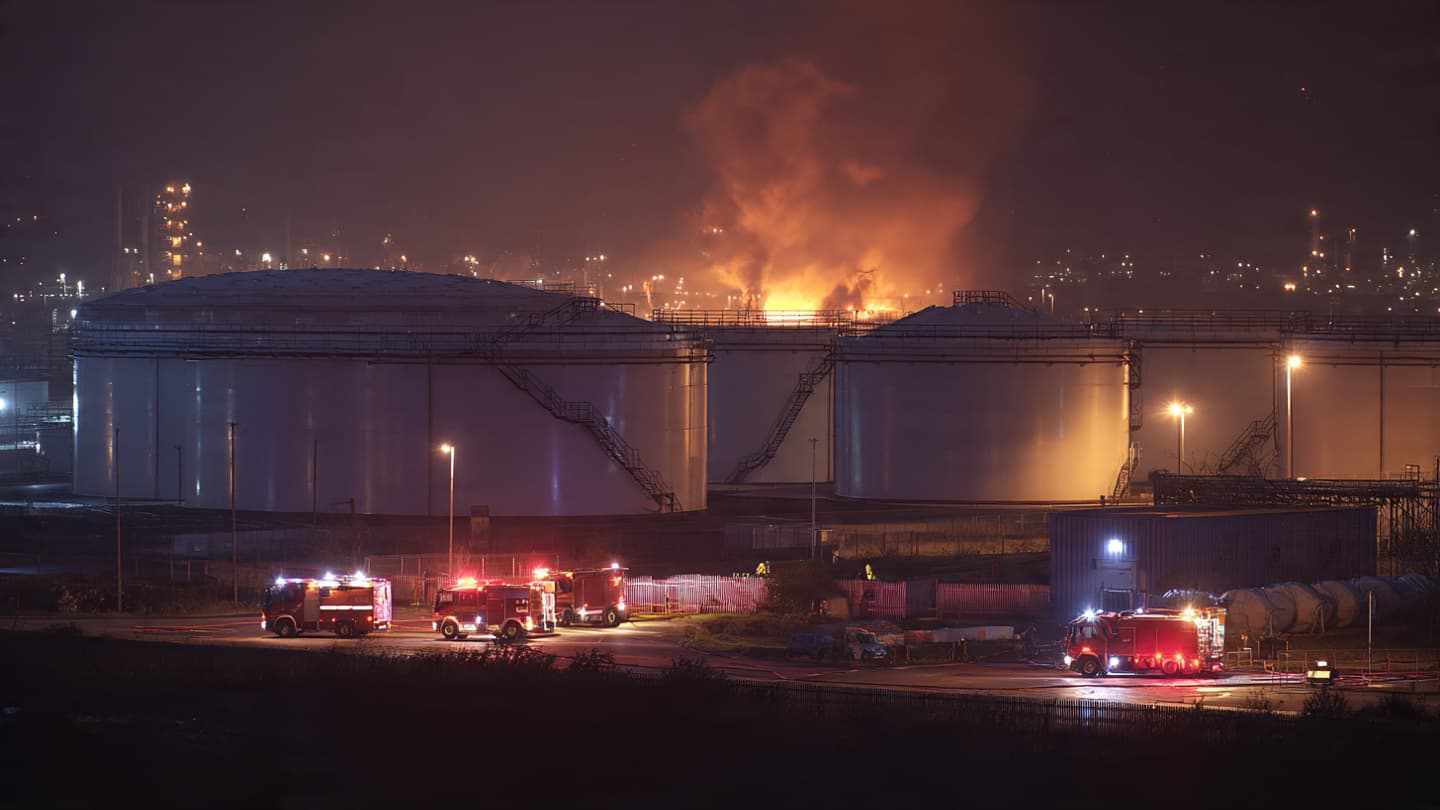
In modern conflicts, strategic infrastructure often becomes as significant as the front lines themselves. Pipelines, storage terminals, and fuel depots form invisible networks that sustain military and economic activity. Against this backdrop, reports of Ukrainian strikes targeting oil facilities in Russia and Crimea reflected another chapter in a conflict increasingly shaped by logistics as much as territory.
According to Ukrainian and Russian officials, multiple oil-related sites were affected during overnight operations. Ukrainian authorities described the strikes as part of a broader effort to impose economic costs on Russia while disrupting resources linked to military operations.
One reported target was an oil transshipment facility in Russia’s Krasnodar region. Ukrainian military statements identified the site as an important hub for handling petroleum products in southern Russia. Regional authorities confirmed that a fire occurred following a drone strike, although reports indicated no casualties.
Meanwhile, Ukrainian officials also reported attacks on fuel storage facilities in Crimea. Military statements described these locations as significant storage and transfer points used to support Russian operations on the occupied peninsula. Fires were reported following the strikes.
The exchanges occurred alongside another large wave of drone activity. Russia stated that hundreds of Ukrainian drones were intercepted across various regions, including areas near Moscow, Crimea, and the Black Sea. Ukraine also reported defending against numerous Russian drone attacks directed at its territory.
The conflict has increasingly featured long-range strikes targeting energy infrastructure. Such operations aim not only to damage facilities but also to complicate transportation, storage, and distribution networks that support broader military capabilities.
Energy infrastructure occupies a unique place in wartime calculations. Facilities often serve civilian economic functions while also carrying strategic value, making them frequent subjects of military planning and political discussion. The latest incidents illustrate how these considerations continue to shape operational decisions on both sides.
International observers continue to monitor the effects of these strikes, particularly their implications for energy markets and regional stability. While immediate assessments often focus on physical damage, longer-term consequences can emerge through disruptions to transportation and supply chains.
For now, the reports underscore the continuing intensity of the war and the growing importance of infrastructure targets. As military operations evolve, the contest increasingly extends beyond battlefields into the networks that sustain modern economies and armed forces.
AI Image Disclaimer: This article includes an AI-generated illustration created to represent the reported events visually.
Sources Verified Associated Press RBC-Ukraine Regional official statements
Note: This article was published on BanxChange.com and is powered by the BXE Token on the XRP Ledger. For the latest articles and news, please visit BanxChange.com