
Key Highlights
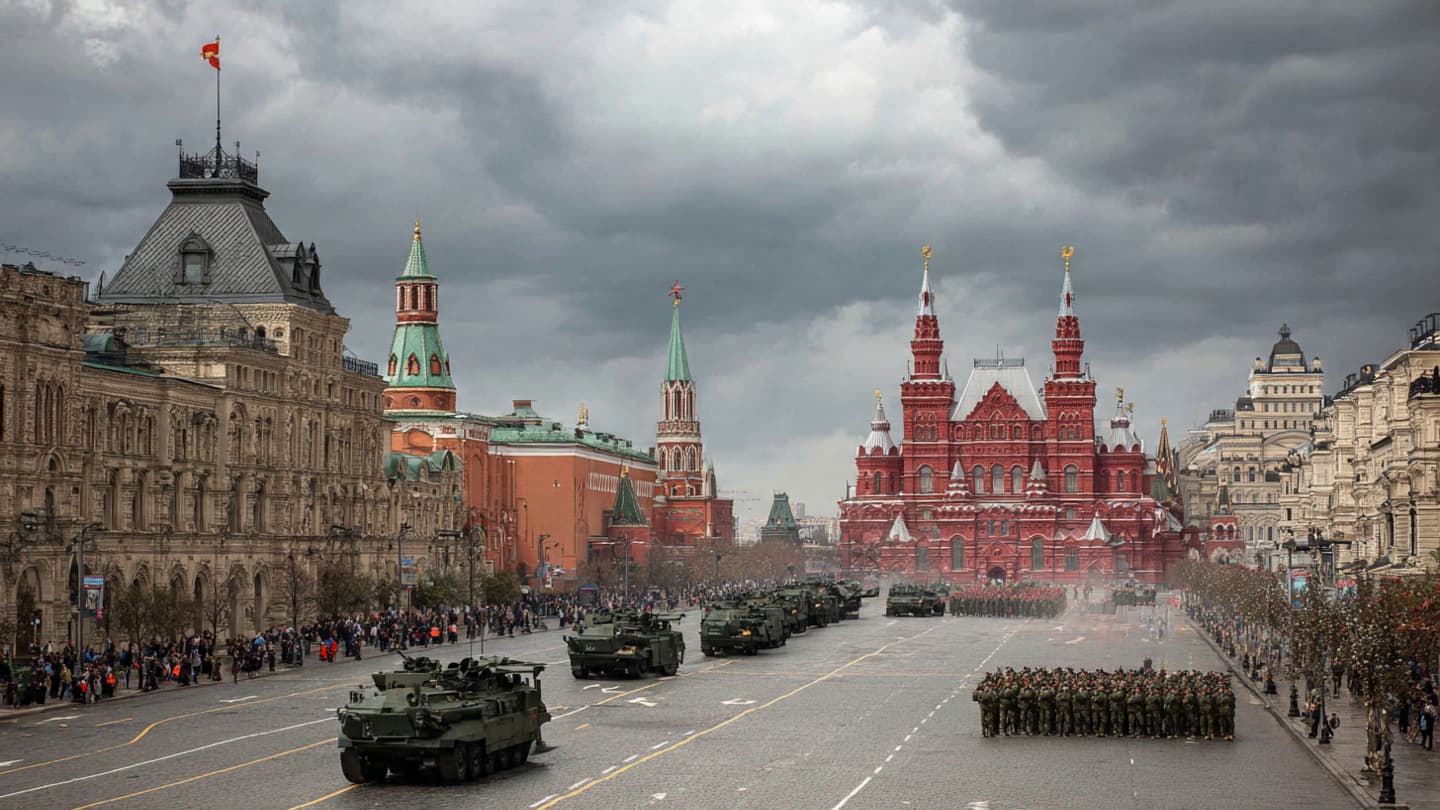
- Reduced Military Display:This year's Victory Day parade featured fewer tanks and military formations than in previous years.
- Heightened Security:Increased security measures were implemented in Moscow due to fears of drone attacks amid ongoing conflict.
- Historical Context:Putin's address linked the current war in Ukraine to Russia's historical sacrifices during World War II.
The morning arrived in Moscow beneath a sky the color of worn steel, where spring had begun to soften the edges of the city without fully warming it. Along the avenues leading toward Red Square, barriers stood in careful lines, and soldiers moved with the rehearsed precision of ritual. Victory Day has long carried the gravity of memory in Russia — a day of old photographs, folded uniforms, carnations pressed into cold hands, and stories that survive longer than those who once told them. Yet this year, the rhythm felt quieter, narrowed somehow, as if history itself had drawn a slower breath.
Vladimir Putin presided over a reduced military parade in Moscow while the war in Ukraine continued into another grinding season, its duration reshaping not only battlefields but public ceremony itself. The annual commemoration of the Soviet victory over Nazi Germany has traditionally been staged with sweeping displays of military hardware and national confidence. But this year’s procession appeared more restrained, reflecting both the demands of an ongoing conflict and the practical realities that now surround it.
Fewer tanks rolled across Red Square than in years past. Some analysts noted the absence of large formations that once symbolized the depth of Russia’s conventional military power. Security measures across the capital were heightened, shaped partly by fears of drone attacks and the widening vulnerability that modern warfare has carried far beyond front lines. Even the air above Moscow seemed quieter, with aerial displays reportedly scaled back compared to earlier celebrations.
Still, ceremony persisted. Veterans sat wrapped in heavy coats despite the mild weather, medals catching fragments of pale sunlight. Military bands filled the square with songs that belonged to another century, their brass notes echoing against Kremlin walls that have witnessed revolutions, funerals, victories, and long winters of uncertainty. Around them stood younger soldiers, many born decades after the collapse of the Soviet Union, now carrying the burden of a different war whose end remains distant and indistinct.
In his address, Putin framed the conflict in Ukraine through the language of historical continuity, linking present military operations to Russia’s memory of sacrifice during World War II. Such comparisons have become central to the Kremlin’s narrative, binding contemporary politics to the emotional architecture of national remembrance. Yet outside the ceremonial language, the realities of the war continue to shape daily life across Russia and Ukraine alike — through economic strain, casualty reports, international isolation, and the steady exhaustion that accompanies prolonged conflict.
The parade unfolded while fighting persisted across multiple regions of Ukraine, where offensives and counteroffensives have gradually transformed towns, infrastructure, and landscapes into contested ground. The war, once discussed in terms of rapid advances and decisive outcomes, has settled into something slower and heavier. It now resembles a long winter road: difficult to leave behind, difficult to clearly see ahead upon.
Beyond Moscow, Victory Day itself has become more fragmented in tone. Some regional celebrations across Russia were reportedly reduced or canceled over security concerns. In previous decades, the holiday often projected confidence and permanence, a reminder of Soviet endurance after immense suffering. This year, however, the spectacle carried visible restraint, as though even grand state rituals could not entirely escape the atmosphere of attrition that now surrounds the conflict.
Internationally, the parade also unfolded against continuing diplomatic tension between Russia and Western governments supporting Ukraine. Sanctions remain in place, military aid continues to flow toward Kyiv, and geopolitical divisions have hardened into a colder, more enduring shape. Yet within Moscow, ordinary life moved in quieter parallel rhythms. Cafés opened. Metro trains arrived beneath chandeliers and marble arches. Families walked along river embankments under fluttering flags. The city continued, as cities always do, carrying history and uncertainty together.
There is something revealing about ceremonies during wartime. They become mirrors as much as performances, reflecting not only strength but strain, not only memory but adaptation. The smaller parade did not erase the symbolism of Victory Day, nor the emotional significance it holds for many Russians, but it did highlight the complexities of a nation grappling with the realities of war.
Published by Banx Network. This article is part of the Banx decentralized media programme, powered by the BXE token on the XRP Ledger.



