
Key Highlights
- NATO defense spending has surged due to the Ukraine conflict.
- Five member countries have met the 3.5% GDP defense spending target early.
- The U.S. remains the largest spender, despite a lower GDP percentage.
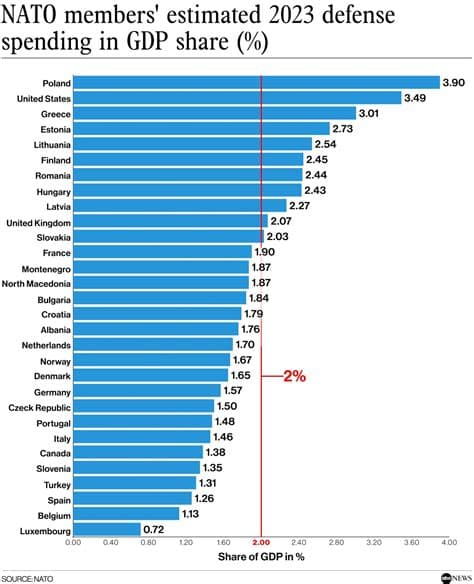
NATO's latest figures for 2025 indicate a significant increase in defense spending among allied nations, largely driven by the ongoing war in Ukraine and heightened pressure on member states to bolster their military budgets. The data reveals that all NATO countries have met the previous benchmark of allocating at least 2% of their GDP to defense, a target that has been a longstanding goal of the alliance.
In a notable development, at least five NATO members, particularly those in Eastern Europe, have already surpassed the alliance's new, more ambitious target of 3.5% of GDP by 2035. This shift reflects a growing recognition of the need for enhanced military readiness in response to evolving security threats. Countries such as Estonia, Latvia, and Poland have emerged as leaders in defense spending, showcasing their commitment to national and regional security.
NATO's commitment to a higher spending target includes an additional 1.5% of GDP earmarked for defense-related areas, such as the protection of critical infrastructure and the enhancement of civil preparedness. This comprehensive approach aims to ensure that member states are not only equipped for traditional military engagements but also prepared for hybrid threats that may arise in the modern security landscape.
While European nations and Canada have collectively increased their defense spending, the United States continues to lead in absolute terms. However, it is noteworthy that the U.S. defense spending as a percentage of GDP has decreased compared to previous years. This trend raises questions about the sustainability of U.S. military commitments abroad, especially as European allies ramp up their own defense budgets.
The implications of these spending increases are profound, as they signal a shift in the geopolitical landscape. The war in Ukraine has acted as a catalyst for NATO members to reassess their defense strategies and investment priorities. As the alliance moves forward, the focus will likely remain on ensuring that all member states meet their commitments while addressing the diverse security challenges that lie ahead.
In conclusion, the early achievement of the 3.5% defense spending target by five NATO members underscores a significant shift in military readiness and commitment among allies. As the geopolitical landscape continues to evolve, NATO's collective defense strategy will be crucial in maintaining stability and security in Europe and beyond.
Published by Banx Network. This article is part of the Banx decentralized media programme, powered by the BXE token on the XRP Ledger.



