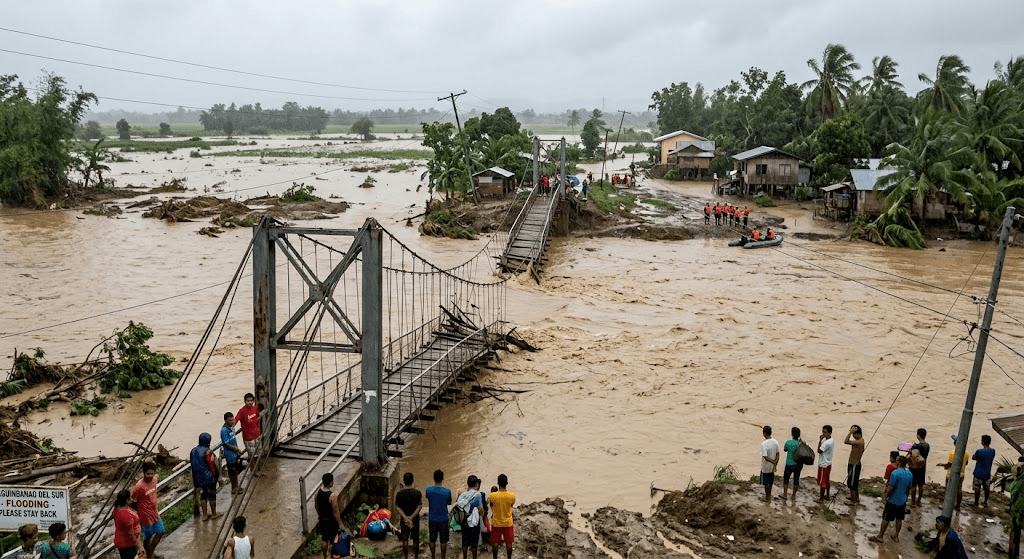
Manila, Philippines—A powerful typhoon packing sustained winds of one hundred sixty kilometers per hour slammed into the eastern coast at 02:00 PHT Sunday, generating destructive four-meter storm surges that swept through low-lying coastal villages and left five people dead. Seawater crashed over concrete seawalls, inundating thousands of wooden residential homes and destroying commercial fishing fleets anchored in protected bays. Disaster response units deployed amphibious vehicles and rubber speedboats to rescue families stranded on rooftop structures.
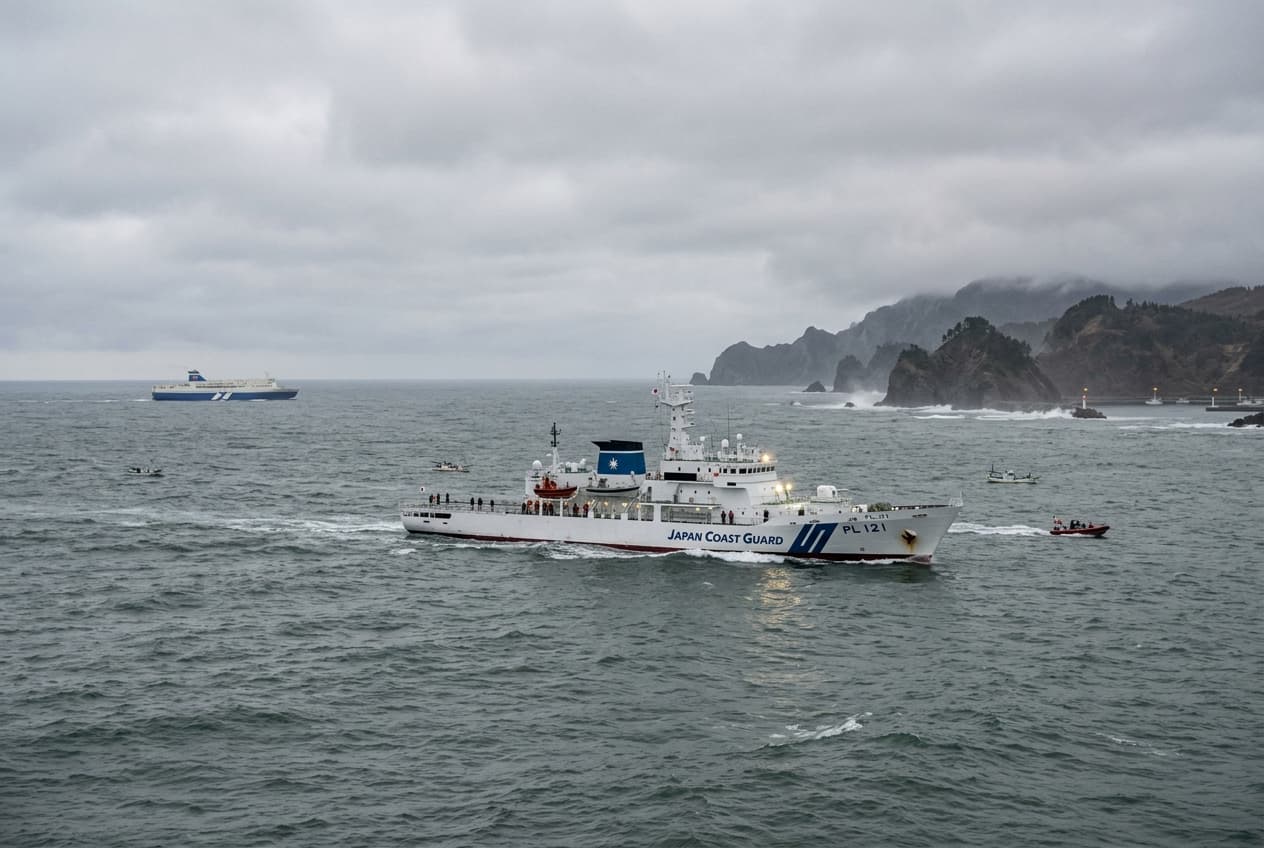
Coast guard search teams recovered the bodies of three fishermen and two coastal residents who were swept away when the initial surge breached shoreline defenses. Medical personnel treated over twenty injured citizens for severe lacerations, hypothermia, and blunt force trauma at regional field hospitals. Emergency management agencies confirmed over forty thousand residents were displaced into provincial evacuation centers established in reinforced school buildings.
Widespread power blackouts halted communications across three coastal provinces as falling palm trees and flying roof debris severed high-voltage transmission lines. Regional airports canceled all domestic commercial flights, while maritime authorities grounded inter-island ferries, leaving thousands of passengers stranded at regional seaports. Highway crews cleared fallen trees, landslide debris, and washed-out utility poles blocking main evacuation routes.
Coastal fishing villages bore the brunt of the storm's impact, with dozens of wooden homes completely flattened or washed out to sea by receding surge waters. Local fisherfolk surveyed destroyed wooden boats and tangled fishing nets scattered across coastal roadways. Municipal water systems lost line pressure in inundated districts, forcing authorities to deploy mobile water purification units to supply emergency drinking water.
National Disaster Risk Reduction and Management Council Spokesperson Bernardo Rafaelito Alejandro delivered a direct situation update at headquarters late Sunday morning. "The extreme coastal storm surges generated by this typhoon caused severe structural damage along our eastern coastline," Alejandro stated. "Our search and rescue teams are currently working to reach isolated coastal Barangays to deliver emergency medical care and supplies."
Local government officials called on central authorities to provide immediate engineering support to clear debris and rebuild shattered coastal defenses. Environmental groups emphasized the rising frequency of intense tropical cyclones, urging regional planners to construct permanent concrete evacuation centers in higher elevation zones. Coast guard units established sea patrols along affected coastlines to monitor for missing maritime personnel.
Coroner personnel processed the remains of the five deceased victims at provincial hospital facilities before releasing them to surviving family members. Military transport aircraft airlifted emergency medical supplies, food packs, and water containers to regional staging airfields near the landfall zone. Disaster agencies began deploying mobile satellite communication terminals to restore local government command networks.
Typhoon winds gradually weakened as the storm system moved across mountain ranges toward the western sea, but torrential rainfall continued causing localized flash floods. Emergency crews maintained high-visibility patrols along coastal roads to prevent evacuees from returning to compromised shoreline structures. The disaster council stated recovery and restoration operations will continue through the coming week.
Published by Banx Network. This article is part of the Banx decentralized media programme, powered by the BXE token on the XRP Ledger.