
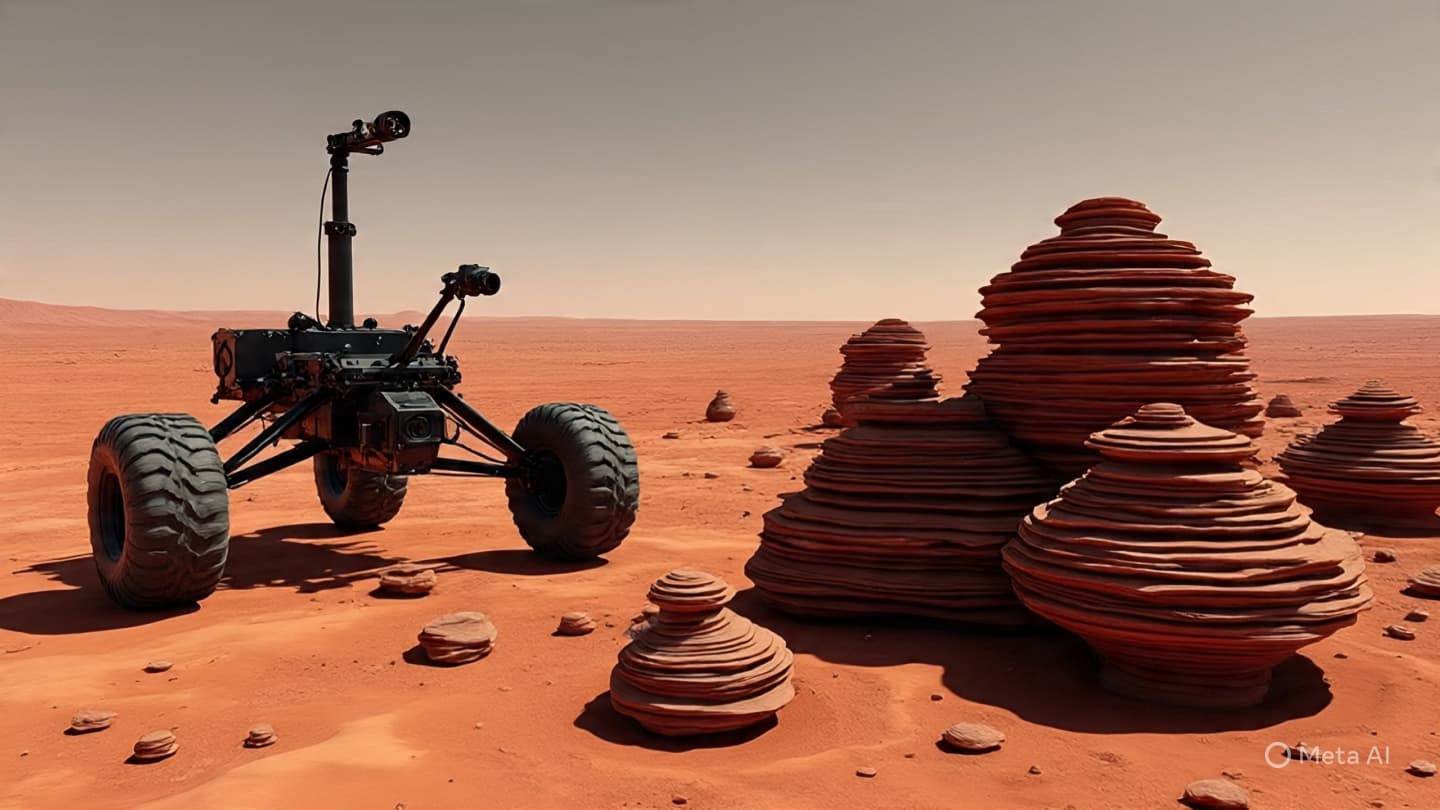
Mars has long been a keeper of textures. Its plains hold dust like memory, and its rocks preserve chapters written by wind, water, and time. Now, NASA’s Curiosity rover has photographed unusual fish-scale-like patterns on the Martian surface, offering another reminder that even silence can leave marks.
The patterns were observed in layered rocks explored by Curiosity inside Gale Crater, where the rover has spent years studying ancient environments. These repeating ridges and cracks resemble scales at first glance, though they are geological formations rather than traces of marine life.
Planetary scientists often interpret such textures through familiar earthly comparisons. Honeycomb rocks, polygonal cracks, and ripple marks all borrow names from everyday forms. The fish-scale description helps communicate shape, not origin.
Researchers suggest the formations may result from sediment layers that hardened, fractured, and eroded over immense periods. Wind abrasion can expose repeating structures, while mineral changes may strengthen some sections more than others. Mars, lacking oceans today, still shapes stone through atmosphere, temperature swings, and dust movement.
Curiosity’s mission has focused on whether ancient Mars once had habitable conditions. Gale Crater is believed to have hosted lakes and streams billions of years ago. As sediments settled and later turned to rock, they preserved clues to changing climates.
Textures like these matter because they reveal processes rather than just scenery. A ridge can indicate past water flow; a crack can suggest drying cycles; layered minerals may record chemistry from vanished lakes. Even decorative-looking surfaces can become evidence.
The rover’s cameras, spectrometers, and drilling tools work together to turn images into context. A striking pattern invites attention, but measurements and comparisons turn curiosity into science. That slow method has defined Curiosity’s long success on Mars.
There is something quietly human in naming alien geology after fish scales. We meet the unknown through analogy, borrowing the language of Earth to approach another world. It is less certainty than bridge-building.
NASA says continued exploration of Gale Crater and nearby slopes of Mount Sharp may reveal more about Mars’ wetter past and its gradual transformation into the colder, drier planet seen today.
AI Image Disclaimer: The visuals accompanying this article are AI-generated renderings inspired by scientific reports.
Sources: NASA/JPL, Space.com, Live Science
Published by Banx Network. This article is part of the Banx decentralized media programme, powered by the BXE token on the XRP Ledger.



