There is a particular stillness to late winter mornings — a hush before green returns in earnest. Then, almost quietly, life begins again. From hollow trees, roof spaces, and old bird boxes, the tree bumblebee stirs.
One of the earliest bumblebee species to emerge in spring, the tree bumblebee (Bombus hypnorum) is already on the wing while many gardens remain hesitant. Queens that have overwintered alone — tucked beneath bark or sheltered in crevices — awaken with a singular urgency: find nectar, find pollen, and find it quickly.
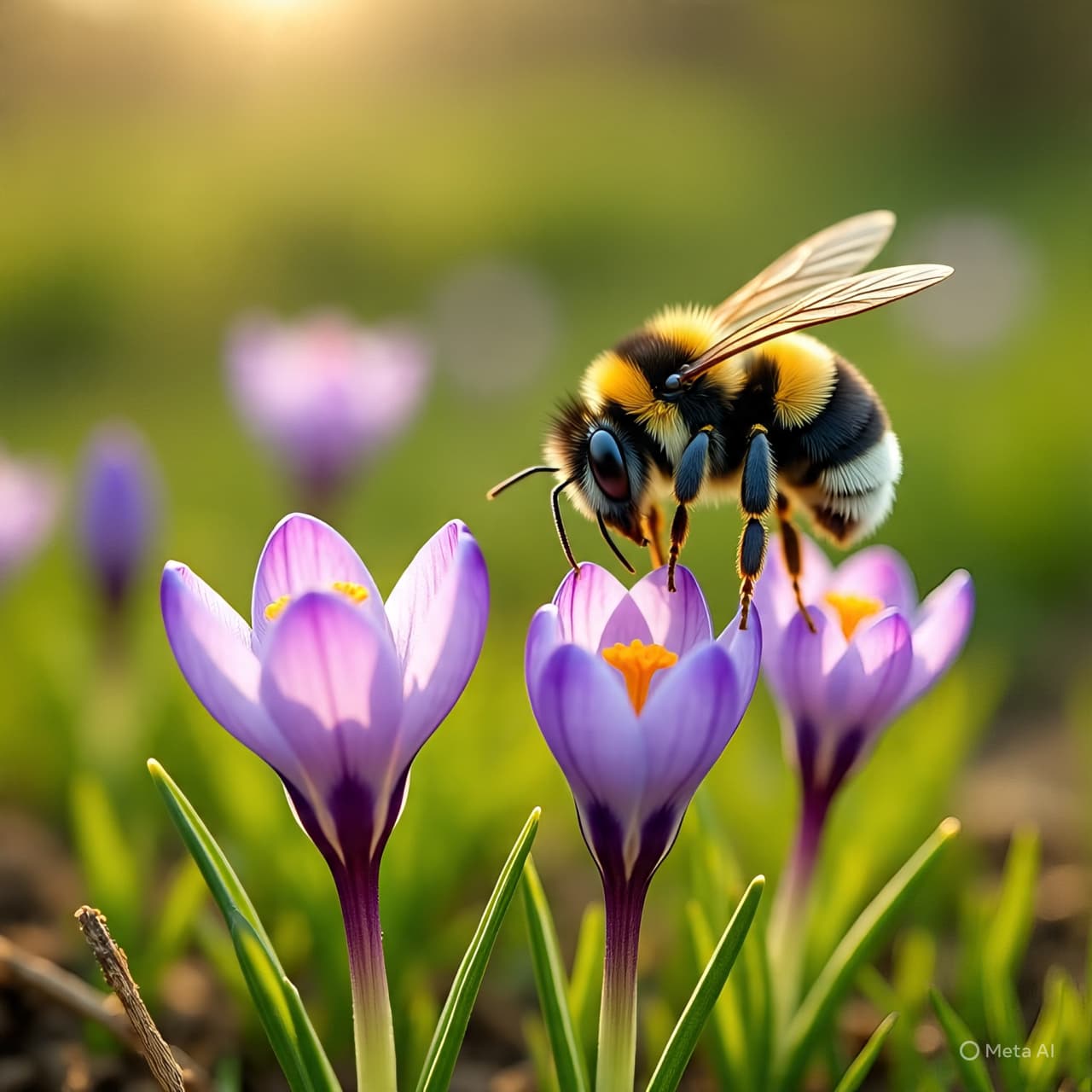
Their hunger is not casual. It is biological necessity. After months in torpor, surviving on stored fat reserves, newly emerged queens must refuel immediately to power flight and begin establishing a colony. Early blossoms become lifelines — willow catkins, crocuses, flowering currants — each offering the sugars and proteins required to start the season’s first brood.
Unlike many native bumblebees that prefer underground nests, the tree bumblebee favors elevated spaces. It is known for nesting in bird boxes, roof eaves, and even wall cavities — an adaptability that has helped it expand its range across parts of Europe in recent decades. Its ginger thorax, black abdomen, and distinctive white tail make it easy to spot against pale spring skies.
Being first has its advantages. Early emergence means less competition for nectar and nesting sites. But it also carries risk. Sudden cold snaps, prolonged rain, or a lack of early-flowering plants can prove fatal for solitary queens who have yet to establish workers to share the burden.
Ecologists note that pollinators like the tree bumblebee play a disproportionately large role in spring ecosystems. As they move from bloom to bloom, they trigger the reproductive cycles of fruit trees, shrubs, and wildflowers. Their buzz — low and purposeful — is more than background sound; it is an ecological signal that winter’s dormancy is ending.
Urban gardens have become particularly important for early pollinators. Flowering plants in parks, window boxes, and allotments can offer critical nourishment in landscapes otherwise dominated by hard surfaces. Even small patches of pesticide-free flowers can make a measurable difference for emerging queens.
Public affection for the species has grown alongside awareness of pollinator decline. While the tree bumblebee itself is not currently considered endangered, broader insect population trends remain a concern across Europe and beyond. Habitat loss, climate shifts, and chemical exposure continue to shape pollinator survival in complex ways.
Yet on the first mild days of the year, such anxieties momentarily soften. A single queen zigzagging between blossoms feels like a quiet reassurance. She is not simply foraging; she is founding a future colony of dozens, perhaps hundreds, of workers who will sustain the season’s blooms.
Spring does not begin with a date on a calendar. It begins with movement — with wings testing cold air, with hunger turning into action. The tree bumblebee’s return is modest but meaningful, a reminder that even after the longest winters, life resumes its work.
And somewhere in a sheltered hollow, another queen is waking.
Published by Banx Network. This article is part of the Banx decentralized media programme, powered by the BXE token on the XRP Ledger.