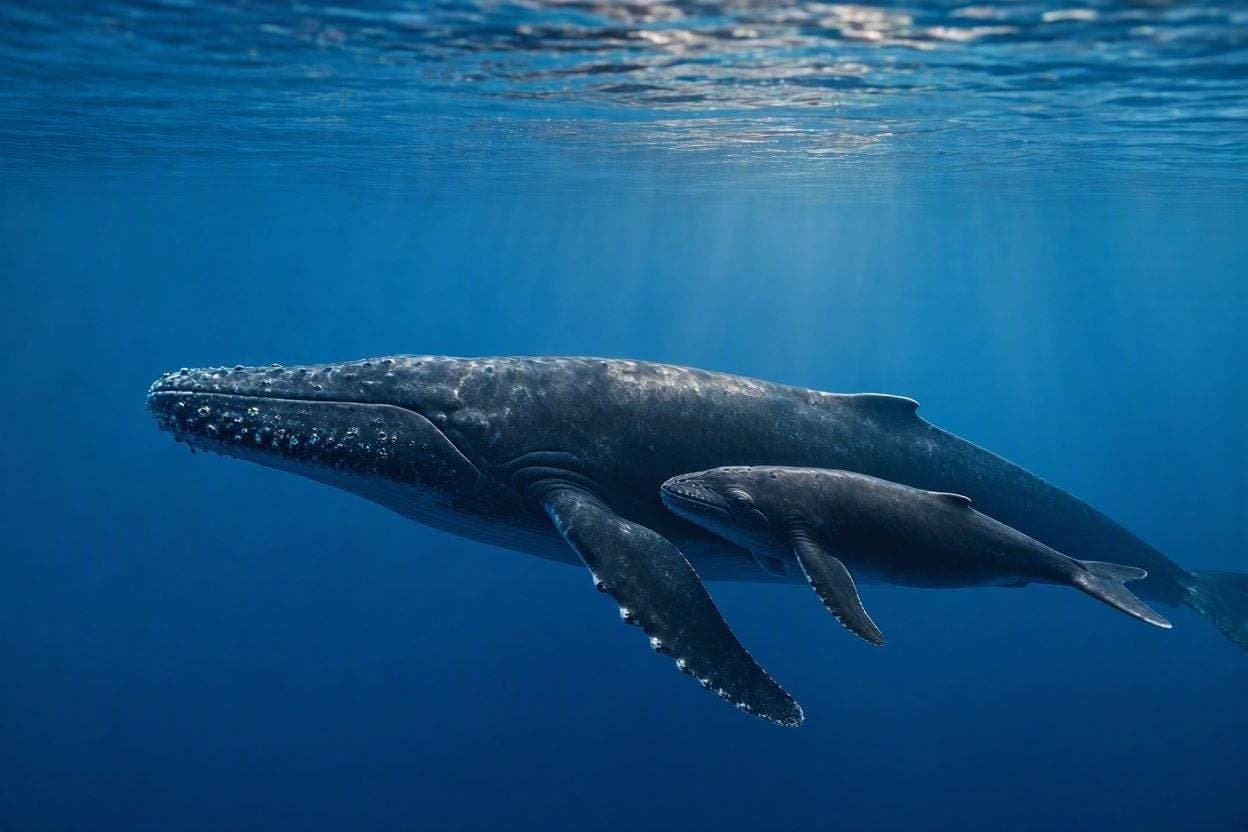
The ocean is a realm of mysteries, hiding its most intimate moments beneath layers of blue. Occasionally, however, technology grants us a glimpse into these hidden wonders. Off the coast of Australia, a drone captured footage of a humpback whale giving birth, a rare and breathtaking event recorded from above for the first time. This aerial perspective offers a unique view of the miracle of life in the marine world, revealing the gentle power of nature. It is a moment of scientific significance and profound beauty, reminding us of the majesty that swims in our waters.
The footage was captured by researchers monitoring whale migrations along the eastern seaboard. Humpback whales travel thousands of kilometers from Antarctic feeding grounds to warmer tropical waters to breed and calve. Witnessing a birth in the wild is exceptionally rare, as mothers often seek secluded areas to protect their vulnerable newborns. The drone’s ability to hover quietly above the surface allowed observers to capture the event without disturbing the animals, providing invaluable data on birthing behavior.
In the video, the mother whale can be seen assisting her calf as it emerges into the world. The newborn, still wet and dark, takes its first breaths and begins to swim alongside its mother. The bond between them is immediate and instinctive, crucial for the calf’s survival in the vast ocean. The footage shows the mother guiding the young whale to the surface, teaching it the essential skill of breathing air.
Scientists emphasize the importance of such observations for understanding whale population health. Successful births are indicators of a recovering species, following decades of conservation efforts that banned commercial whaling. Humpback populations in Australia have shown remarkable resilience, growing steadily in recent years. This sighting adds to the growing body of evidence that protective measures are working.
The use of drones in marine research has revolutionized data collection. Traditional boat-based observations can be intrusive and limited in scope. Drones offer a non-invasive way to study behavior, health, and social interactions from a safe distance. They allow researchers to capture high-resolution images and videos that would otherwise be impossible to obtain. This technology opens new avenues for conservation science.
Public reaction to the footage has been overwhelmingly positive, sparking interest in marine conservation. Sharing these moments helps build a connection between people and the ocean, fostering a sense of stewardship. When people see the vulnerability and beauty of wildlife, they are more likely to support efforts to protect it. Education through visualization is a powerful tool.
The drone footage of a humpback whale birth off Australia is a landmark achievement in marine science. It provides rare insights into whale biology and highlights the success of conservation efforts. As we continue to explore the oceans with new technologies, we gain a deeper appreciation for the life they sustain.
AI Image Disclaimer: The images provided are AI-generated to visually represent the scientific and natural aspects of the story.
Sources: National Geographic ABC News Australia Marine Mammal Science Journal
Published by Banx Network. This article is part of the Banx decentralized media programme, powered by the BXE token on the XRP Ledger.