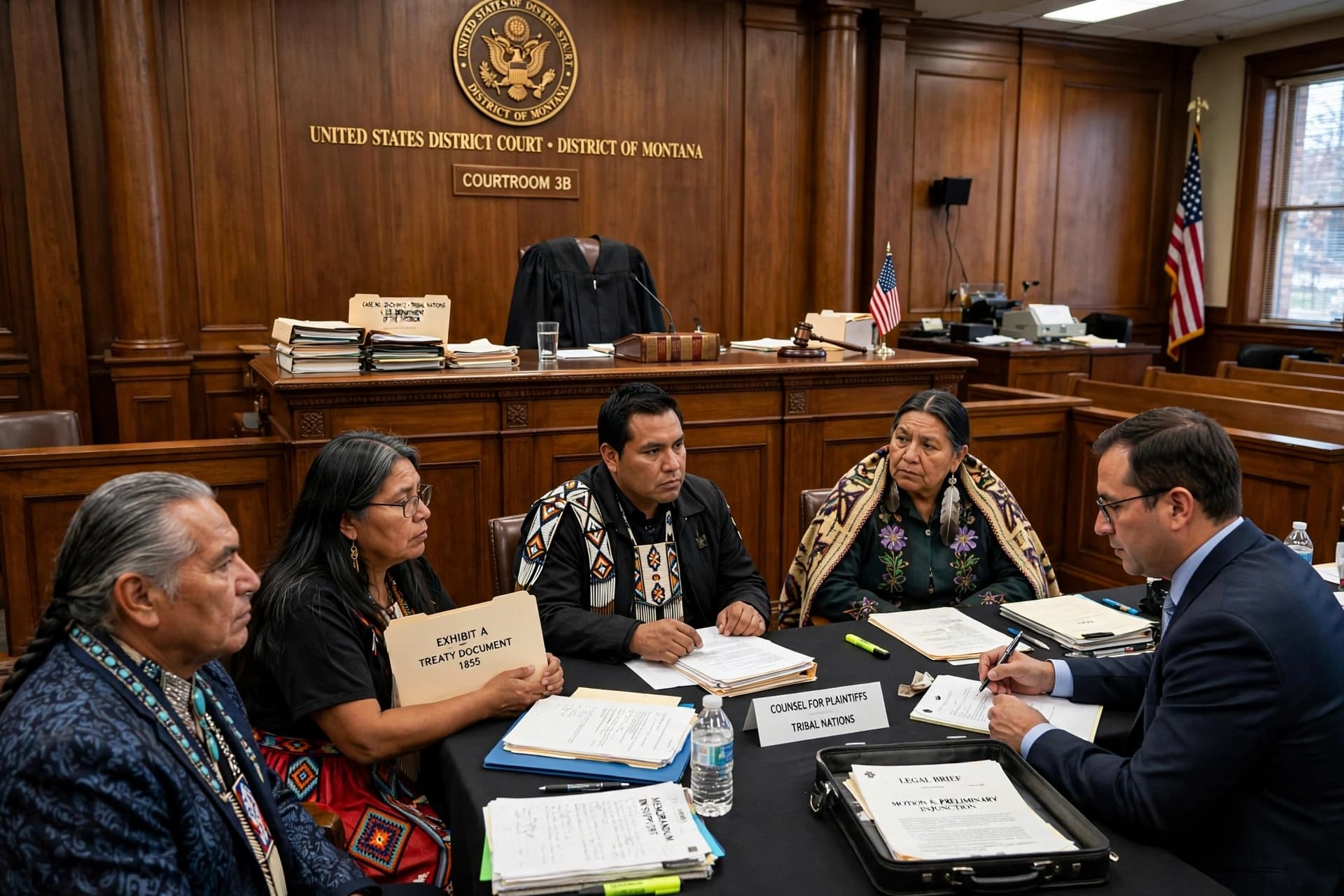
There is a particular tension that arises when a project is designated as being in the national interest—a tension between the urgency of the designation and the right of those most directly affected to be heard, to question, and to seek review. In Alberta, that tension has now taken the form of a legal challenge. Cold Lake First Nations has filed for a judicial review of the federal government's decision to designate the Pacific Link pipeline as a project of national interest under the Building Canada Act, arguing that the designation was made without adequate consultation and that it undermines the nation's treaty rights and its ability to protect its lands and waters.
The Pacific Link pipeline, proposed by Enbridge and supported by the Alberta and federal governments, would carry one million barrels of oil per day from Bruderheim, Alberta, to the Roberts Bank terminal in Delta, British Columbia. The project has been designated as a project of national interest, which puts it on an expedited path for regulatory approval and allows the federal government to impose timelines on the review process. The designation was announced in September, following three months of consultations with more than 130 Indigenous communities.
Cold Lake First Nations, however, says it was not adequately consulted. In its application for judicial review, the First Nation argues that the Crown's consultation was insufficient, that the project's impacts on its treaty rights were not properly assessed, and that the designation effectively predetermines the outcome of the regulatory process. The First Nation is seeking to have the designation quashed, arguing that it violates the Crown's duty to consult and accommodate.
The case is part of a broader pattern of Indigenous opposition to major resource projects in Canada. First Nations across the country have challenged pipeline proposals, arguing that their rights are not being respected and that the environmental risks are too great. The Pacific Link project has been supported by the federal government as part of its strategy to diversify Canada's energy markets and reduce reliance on the United States, but it has faced opposition from environmental groups and some Indigenous communities.
The judicial review will be heard in Federal Court. The federal government has said it is confident in its consultation process, and that the designation is necessary to move the project forward. Cold Lake First Nations says it is not opposed to development, but that it must be done in a way that respects its rights and protects its lands. The case will determine whether the government's consultation was adequate, and whether the designation can stand. The pipeline, and the future of Canadian energy exports, may depend on the answer.
AI Image Disclaimer: The images accompanying this article were generated by artificial intelligence and are for illustrative purposes only.
Sources: CBC News, The Canadian Press, Cold Lake First Nations
Published by Banx Network. This article is part of the Banx decentralized media programme, powered by the BXE token on the XRP Ledger.