

Key Highlights
- Incident Overview:A helicopter crash in Utah and a bulldozer operator's death in Oregon highlight the dangers of wildfire suppression.
- Fatalities:The incidents occurred amid extreme weather conditions affecting firefighting efforts across the western U.S.
- Investigations:The NTSB and FAA are investigating the helicopter crash, while fire conditions remain critical in Oregon.
RICHFIELD, Utah — Extreme heat, erratic winds, and dry timber continue to strain wildfire operations across the western United States, culminating in a series of tragic incidents in Utah and Oregon. These events underscore the perilous conditions faced by firefighters as they battle raging blazes.
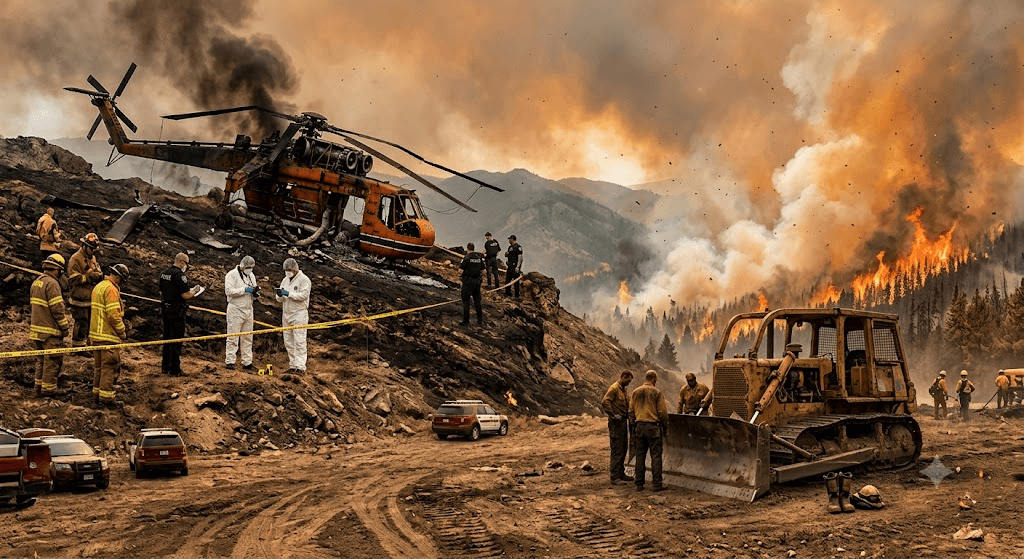
In central Utah, a heavy-lift Sikorsky S-64 Skycrane carrying two crew members crashed while suppressing a lightning-caused wildfire in steep terrain near Richfield. This incident is part of a broader struggle against wildfires that have been exacerbated by severe weather conditions. Meanwhile, in south-central Oregon, a 47-year-old bulldozer operator tragically lost his life after being trapped by a fast-moving blaze.
The Utah incident involved the Sikorsky S-64 helicopter—one of seven aircraft deployed to combat a massive fire burning across the Fishlake National Forest near Kanosh. According to officials with the Great Basin Incident Management Team, the aircraft went down in steep, rugged terrain, igniting a secondary fire upon impact. Emergency crews faced intense flames and extreme ground conditions, which delayed their response to the crash site on Friday.
Sevier County Sheriff Nathan Curtis commented on the situation, stating, "We didn't want to put responders at bigger risk. We'll get them in there as soon as we can." This highlights the ongoing challenges faced by emergency personnel in accessing dangerous areas during wildfire operations.
The National Transportation Safety Board (NTSB) and the Federal Aviation Administration (FAA) have launched investigations into the cause of the helicopter crash. The findings from these investigations will be crucial in understanding the circumstances that led to this tragic event and in preventing future occurrences.
In south-central Oregon, the Wrights Spring fire grew with unexpected speed east of Chiloquin. Jason Ensign, 47, was operating a bulldozer for a local timber company to construct fire lines when erratic flame behavior suddenly cut off his escape route. The sheriff's department confirmed that Ensign succumbed to the fire on Thursday, marking a devastating loss for his family and colleagues.
As of Friday, the uncontained Wrights Spring blaze had charred nearly 14 square miles (36 square kilometers) of brush and timber under severe Red Flag weather conditions. Fire crews throughout the region are grappling with historic dryness, high temperatures, and sudden thunderstorms that complicate containment efforts. With over 600 personnel battling blazes in central Utah alone, officials continue to stress extreme caution as crews work under hostile environmental conditions.
Federal and state fire agencies have expressed deep condolences to the families and colleagues affected by the recent tragedies, emphasizing the heavy toll the grueling wildfire season continues to take on emergency personnel. Officials reaffirmed their commitment to safety, promising to implement any necessary protocol updates as aviation and workplace safety investigators complete their formal reviews.
The ongoing wildfire season serves as a stark reminder of the risks faced by those on the front lines of firefighting. As conditions remain volatile, the safety of personnel remains a top priority for agencies involved in wildfire suppression efforts.
Published by Banx Network. This article is part of the Banx decentralized media programme, powered by the BXE token on the XRP Ledger.




