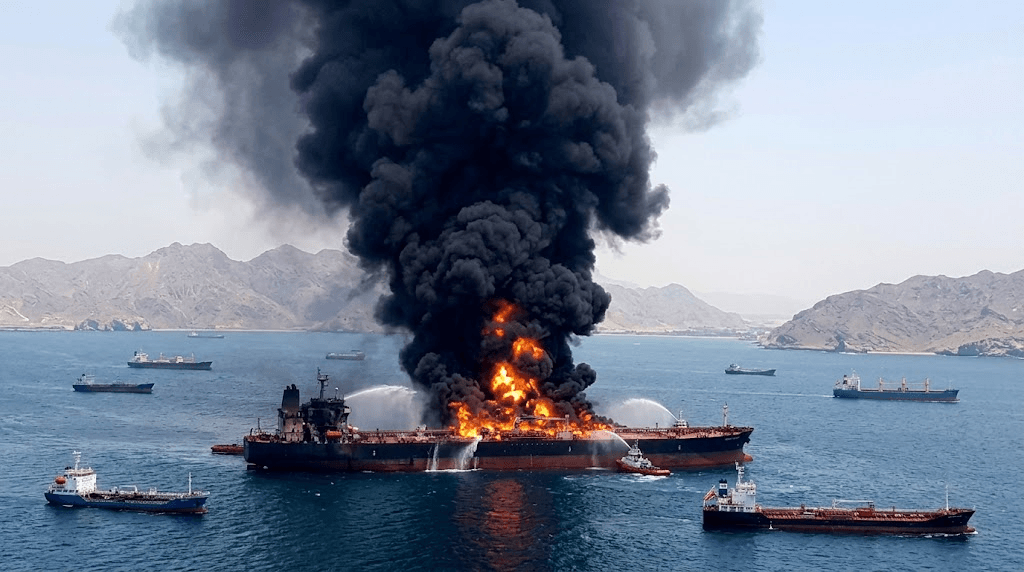
STRAIT OF HORMUZ — Tensions in the world’s most critical maritime chokepoint reached a boiling point overnight as three commercial tankers erupted into flames following naval mine strikes in the western sector of the Strait of Hormuz.
The Islamic Revolutionary Guard Corps (IRGC) Navy claimed responsibility for laying the naval mines, stating the vessels were targeted after navigating unauthorized maritime routes and ignoring explicit regional warnings. The strikes mark one of the most severe operational escalations in the waterway to date, triggering immediate alarm across global energy markets and international shipping corridors.
According to statements released by Iran’s state media, the explosions occurred in rapid succession during nighttime transit through the narrow passage. The vessels, including crude oil supertankers, were reportedly running without AIS or radar tracking to slip through the contested waters undetected.
Emergency distress signals sent shipping traffic into chaos as thick black smoke plumes drifted across the western approach to the Gulf. Initial reporting indicates hull breaches below the waterline on all three vessels, sparking rapid fires along the cargo decks and midship engine housing.
"Three violating ships last night caught fire after hitting a naval mine in the west of the Strait of Hormuz," read a direct operational statement issued by the IRGC, warning that any vessel operating outside authorized transit corridors would face decisive interdiction.
The strikes come amidst a widening naval standoff. US Naval Forces Central Command (CENTCOM) and regional coalition task forces have been increasing naval escorts along Oman's coast to protect merchant shipping. However, asymmetric tactics—specifically naval mining and unannounced interdictions—have made securing the entire 21-mile-wide passage increasingly difficult.
While emergency tugs and firefighting vessels responded to contain the blazes and extract surviving crew members, maritime security firms have raised risk levels to critical. Global crude oil futures spiked dramatically in early trading following news of the strikes, reflecting fears of sustained disruptions to a corridor responsible for carrying nearly 20% of global petroleum supplies.
Published by Banx Network. This article is part of the Banx decentralized media programme, powered by the BXE token on the XRP Ledger.