There is a particular paradox in the study of fire—that the most destructive force in a forest can also create its own weather, spinning clouds and lightning from the heat and smoke it produces. For decades, scientists have observed these phenomena from a distance: pyrocumulonimbus clouds, or "fire clouds," that rise from the intense heat of wildfires and inject smoke and particles high into the stratosphere. But observing from a distance has limits. To understand what these clouds are and what they do, you have to fly through them. That is exactly what a NASA project has been doing.
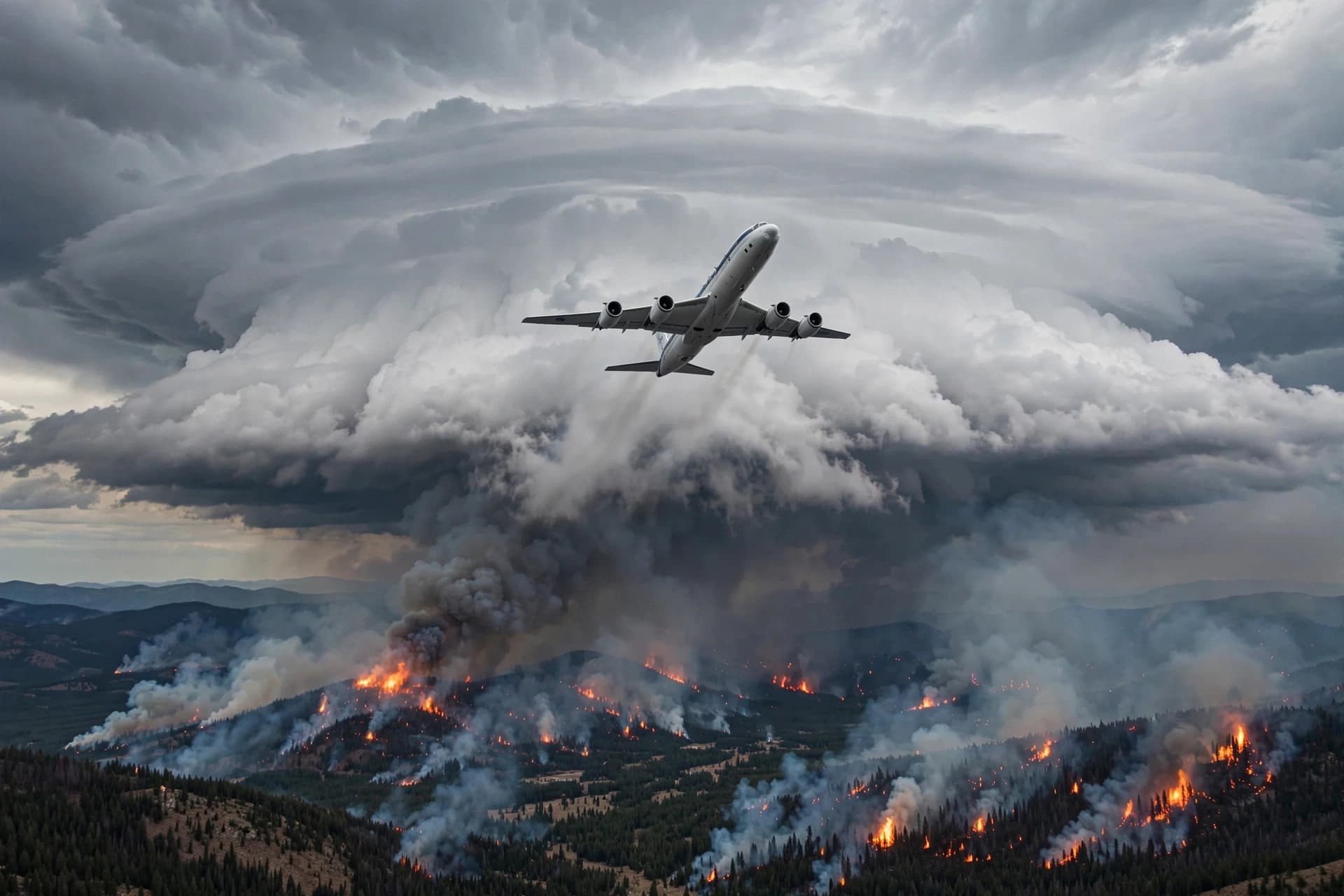
The project, known as the Fire Influence on Regional to Global Environments and Air Quality mission, or FIREX-AQ, has been using aircraft to sample the emissions from wildfires and the clouds they generate. In 2019, NASA flew a DC-8 research aircraft directly into a pyrocumulonimbus cloud formed by the Williams Flats Fire in Washington state. The flight was the first of its kind, and it revealed a different kind of fire cloud than scientists had seen before—one that stayed over the fire for hours, churning like a thunderstorm, rather than rising quickly and dissipating .
What makes pyrocumulonimbus clouds significant is their ability to inject smoke and aerosols into the stratosphere, where they can persist for months and travel thousands of kilometers. The particles absorb sunlight and warm the atmosphere, and they can affect the chemistry of the stratosphere, including the ozone layer. The FIREX-AQ mission, a collaboration between NASA and NOAA, used the DC-8 and a smaller aircraft to sample both the smoke near the fire and the cloud itself. Instruments aboard the aircraft measured gases, aerosols, and cloud microphysics, while ground-based radar and satellite observations provided broader context .
The findings have helped scientists understand how fire clouds form and why some fires produce them while others do not. The key factor, it appears, is the amount of heat and moisture the fire generates. When a fire burns intensely enough, it can create its own updraft, lifting smoke and water vapor high into the atmosphere. If conditions are right, the moisture condenses into cloud droplets, releasing latent heat and further fueling the updraft. The result is a self-sustaining storm that can produce lightning, hail, and even tornadoes .
The FIREX-AQ data is still being analyzed, but the early results have already changed how scientists model the effects of wildfires on climate and air quality. The smoke that reaches the stratosphere has a longer lifetime and a different impact than smoke that stays in the troposphere. As wildfires become more frequent and intense in a warming climate, understanding these high-altitude emissions becomes increasingly important. The project's flights through fire clouds were not just acts of scientific daring—they were necessary steps toward understanding a phenomenon that is becoming more common, and more consequential, with each passing fire season.
AI Image Disclaimer: The images accompanying this article were generated by artificial intelligence and are for illustrative purposes only.
Sources: NASA, NOAA, EurekAlert!, AGU
Published by Banx Network. This article is part of the Banx decentralized media programme, powered by the BXE token on the XRP Ledger.