
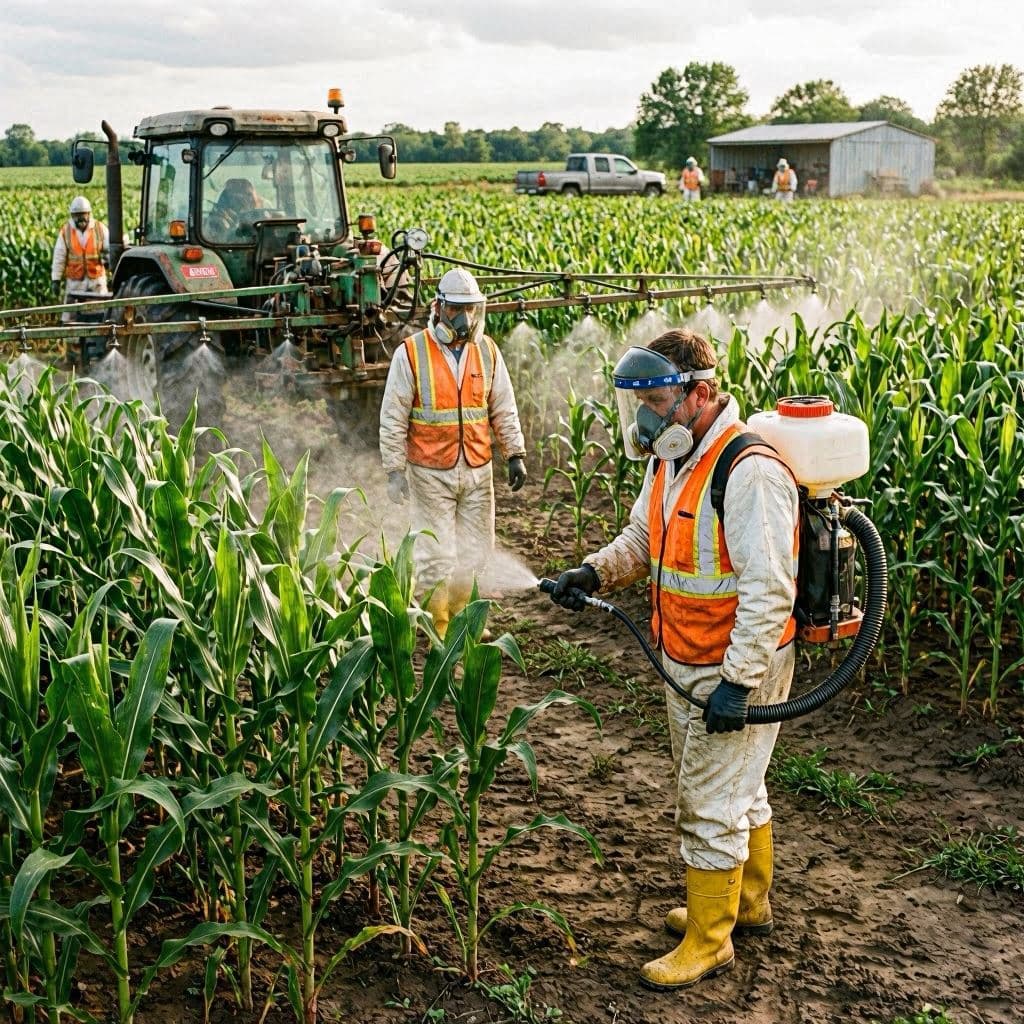
Across agricultural landscapes, pesticides have long occupied a complicated place in modern life. They help protect crops, support food production, and sustain agricultural economies. Yet, like many tools created to solve one challenge, their use continues to raise questions about potential consequences for human health.
A recent large-scale scientific study has reported an association between long-term exposure to certain pesticides and an increased risk of developing various forms of cancer. Researchers analyzed extensive environmental and health data to better understand how prolonged exposure may affect populations living in agricultural regions.
The findings suggest that individuals residing in areas with intensive pesticide application could face elevated risks for specific cancers compared with populations experiencing lower levels of exposure. Scientists emphasized that risk levels vary depending on numerous factors, including the type of pesticide, duration of exposure, and individual health characteristics.
Researchers noted that the study does not necessarily establish direct causation for every observed outcome. Instead, it identifies statistically significant associations that warrant additional investigation and continued public health monitoring. Such distinctions are important in scientific research, where complex environmental interactions rarely produce simple explanations.
Public health experts have long examined the relationship between chemical exposure and chronic disease. Previous studies have also explored links between pesticides and conditions ranging from neurological disorders to respiratory illnesses, although findings have differed depending on methodology and population groups.
Agricultural organizations stress that pesticides remain important tools for maintaining crop yields and food security. Industry representatives frequently point to regulatory frameworks designed to ensure that approved products meet established safety standards when used according to official guidelines.
Scientists involved in the research recommend continued efforts to improve exposure monitoring, strengthen protective measures for agricultural workers, and encourage further investigation into alternative farming practices that may reduce reliance on chemical treatments.
As scientific understanding evolves, policymakers, farmers, researchers, and public health officials are expected to continue evaluating how best to balance agricultural productivity with long-term human and environmental health considerations.
AI Image Disclaimer: The accompanying visuals were generated using artificial intelligence to illustrate agricultural and scientific settings.
Sources: ScienceDaily, National Cancer Institute, Reuters, Environmental Health Perspectives, World Health Organization
Note: This article was published on BanxChange.com and is powered by the BXE Token on the XRP Ledger. For the latest articles and news, please visit BanxChange.com