
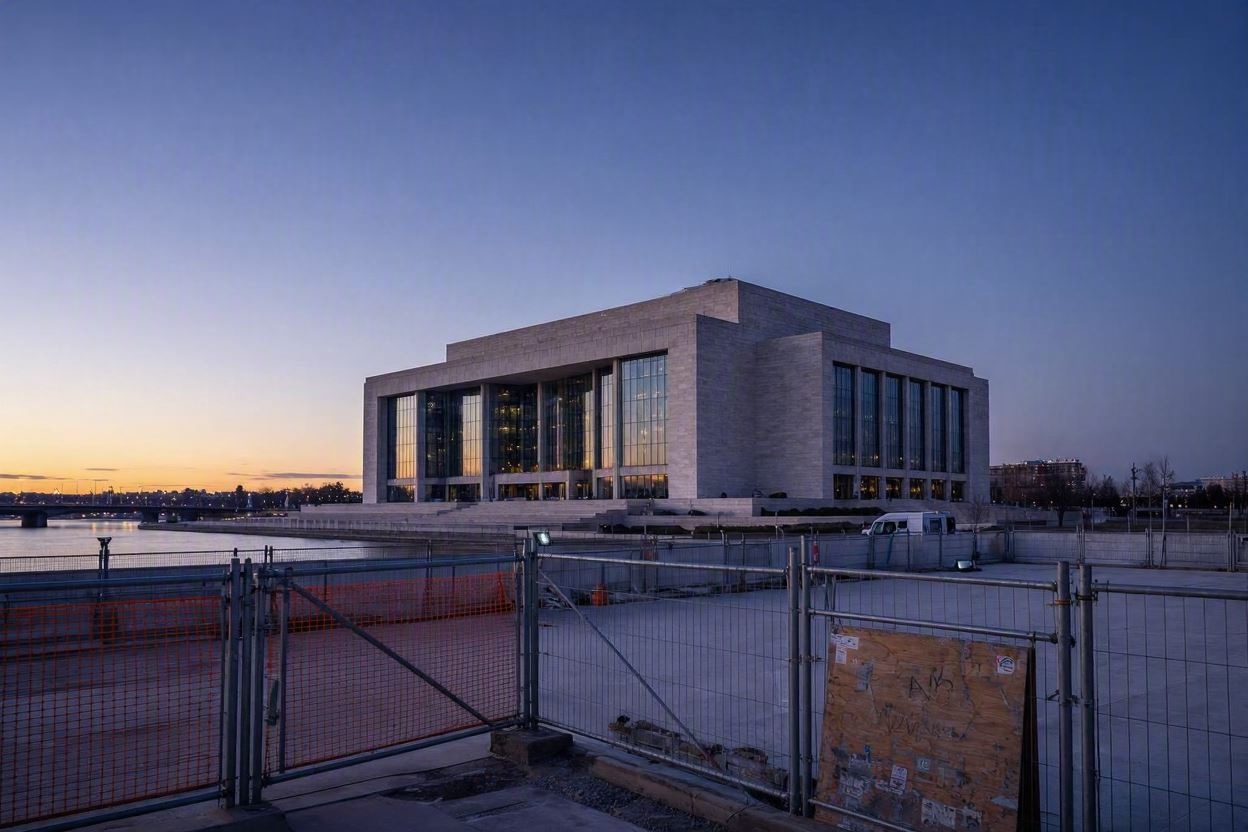
On the banks of the Potomac River, the John F. Kennedy Center for the Performing Arts stands as a beacon of culture and diplomacy. Its white marble façade has hosted countless performances, welcoming dignitaries and artists from around the world. Yet, recent weeks have seen a change in its appearance: temporary fencing now surrounds parts of the iconic structure. For preservationists and arts advocates, this visual shift has sparked anxiety, fueled by rumors and legal threats suggesting that the building could face demolition if renovation plans are blocked.
The tension stems from a ongoing dispute between the federal government and cultural heritage groups. The Trump administration has proposed significant renovations to the center, including changes to its exterior that critics argue would alter its historic character. When a federal judge initially blocked some of these modifications, citing violations of historic preservation laws, administration officials responded with stark warnings. In court filings, they suggested that without the ability to proceed with their preferred plans, the building might become unsafe and potentially require demolition.
This rhetoric has alarmed activists who view the Kennedy Center as a protected landmark. The erection of fencing, ostensibly for safety or preparatory work, has been interpreted by some as a precursor to more drastic action. Groups like the DC Preservation League have filed lawsuits to prevent any unauthorized construction or demolition, arguing that the center is a national treasure that must be preserved according to established legal frameworks.
For the artistic community, the uncertainty is deeply unsettling. The Kennedy Center is not just a building; it is a home for orchestras, ballets, and theater companies that rely on its stability. The threat of demolition, even if rhetorical, casts a shadow over future programming and fundraising. Artists and patrons alike are watching closely, hoping that dialogue and legal processes will prevail over confrontation.
The federal government maintains that the renovations are necessary for safety and modernization. They argue that the current structure has deficiencies that need addressing to ensure its longevity. However, the method and scope of these changes remain contentious. Preservationists insist that there are ways to upgrade the facility without compromising its architectural integrity, urging a collaborative approach rather than a coercive one.
Public opinion has largely sided with the preservationists, with many expressing outrage at the idea of demolishing such a significant cultural institution. Social media campaigns and petitions have rallied support, highlighting the center’s role in American soft power and cultural identity. The fencing, therefore, has become a symbol of this struggle, a physical manifestation of the tension between progress and preservation.
As legal battles continue, the fate of the Kennedy Center remains in limbo. Courts will need to balance the government’s authority to manage federal properties with the protections afforded by historic preservation laws. The outcome will set a precedent for how other national landmarks are treated in the future, influencing the relationship between state power and cultural heritage.
In the end, the Kennedy Center represents more than just architecture; it is a testament to the enduring value of the arts. Whether through renovation or preservation, the goal should be to ensure that it continues to inspire generations to come. The fencing may be temporary, but the commitment to protecting our cultural legacy must be permanent.
AI Image Disclaimer: The images accompanying this article are AI-generated artistic interpretations of the Kennedy Center and protest scenes, not actual photographs of the current fencing or specific legal proceedings.
Published by Banx Network. This article is part of the Banx decentralized media programme, powered by the BXE token on the XRP Ledger.