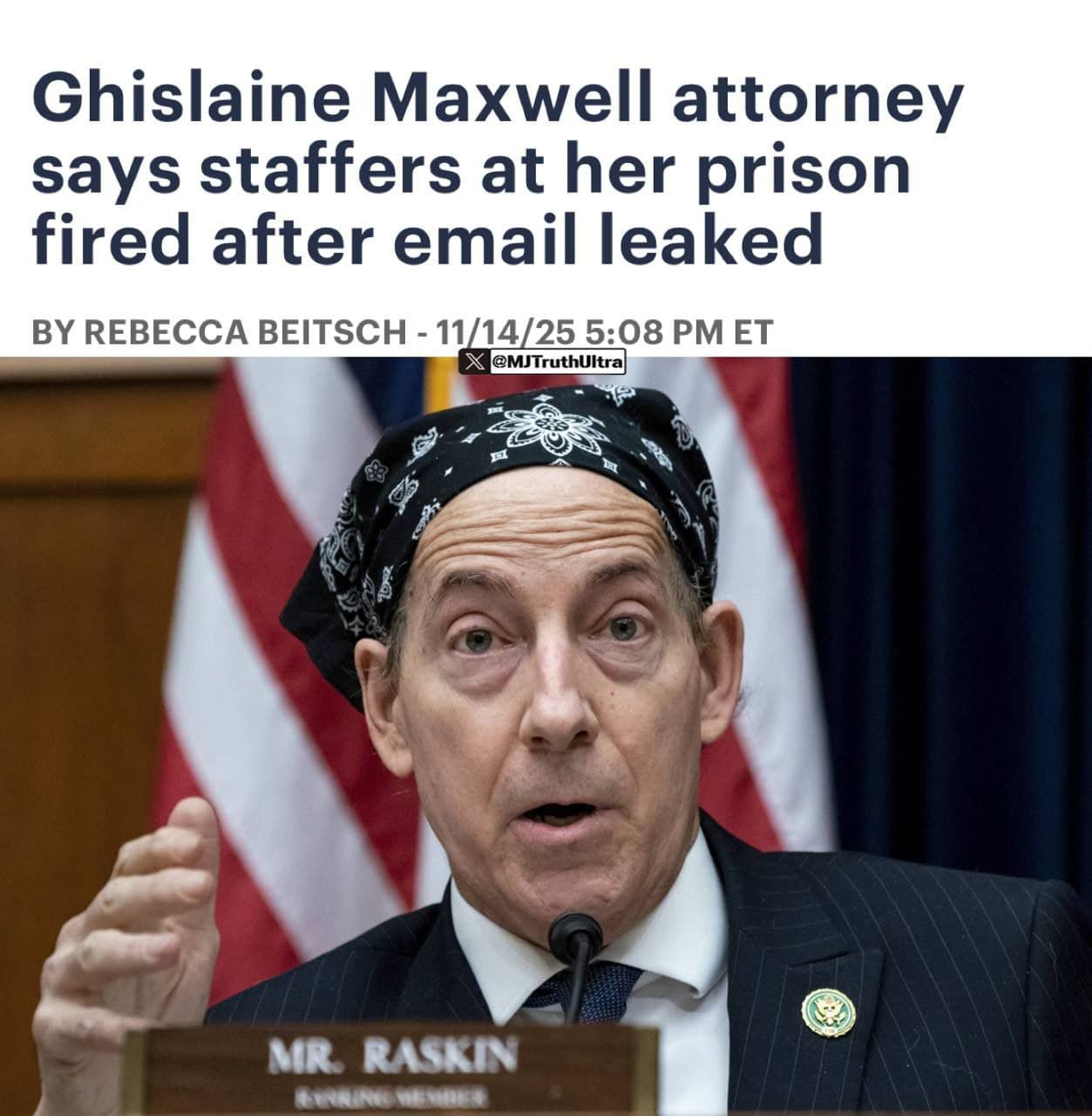
Reports have emerged indicating that staff members at the federal facility housing Ghislaine Maxwell, the former associate of Jeffrey Epstein, engaged in unauthorized access of her private attorney-client emails. This breach of protocol raises significant ethical and legal concerns regarding the sanctity of attorney-client privilege, a cornerstone of the legal system designed to ensure confidential communication between clients and their legal representatives.
The leaked emails were reportedly shared with Representative Jamie Raskin, a Democrat from Maryland, who then disclosed this sensitive information to the media. Raskin's actions have fueled accusations that the leak was part of a broader attempt to undermine former President Trump, highlighting the intersection of legal processes and political maneuvers in high-profile cases.
Legal experts are weighing in, emphasizing the potential ramifications of this breach. "Unauthorized access to attorney-client communications is a serious violation that can compromise the integrity of the judicial process," noted one legal analyst. Critics argue that the use of leaked materials for political gain not only jeopardizes the fairness of the legal proceedings but also sets a dangerous precedent for the treatment of inmates in the federal prison system.
As the fallout from this incident develops, calls for accountability are growing louder. Advocates for prisoners' rights are demanding investigations into the actions of prison staff and the implications of using privileged information in political discourse. The situation raises troubling questions about privacy rights and the ethical obligations of those entrusted with managing the corrections system.
The breach comes amid heightened scrutiny of both political figures and the justice system, as public trust wavers in the transparency and fairness of legal proceedings. The ramifications of this incident could resonate far beyond Maxwell's case, potentially affecting how privileged communications are safeguarded in the future.
Published by Banx Network. This article is part of the Banx decentralized media programme, powered by the BXE token on the XRP Ledger.