

Key Highlights
- Ruling Date:A federal judge ruled on April 9, 2026, against the Pentagon's new press restrictions.
- Background:The original policy was implemented in October 2025 and deemed unconstitutional.
- Implications:The ruling is seen as a significant victory for press freedom amid ongoing tensions.
[Background of the Controversy] The recent ruling by Judge Friedman comes just weeks after he blocked an initial Pentagon policy on March 20, 2026, which had been criticized for its unconstitutional nature. This decision followed a lawsuit filed by The New York Times, leading to the immediate restoration of press credentials for seven of its journalists. The original policy, enacted in October 2025 under Defense Secretary Pete Hegseth, imposed stringent restrictions on journalists, threatening their accreditation if they sought unauthorized information or published content deemed unfavorable to the Pentagon. The department justified these measures by citing national security concerns.
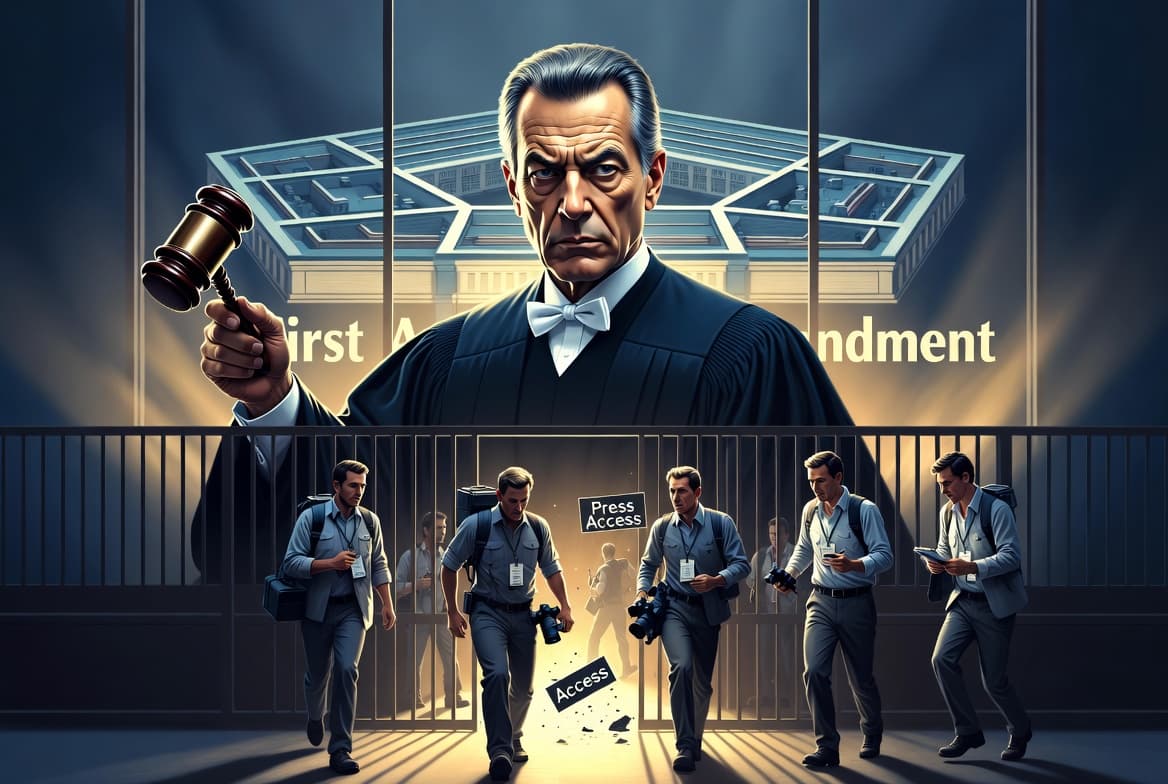
[The April 9 Ruling] In his ruling on April 9, Judge Friedman reaffirmed his commitment to press freedom, stating that the new policy introduced by the Pentagon was merely a rebranding of the previous unconstitutional measures. He emphasized that the department could not simply reinstate an illegal policy under the guise of a new action. The judge's decision mandated the full restoration of journalists' access, reinforcing the notion that press freedom is a cornerstone of democracy. “The suppression of political speech is the hallmark of an autocracy, not a democracy,” he stated, highlighting the importance of an independent press.
[Reactions and Implications] The Pentagon's response to the ruling has been to indicate plans to appeal, while a spokesperson for The New York Times hailed the decision as a victory for press freedom. This case underscores the ongoing tensions between the Trump administration and the media, with press freedom organizations, such as the Reporters Committee for Freedom of the Press, praising the ruling as a crucial defense of journalistic rights. Pentagon officials argue that the rules are necessary to protect sensitive information, especially in light of recent U.S. military operations in Venezuela and Iran.
[Continued Legal Battle] Accredited journalists covering the Pentagon have expressed concerns that these restrictions severely hinder their ability to inform the public independently. The legal battle is expected to continue, with an appeal to a higher court anticipated. The outcome of this case could have significant implications for media access to federal institutions across the United States, potentially setting a precedent for how government agencies interact with the press in the future.
[Conclusion] As the legal proceedings unfold, the balance between national security and press freedom remains a contentious issue. The April 9 ruling serves as a reminder of the judiciary's role in safeguarding democratic principles, particularly the vital function of a free press in holding power accountable.
Published by Banx Network. This article is part of the Banx decentralized media programme, powered by the BXE token on the XRP Ledger.




