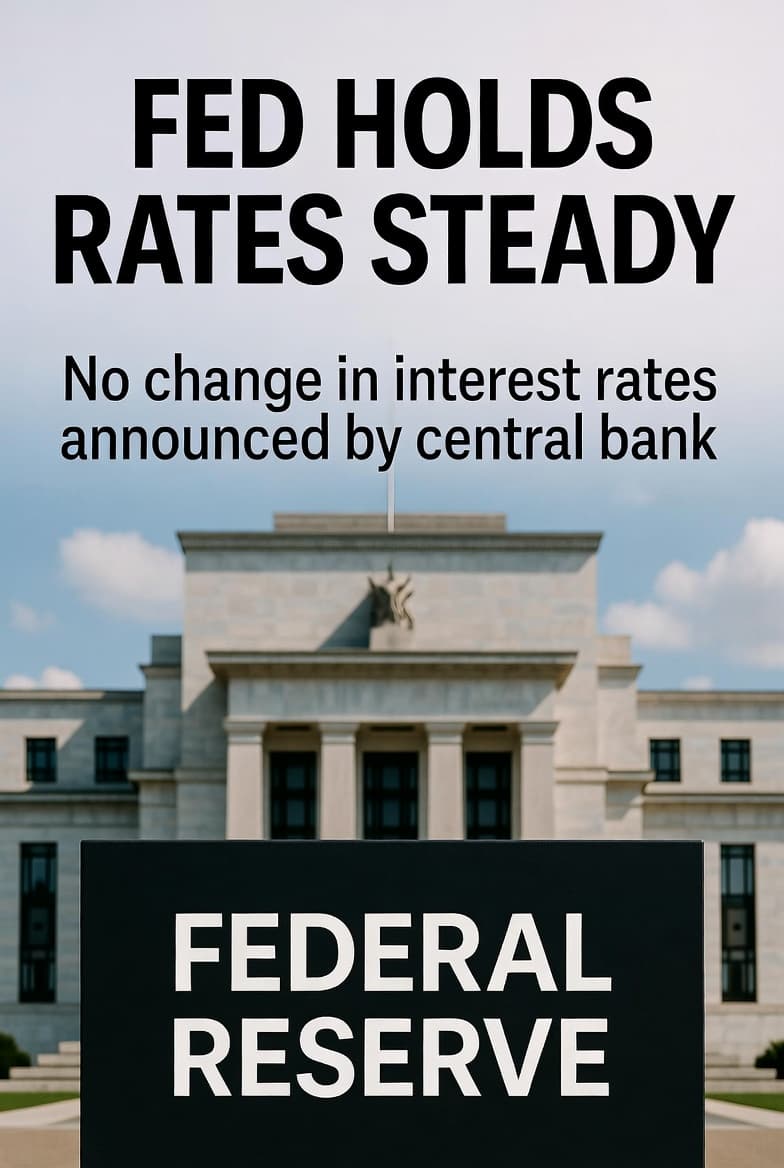
After three consecutive rate cuts late in 2025, the Fed has now pressed pause — not because risks have disappeared, but because policy optionality is shrinking.
🔍 A “Pause” That Isn’t Neutral
While the Fed reiterated that economic growth remains “solid,” the tone of the statement subtly shifted. Inflation is no longer framed as a rapidly easing threat, but as “persistent”, while labor market strength is described with more caution than confidence.
The split vote — with multiple officials pushing for immediate easing — exposes internal pressure to restart the cutting cycle, even as headline inflation refuses to fully cooperate.
Translation for markets: 👉 The Fed wants to cut. 👉 The data won’t let them — yet.
📉 Bearish Signal: Policy Lag Is Catching Up
From a bearish macro perspective, today’s decision highlights a growing risk:
Monetary policy is still restrictive relative to slowing real demand
The cumulative impact of past tightening is only now hitting corporate margins, credit, and employment
The Fed risks cutting too late, not too little
If growth cracks faster than expected, markets may quickly reprice toward aggressive cuts, forcing the Fed into a reactive — rather than proactive — stance.
This is particularly relevant for:
Credit markets
Commercial real estate
Highly leveraged sectors dependent on refinancing
📈 Bullish Signal: Liquidity Is Coming — Just Delayed
On the bullish side, markets are increasingly confident that this pause is temporary.
The internal dissent, combined with political pressure and global easing trends, reinforces a key narrative:
The next meaningful move in U.S. rates is down — not up.
Risk assets are reading today’s decision as:
A green light for duration trades
A medium-term tailwind for equities
A structural bullish setup for crypto and alternative assets once cuts resume
In other words, the Fed didn’t deliver the cut today — but it validated the expectation.
⚖️ Fed Independence Under Stress
Beyond rates, today’s decision lands in a politically charged environment. Public calls for lower rates are growing louder, putting central bank independence under scrutiny.
Jerome Powell’s insistence on “data-dependence” is increasingly interpreted by markets as time-buying, not conviction. The longer inflation hovers above target, the narrower the Fed’s exit becomes.
🧠 Market Takeaway
This was not a “nothing meeting.”
It was a transition moment:
From easing momentum → to strategic hesitation
From confidence → to constraint
From policy control → to data dependency
📌 Bottom line: The Fed held rates steady, but markets heard something louder — pressure is building on both sides of the mandate. Whether the next catalyst is a growth shock or an inflation break, volatility is likely to return, and the next decisive move will carry outsized market impact.
Published by Banx Network. This article is part of the Banx decentralized media programme, powered by the BXE token on the XRP Ledger.