Key Highlights
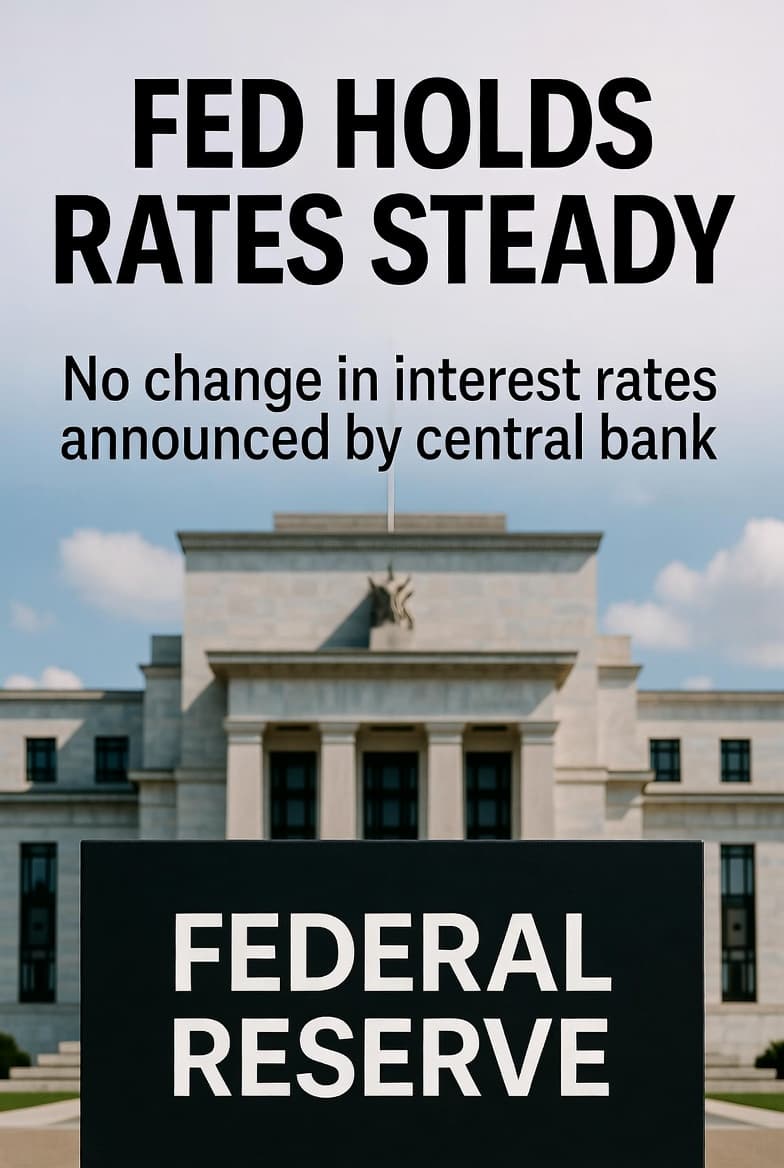
- Fed Decision:The Federal Reserve has decided to hold interest rates steady after three consecutive cuts in late 2025.
- Market Reactions:Internal dissent within the Fed indicates pressure for future rate cuts, despite current economic conditions.
- Economic Context:The decision reflects growing concerns about inflation and its impact on corporate margins and employment.
[Current Economic Landscape] After three consecutive rate cuts late in 2025, the Federal Reserve has opted to pause its monetary policy adjustments. This decision comes not from a sense of stability but rather from a recognition that the risks facing the economy have not dissipated. The Fed's latest statement indicates that while economic growth remains “solid,” the tone has shifted. Inflation is now described as “persistent,” and the strength of the labor market is presented with more caution than confidence.
The split vote among Fed officials, with several advocating for immediate easing, underscores the internal pressures the central bank faces. This dynamic suggests that while the Fed may desire to cut rates, the current economic data does not support such a move at this time. The markets are interpreting this as a signal that the Fed is caught between wanting to stimulate the economy and the reality of stubborn inflation.
[Market Implications] From a bearish perspective, the Fed's decision highlights a growing risk: monetary policy remains restrictive relative to the slowing real demand. The cumulative effects of previous tightening measures are now beginning to impact corporate margins, credit availability, and employment levels. There is a concern that the Fed may cut rates too late, potentially leading to a rapid market adjustment if economic growth falters more than anticipated.
This situation is particularly critical for sectors such as credit markets, commercial real estate, and those heavily reliant on refinancing. If growth slows unexpectedly, markets may quickly adjust their expectations, leading to aggressive rate cuts that could catch the Fed off guard.
[Positive Outlook Amidst Uncertainty] On the bullish side, many market participants believe that this pause is temporary. The internal dissent within the Fed, coupled with increasing political pressure and global trends toward easing, reinforces the narrative that the next significant move in U.S. interest rates will likely be downward rather than upward. Risk assets are interpreting the Fed's decision as a green light for duration trades and a medium-term boost for equities. Furthermore, there is a structural bullish setup for cryptocurrencies and alternative assets once rate cuts resume.
[Political Context] The Fed's decision comes at a time of heightened political scrutiny regarding its independence. Public calls for lower rates are becoming more pronounced, which places additional pressure on the central bank. Jerome Powell's commitment to a “data-dependent” approach is increasingly viewed by markets as a tactic to buy time rather than a firm conviction. As inflation continues to hover above the Fed's target, the options for exiting the current policy stance are narrowing.
[Conclusion] In summary, while the Federal Reserve has held rates steady, the underlying message is one of increasing pressure from both sides of its dual mandate. The next catalyst for change could stem from either a growth shock or a significant inflation shift, suggesting that volatility may return to the markets. The next decisive move by the Fed will likely have a substantial impact on market dynamics moving forward.
Published by Banx Network. This article is part of the Banx decentralized media programme, powered by the BXE token on the XRP Ledger.