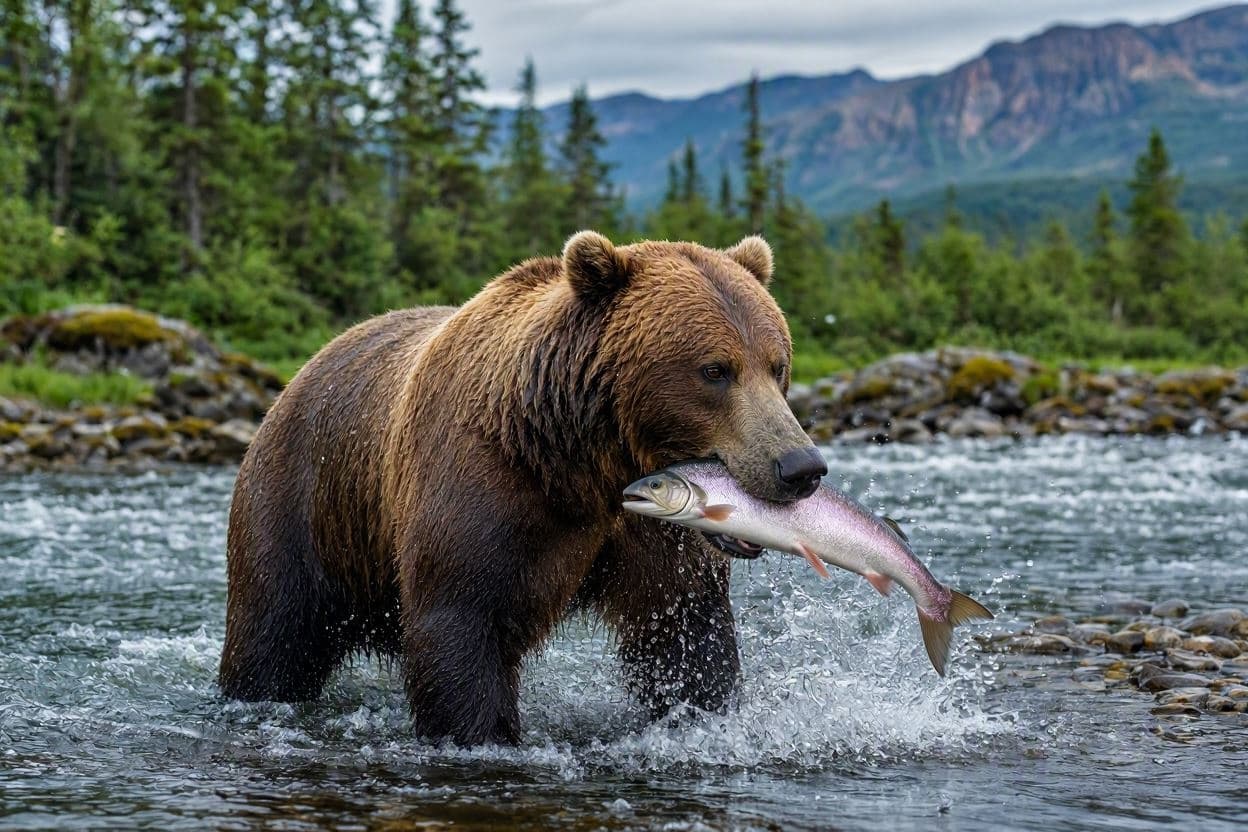
In the rugged wilderness of Alaska, nature puts on a spectacle of survival and abundance each autumn. As salmon run upstream to spawn, brown bears gather along the rivers to feast, preparing for the long winter ahead. This annual ritual has captured the hearts of people worldwide through "Fat Bear Week," a playful yet educational event that celebrates the bears’ impressive weight gain. This year, the competition is bigger than ever, drawing record participation and highlighting the health of Alaska’s ecosystems and the majestic creatures that inhabit them.
Fat Bear Week, organized by Katmai National Park and Preserve, invites the public to vote for their favorite bear based on how much weight they have gained during the salmon season. The event combines conservation education with community engagement, allowing people to connect with wildlife in a positive and meaningful way. This year, the number of participating bears has increased, reflecting a robust population and successful salmon runs. Each bear has its own personality and story, adding charm and character to the competition.
The bears’ ability to gain weight is critical for their survival. During hibernation, they rely on stored fat to sustain them for months without eating. A successful salmon season means healthier bears, higher cub survival rates, and a stronger population overall. By monitoring the bears’ progress, scientists and park rangers can assess the health of the ecosystem and the availability of prey. Fat Bear Week serves as a citizen science tool, raising awareness about these ecological connections.
Social media has played a significant role in the event’s growth, with millions of followers tuning in to watch live cams and share updates. Fans create memes, write poems, and form passionate alliances behind their favorite bears, such as the popular Bear 747 or the mother bear Holly. This digital engagement fosters a sense of global community, uniting people across borders in appreciation of nature. It transforms passive observation into active participation in conservation efforts.
The increase in participants this year also reflects improved monitoring techniques and camera placements in Katmai. Rangers have identified more individual bears, allowing for a more comprehensive competition. This data helps researchers track long-term trends in bear health and behavior, providing valuable insights into the impacts of climate change and habitat preservation. The event is not just fun; it is a vital component of wildlife management.
Critics might argue that anthropomorphizing wild animals trivializes their struggle for survival. However, proponents believe that creating an emotional connection is essential for inspiring conservation action. When people care about individual bears, they are more likely to support policies that protect their habitats and food sources. Fat Bear Week bridges the gap between scientific data and public empathy, making conservation accessible and engaging.
As the voting concludes, the winner is announced, but the real victory lies in the increased awareness and support for bear conservation. The event highlights the importance of preserving wild places and the species that depend on them. It reminds us that nature’s cycles are intricate and fragile, requiring our stewardship and respect.
Fat Bear Week 2026 has set a new record for participation, celebrating the resilience and beauty of Alaska’s brown bears. As the bears enter hibernation, the event leaves a lasting legacy of education and advocacy. By connecting people with wildlife, Fat Bear Week reinforces the importance of protecting natural ecosystems for future generations.
AI Image Disclaimer: Please be aware that images included in this article are AI-generated visualizations created for illustrative purposes and do not depict actual events on the ISS.
Sources: National Park Service Katmai Conservancy BBC News The Guardian
Published by Banx Network. This article is part of the Banx decentralized media programme, powered by the BXE token on the XRP Ledger.