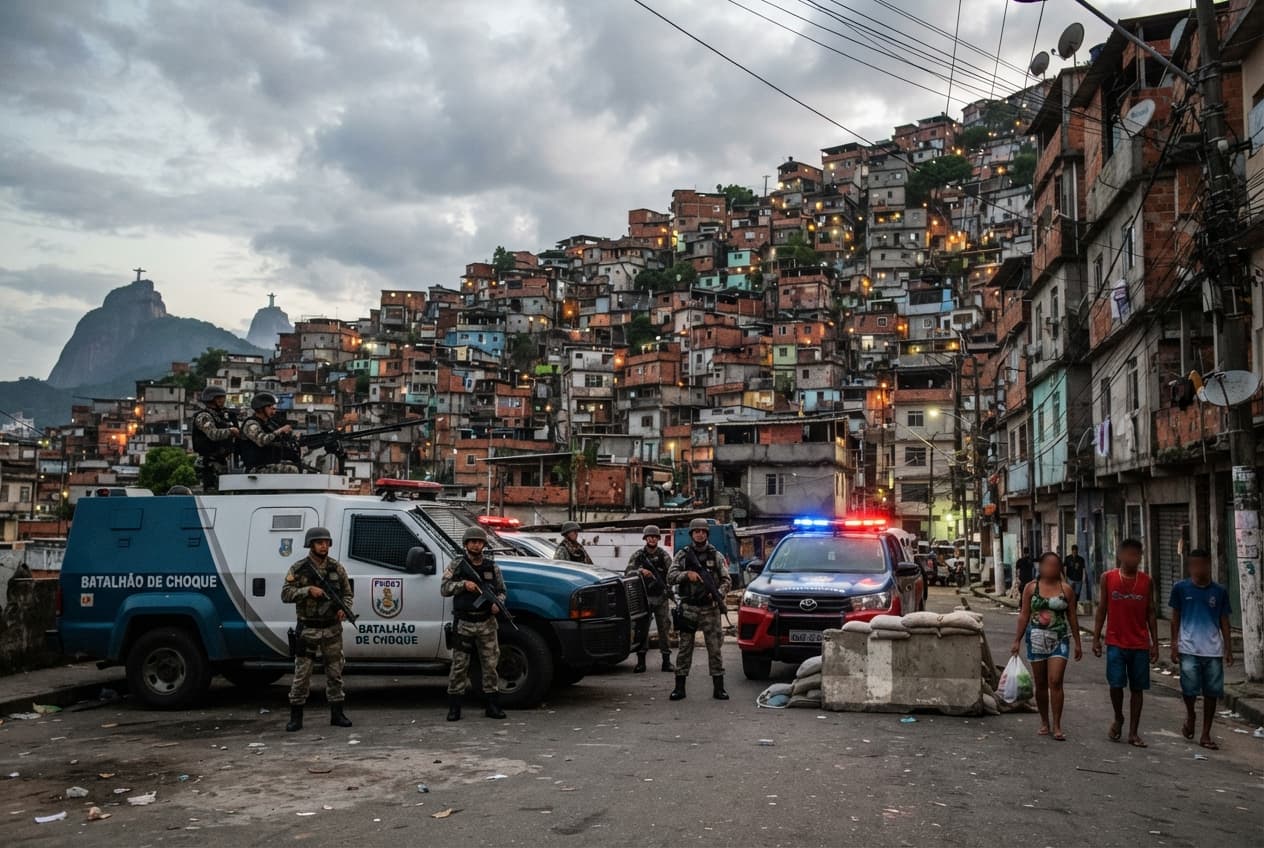
Rio de Janeiro, Brazil—The rat-tat-tat of high-caliber rifles echoed across the densely packed hillside favela at midday. Drug trafficking factions locked in a territorial turf war exchanged relentless gunfire between alleyways. Military police units entering the enclave to suppress the fighting encountered immediate armed resistance. Stray rounds penetrated the tin roofs and brick walls of residential homes along the ridge. A sixty-year-old resident sitting inside her kitchen was struck in the chest by a stray bullet. She collapsed to the floor instantly as family members screamed for help.
Neighbors carried the wounded woman down the steep concrete steps toward waiting civilian transport. Paramedics intercepted the transport vehicle near the base of the hill, attempting emergency medical stabilization. Attending physicians at the municipal hospital pronounced the victim dead upon arrival in the trauma unit. News of the civilian fatality quickly spread through the community, sparking immediate protests among residents. Demonstrators burned tires across the access road, blocking traffic and demanding an end to urban warfare.
State security secretariats issued a formal statement expressing regret over the tragic civilian loss. Police commanders insisted that officers returned fire only after being targeted by heavily armed faction members. Human rights organizations condemned the ongoing militarized approach to policing urban favela communities. Forensic experts collected ballistic evidence from the interior of the victim's residential kitchen. Ballistics testing will determine whether the fatal round originated from police or criminal firearms.
Commercial establishments across the neighborhood pulled down their metal shutters as tensions escalated. Public bus lines suspended operations into the upper sectors of the hillside community indefinitely. Local schools closed their doors early, sending children home under anxious parental supervision. The cycle of violence continues to terrorize working-class families caught between rival criminal syndicates. State prosecutors promised an independent inquiry into the tactical decisions executed during the raid.
As night fell over the sprawling metropolis, an uneasy quiet settled across the hillside favela. Community leaders organized a candlelight vigil outside the victim's home to honor her memory. Police armored vehicles maintained a static perimeter at the base of the winding access road. Residents sat on balconies in the dark, contemplating the relentless cost of urban insecurity. The fracture lines of the city remain deep, volatile, and heavily armed.
Published by Banx Network. This article is part of the Banx decentralized media programme, powered by the BXE token on the XRP Ledger.