
Key Highlights
- Incident:A shopkeeper was killed by stray gunfire during a shootout in a Rio favela.
- Response:Military police deployed tactical units to the area following emergency calls.
- Community Impact:Residents demand accountability for security failures amid ongoing violence.
Rio de Janeiro, Brazil—A local store owner tragically lost his life on Friday afternoon after being struck by stray gunfire during an intense shootout between rival drug factions in a crowded northern zone favela. The incident unfolded as military police battalions deployed tactical units to the community in response to emergency calls reporting sustained automatic gunfire echoing through the narrow alleyways. Paramedics rushed the wounded shopkeeper to a municipal emergency hospital, but medical staff pronounced him dead upon arrival due to a severe chest wound. In the aftermath, residents gathered outside the medical center, demanding accountability for the ongoing security failures during active police incursions.
Preliminary military police reports indicate that the fatal exchange erupted when heavily armed criminal groups clashed over territorial drug distribution points near a local school. The victim was reportedly standing behind the counter of his neighborhood grocery store when a stray bullet pierced the corrugated iron wall. Neighbors rushed to assist the injured merchant before emergency ambulance crews managed to navigate the barricaded community access roads. Community activists criticized security forces for launching operations during peak daylight hours without adequate regard for civilian safety, highlighting the risks posed to innocent bystanders.
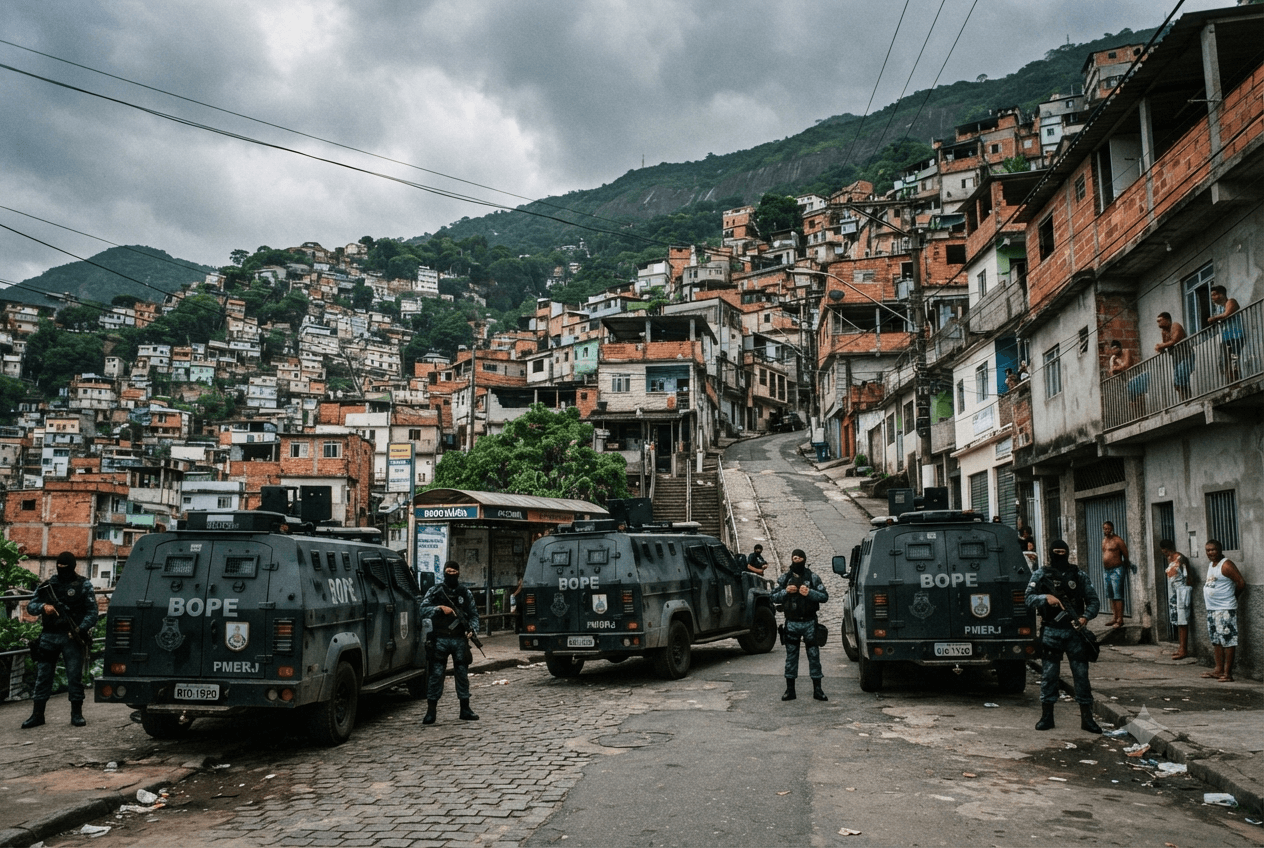
State public security authorities expressed deep condolences to the victim's family while defending the tactical necessity of countering armed criminal expansion in the area. Forensic crime scene technicians collected multiple high-caliber bullet fragments from inside the ransacked commercial establishment and surrounding alleyways. Armored police vehicles remained stationed at the primary favela entrance to deter further clashes between rival factions seeking to exploit the chaos. Local human rights organizations announced plans to file formal petitions demanding an independent investigation into the operation, emphasizing the need for accountability in the face of such tragedies.
As the community grappled with the aftermath of the shooting, neighborhood residents observed a tense silence, with local merchants pulling down their metal security shutters across the marketplace. Public transport buses temporarily suspended routes entering the favela perimeter, stranding hundreds of returning workers at nearby transit hubs. Municipal social workers arrived at the victim's family home to provide immediate bereavement support and psychological assistance, recognizing the emotional toll such violence takes on families and communities.
Investigative detectives began questioning eyewitnesses willing to provide anonymous accounts regarding the specific gunmen involved in the firefight. Forensic specialists continued cataloging ballistic fragments inside the commercial district under the supervision of military police commanders. However, state security officials refused to confirm when armored patrol units would withdraw from the community perimeter, leaving residents anxious about the ongoing presence of law enforcement in their neighborhoods.
The tragic death of the shopkeeper serves as a stark reminder of the pervasive violence in Rio de Janeiro's favelas, where the struggle between law enforcement and criminal organizations often places innocent lives at risk. As the community mourns, the call for reform and accountability in policing practices grows louder, underscoring the urgent need for a comprehensive approach to public safety that prioritizes the well-being of all residents.
Published by Banx Network. This article is part of the Banx decentralized media programme, powered by the BXE token on the XRP Ledger.



