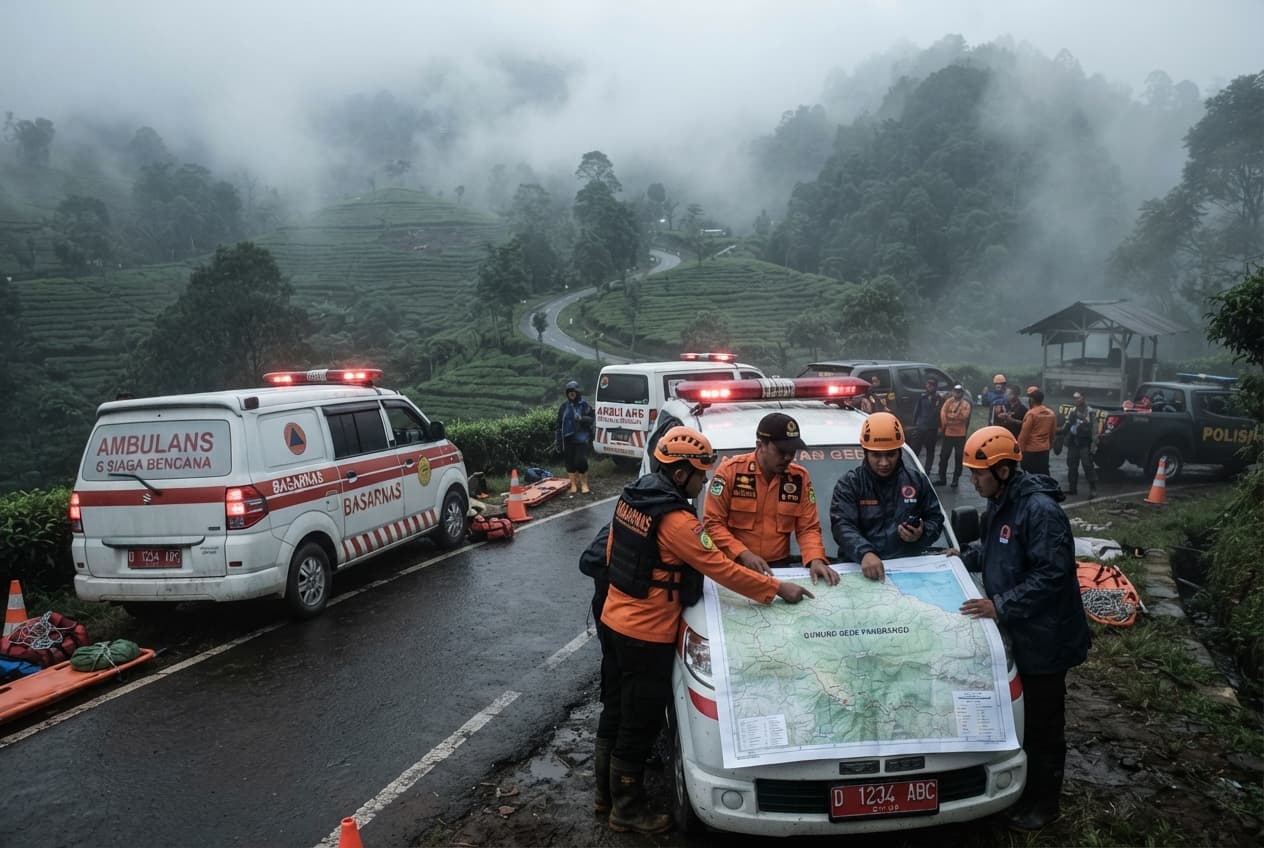
Bandung, Indonesia—Three passengers died on Sunday afternoon when a crowded public mini-bus lost control on a treacherous mountain pass and plummeted hundreds of meters into a deep ravine in West Java. Local police and civilian volunteers rushed to the steep gorge, using ropes and makeshift stretchers to navigate the unstable earth and reach the crushed vehicle resting near a rushing riverbed. Survivors and witnesses reported that the vehicle appeared to suffer a sudden brake failure while negotiating a sharp, unlit downhill curve.
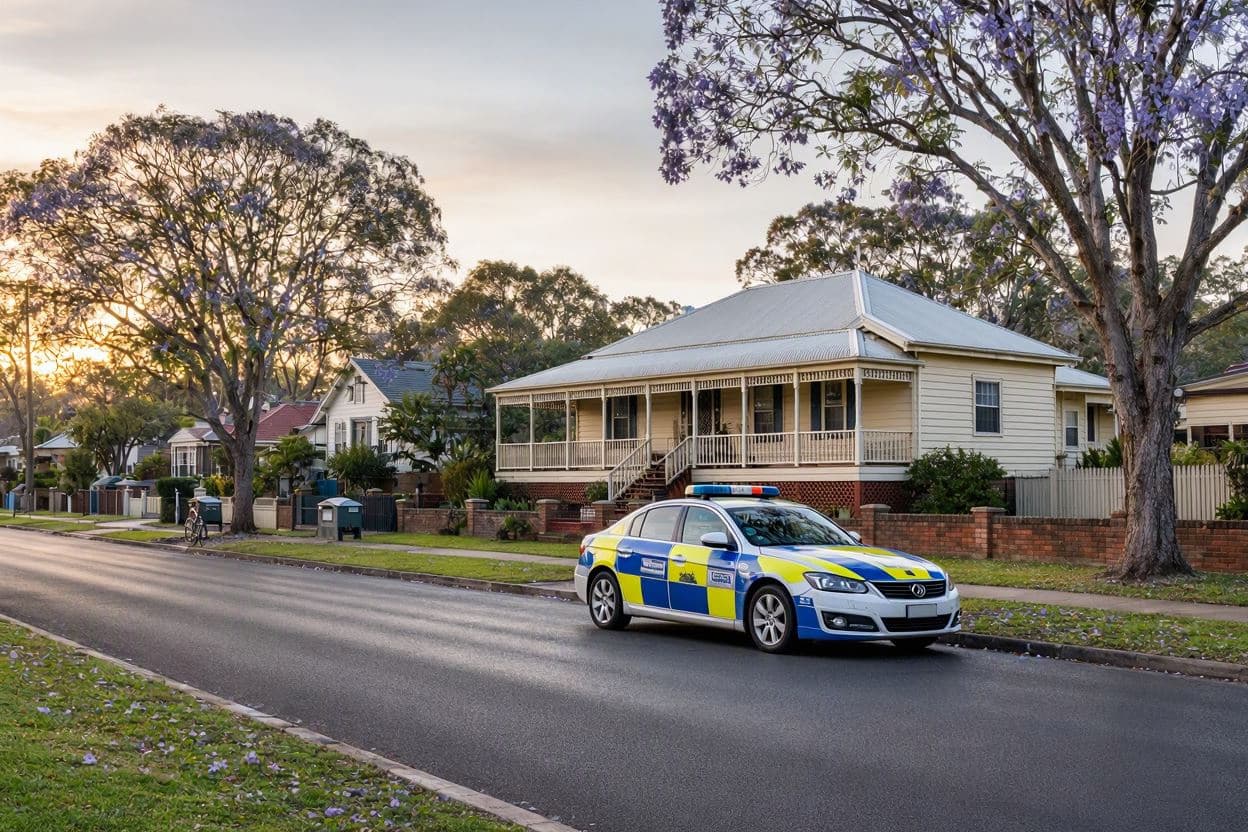
Traffic police cordoned off the main provincial corridor as heavy towing equipment struggled to stabilize the crumbling roadside edge where the mini-bus broke through rusted guardrails. Medical personnel set up an emergency triage tent on the asphalt above, treating several severely injured survivors pulled from the wreckage before transferring them to regional hospitals. Local health authorities confirmed three immediate fatalities at the scene, with critical care units admitting multiple passengers suffering from major trauma.
Investigators from the national traffic directorate arrived at the winding mountain pass to inspect skid marks and analyze the braking assembly of the wreckage. Preliminary findings indicate the vehicle was carrying passengers beyond its licensed seating capacity, raising renewed questions regarding rural transport oversight and vehicle maintenance enforcement. Transport officials noted that the route has a long history of severe accidents due to steep gradients and inadequate barrier infrastructure.
Local residents who witnessed the horrific descent described hearing a loud mechanical snap followed by frantic shouting from inside the cabin before the mini-bus vaulted off the cliff. Villagers living near the base of the ravine were the first to reach the crumpled hull, using hand tools to pry open jammed doors and pull trapped victims clear of leaking fuel. Police praised the swift civilian response, noting that delayed professional arrival would have likely increased the final casualty count significantly.
Regional transportation bureaus announced an immediate suspension of operating permits for the transit company pending a comprehensive safety audit of their entire regional fleet. Inspectors will examine maintenance logs, driver licensing credentials, and vehicle inspection records at the company's main depot in Bandung. Transport ministry representatives stressed that strict penalties will follow if operational negligence is proven to have contributed to the mechanical failure.
Family members gathered at the local community health center seeking information as officials released preliminary casualty lists compiled from passenger manifest documents. Grief counselors deployed by the local government offered immediate support to grieving relatives arriving from neighboring villages to identify loved ones. Local authorities coordinated with municipal funds to cover emergency medical expenses and repatriation of the deceased.
Infrastructure committees in the provincial legislature called for an urgent review of structural safety barriers along mountainous arterial routes notorious for blind curves and steep drop-offs. Engineers pointed out that thousands of kilometers of rural roadway lack impact-absorbing guardrails capable of withstanding heavy vehicle collisions. Funding allocations for road safety improvements remain heavily constrained despite repeated demands from transport advocacy groups.
Traffic police continue clearing the wreckage from the ravine floor as recovery operations extend into the evening hours under floodlights.
Published by Banx Network. This article is part of the Banx decentralized media programme, powered by the BXE token on the XRP Ledger.