
Key Highlights
- Incident:A multi-vehicle collision on the Beijing-Hong Kong-Macau Expressway resulted in four fatalities.
- Injuries:A dozen individuals were hospitalized with severe trauma and smoke inhalation.
- Response:Emergency services faced significant challenges due to the scale of the wreckage and hazardous conditions.
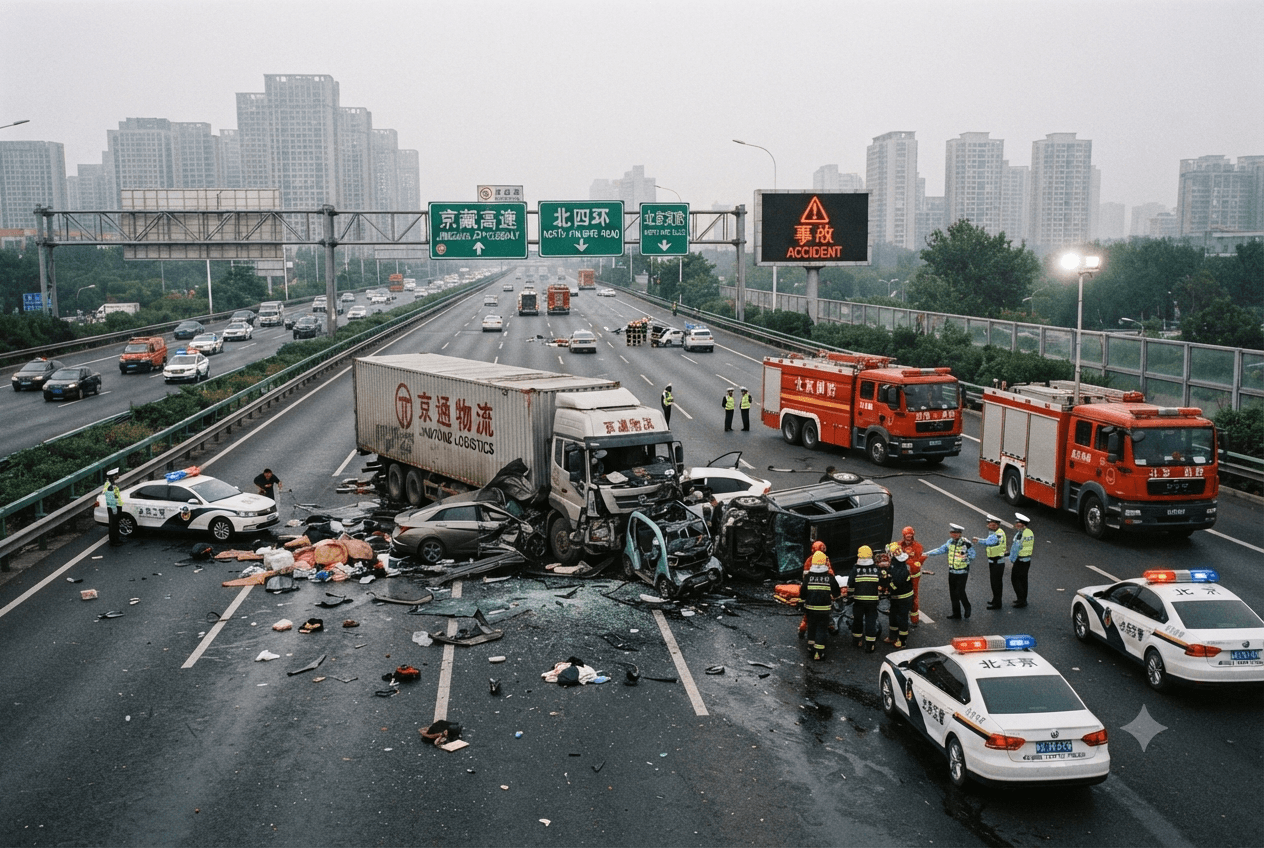
A tragic multi-vehicle collision occurred on the Beijing-Hong Kong-Macau Expressway, claiming the lives of four motorists and injuring at least a dozen others. The accident unfolded during the morning commute, exacerbated by heavy fog and speeding freight trucks. Eyewitnesses described a chaotic scene as metal twisted into heaps across three southbound lanes, blocking traffic for miles.
Emergency responders arrived to find a devastating scene, with passenger cars crushed beneath the axles of commercial semi-trailers. Firefighters utilized hydraulic tools to extricate trapped individuals, while paramedics triaged the injured on-site. Unfortunately, four victims succumbed to their injuries before they could be transported to local hospitals, where additional patients were admitted for severe trauma and smoke inhalation.
The scale of the disaster left first responders struggling to reach vehicles trapped deep within the wreckage. Traffic police officer Chen Gang noted the difficulties faced by rescue workers as they navigated the debris field. Tow trucks worked tirelessly to clear the wreckage, allowing emergency vehicles to access the scene. Investigators began examining the crash site, measuring skid marks and reviewing electronic logs from the involved commercial haulers.
As the cleanup operation progressed, commuters stranded behind the roadblock faced long waits in their vehicles under the oppressive summer sun. Highway patrol officers diverted traffic onto older provincial roads, leading to secondary congestion in nearby towns. State media crews set up cameras to provide live updates on the situation, while insurance adjusters awaited clearance to inspect the damaged freight carriers.
Authorities imposed temporary speed restrictions on adjacent expressway sectors due to compromised visibility from regional haze. The transport ministry faced increasing scrutiny over safety compliance for heavy freight carriers on major routes. Families of the deceased arrived at local municipal offices to identify their loved ones amidst the chaos of bureaucratic processing.
Cleanup crews worked diligently against the clock to reopen at least one lane before nightfall. Heavy-duty cranes were deployed to remove a jackknifed flatbed trailer from a drainage ditch, while traffic police maintained strict perimeter controls to prevent further accidents. The wreckage was transported to an impound yard for mechanical inspection by federal safety experts, and road maintenance crews worked to clear remaining oil slicks from the asphalt.
As engineers assessed the integrity of damaged overhead electronic signboards, state dispatchers advised long-haul drivers to postpone trips along the central corridor until full operational clearance was achieved. The expressway remained largely deserted, save for the flashing lights of stationary highway patrol vehicles. Investigators continued to map the crash trajectory as dusk settled over the province, highlighting the ongoing challenges in ensuring highway safety in the face of such tragic incidents.
Published by Banx Network. This article is part of the Banx decentralized media programme, powered by the BXE token on the XRP Ledger.



