
Key Highlights
- Incident:Two fatalities reported in a train collision at an unmanned crossing.
- Location:The accident occurred in the Nile Delta region of Egypt.
- Response:Emergency services arrived promptly, but both victims were pronounced dead at the scene.
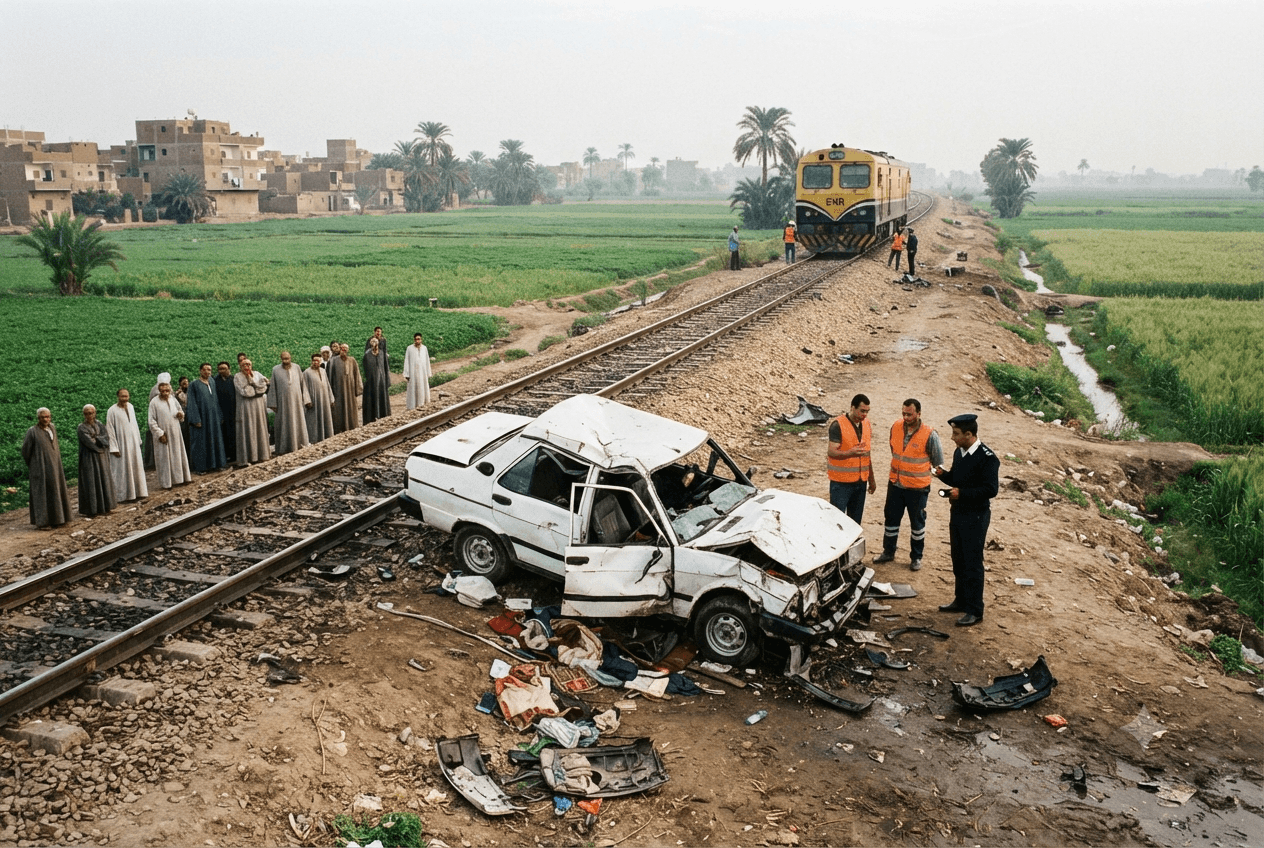
Cairo, Egypt—Tragedy struck this afternoon when an intercity train collided with a passenger vehicle at an unmanned level crossing in the Nile Delta, resulting in the deaths of two individuals. The incident unfolded just before peak evening travel hours along a poorly marked rural stretch of track, where visibility was clear as the train approached at high speed. The force of the impact propelled the mangled vehicle hundreds of meters down the embankment before the train could come to a stop. Emergency responders arrived within twenty minutes, but both occupants were found dead inside the wreckage.
Local residents rushed to the scene immediately after the crash, attempting to assist and pull debris away from the crushed car. Meanwhile, railway workers inspected the locomotive for any structural damage. State railway officials confirmed that the crossing lacked electronic warning signals or protective gates, a significant oversight given that farmers and commuters frequently used this informal shortcut to navigate between agricultural plots. Warning signage had long since deteriorated or disappeared, leaving the crossing perilously unmarked.
Rescue teams utilized hydraulic tools to extract the bodies from the twisted metal of the vehicle. Police cordoned off the area as forensic technicians gathered evidence and took measurements. The victims were transported to a nearby provincial hospital morgue for formal identification and autopsy reports. Family members arrived at the crash site later in the day, expressing their grief and demanding accountability from local authorities regarding the absence of safety infrastructure. The collision caused significant disruption along the regional rail link, stranding thousands of commuters.
In the aftermath of the collision, state railway engineers assessed the track alignment and signaling equipment. Preliminary checks indicated that the locomotive's braking system was functioning correctly prior to the impact. Investigators are focusing on the driver's visibility and the train's speed at the time of the accident. Union representatives highlighted that hundreds of similar unprotected crossings exist throughout rural rail corridors in the Delta, raising concerns about ongoing maintenance budgets for safety upgrades that have faced delays in recent fiscal cycles.
In response to the tragedy, regional governors convened an emergency meeting to address hazardous crossing locations. Municipal departments drafted proposals to install concrete barriers at unauthorized dirt tracks. However, funding for rural railway security remains a contentious issue between national ministries and local councils. Public anger is palpable among Delta residents who have long petitioned for the installation of guarded gates, and community leaders have warned of potential protests if immediate safety measures are not enacted.
As twilight descended over the agricultural landscape, forensic teams cleared the wreckage from the tracks. Railway maintenance crews replaced a damaged rail section and tested signal circuits before reopening the corridor. Freight and passenger services resumed at reduced speeds under strict pilot orders through the crash zone. The locomotive was cleared to return to the central maintenance depot for repairs, while state prosecutors continued to interview witnesses and railway controllers as the formal inquiry into the incident unfolds.
Published by Banx Network. This article is part of the Banx decentralized media programme, powered by the BXE token on the XRP Ledger.



