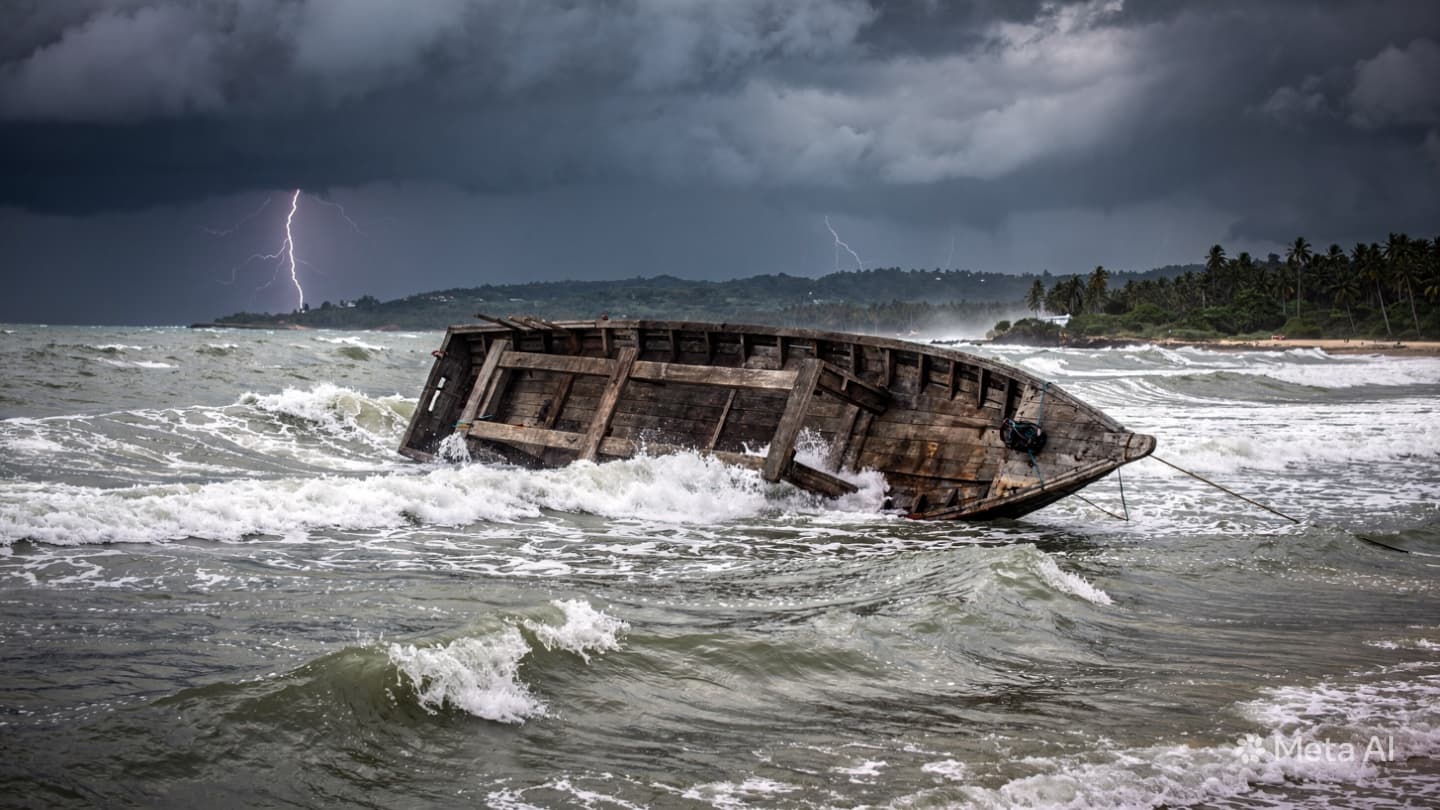
Toamasina, Madagascar—Violent tropical storm winds associated with a powerful cyclone system active in the Indian Ocean overturned an overloaded coastal transport vessel off the eastern coast of Madagascar today, leaving two passengers dead. The wooden merchant craft, designed primarily for short-range cargo haulage, was executing a transit run toward the port city of Toamasina when it was struck by an abrupt five-meter oceanic swell. The heavy maritime impact fractured the rudder assembly, causing the vessel to lose steerage and take on water before rolling completely over in the turbulent surf.
Artisanal fishermen operating near the coastal reef tract observed the vessel’s distress flares and navigated through the gale-force squalls in small motorized canoes to initiate an immediate civilian rescue operation. Marine units from the National Office for Risk and Disaster Management (BNGRC) faced severe logistical delays due to the intense wind speeds and a localized shortage of high-capacity searchcraft at the regional station. Volunteer divers managed to extract nineteen survivors from the churning waters, pulling them onto the rocky beachhead.
Maritime police units subsequently confirmed that two passengers—both local retail traders moving commercial inventory—drowned after becoming entangled in the heavy canvas cargo netting inside the capsized hull. The bodies were retrieved from the submerged superstructure late in the afternoon once the immediate wave velocity abated. Medical personnel treated the nineteen survivors for acute hypothermia and severe salt-water aspiration at a temporary Red Cross shelter erected along the Toamasina waterfront.
Initial manifests obtained from the shipping registry indicate the coastal craft was operating with an excessive cargo load of agricultural commodities, significantly exceeding its legal draft limits for open-water navigation. Furthermore, investigators confirmed that the operator had deliberately ignored a comprehensive maritime travel ban issued by the port authority twelve hours prior due to the advancing cyclone front. The boat captain survived the maritime inversion and has been placed under static guard at a local medical clinic pending formal judicial arraignment.
The maritime disaster has generated intense criticism from coastal community leaders, who lambasted the central government for its chronic failure to deploy adequate search-and-rescue assets along the island's vulnerable eastern seaboard. Residents emphasized that low-income populations are routinely forced to utilize sub-standard, un-certified wooden transport vessels to bypass collapsing land routes that have been washed out by back-to-back tropical storms. Without rigorous dockside inspections, operators consistently risk civilian lives to avoid economic ruin during the lean season.
The regional maritime agency ordered an immediate, total suspension of all small-craft transit operations along the eastern navigation channels, threatening severe fines and boat seizures for non-compliant operators. Meteorological stations warn that secondary wind bands reaching velocities of up to 120 kilometers per hour continue to threaten the coastal zone, creating highly volatile rip currents. The ongoing severe weather conditions are heavily complicating efforts to secure the floating wreckage of the overturned vessel.
The remains of the two deceased women were documented by local civil registry officials and released directly to their families for traditional village burial ceremonies inside the coastal district. Epidemiological teams are monitoring the surviving passengers for signs of secondary water-borne infections due to the heavy contamination of the nearshore water lines following the storm surge.
Salvage crews are currently attempting to secure heavy steel cables to the inverted wooden hull to prevent it from drifting into the primary commercial shipping lanes of Toamasina harbor. Police patrols have been increased along the beach zones to deter scavenging operations as loose consumer cargo continues to wash ashore on the tide.
Published by Banx Network. This article is part of the Banx decentralized media programme, powered by the BXE token on the XRP Ledger.