
Key Highlights
- Incident:Four military personnel killed in an ambush on the Chindwin River.
- Context:The flotilla was transporting supplies to northern outposts.
- Impact:Resistance forces demonstrate increasing capability to disrupt military logistics.
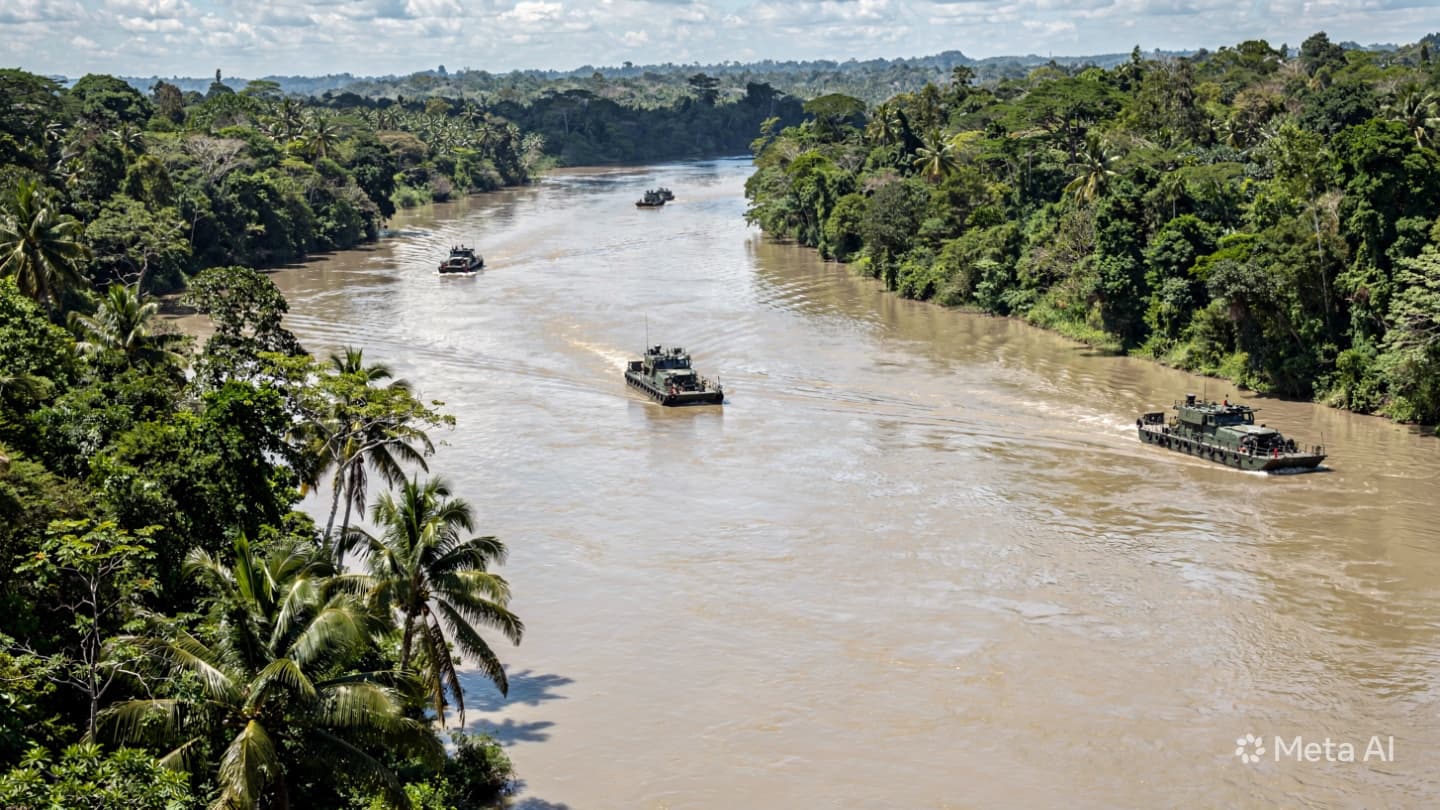
Sagaing Region, Myanmar—In a significant escalation of the ongoing conflict, resistance forces successfully ambushed a military-controlled flotilla on the Chindwin River today, resulting in the death of four regime personnel. The flotilla, which was transporting essential supplies and reinforcements to northern outposts, came under heavy fire as it navigated a narrow stretch of the river. The ambush was initiated with coordinated small-arms fire from both banks, forcing the vessels to maneuver under duress.
Local observers reported that the attack caused considerable panic among the regime troops stationed on the lead vessels. Resistance fighters utilized the river’s natural geography to launch a surprise strike before retreating into the dense forest cover. Despite the regime's attempt to return fire with mounted heavy machine guns, the damage to the convoy was substantial, with independent reports confirming the fatalities.
Military sources have remained silent regarding the specific casualties, but independent reports from local defense groups confirm that four soldiers were killed during the initial phase of the engagement. In retaliation, the military shelled the nearby shoreline with artillery, although no immediate reports of civilian casualties were available. This incident underscores the growing threat that resistance forces pose to military supply lines in the region.
The Chindwin River has become a primary artery for the junta to move troops, as ground roads remain largely controlled or mined by People’s Defense Force units. This ambush highlights the increasing capability of resistance groups to threaten these vital maritime supply lines. Security in the area has been heightened following the incident, with regime vessels remaining anchored downriver while reinforcements from a nearby battalion are deployed to secure the banks.
Resistance groups have warned that further attempts to navigate the river will be met with similar force, effectively closing the river to civilian traffic for the foreseeable future. The incident illustrates the intensifying nature of the conflict in the Sagaing Region, where the military struggles to maintain its hold on critical supply routes while resistance forces continue to employ guerrilla tactics to weaken the junta’s logistical network.
As tensions remain high, both sides are preparing for further confrontations. Local resistance commanders have stated they will sustain their pressure on regime maritime assets to disrupt the military’s ability to reinforce its remote outposts. The situation along the Chindwin continues to evolve, with local villagers advised to avoid the riverbank as military patrols search for resistance units.
The area is currently under intense aerial surveillance by junta aircraft, indicating the military's heightened concern over the effectiveness of resistance operations in the region. As the conflict escalates, the implications for both military and civilian populations in Myanmar remain significant, with ongoing violence threatening stability in the region.
Published by Banx Network. This article is part of the Banx decentralized media programme, powered by the BXE token on the XRP Ledger.



