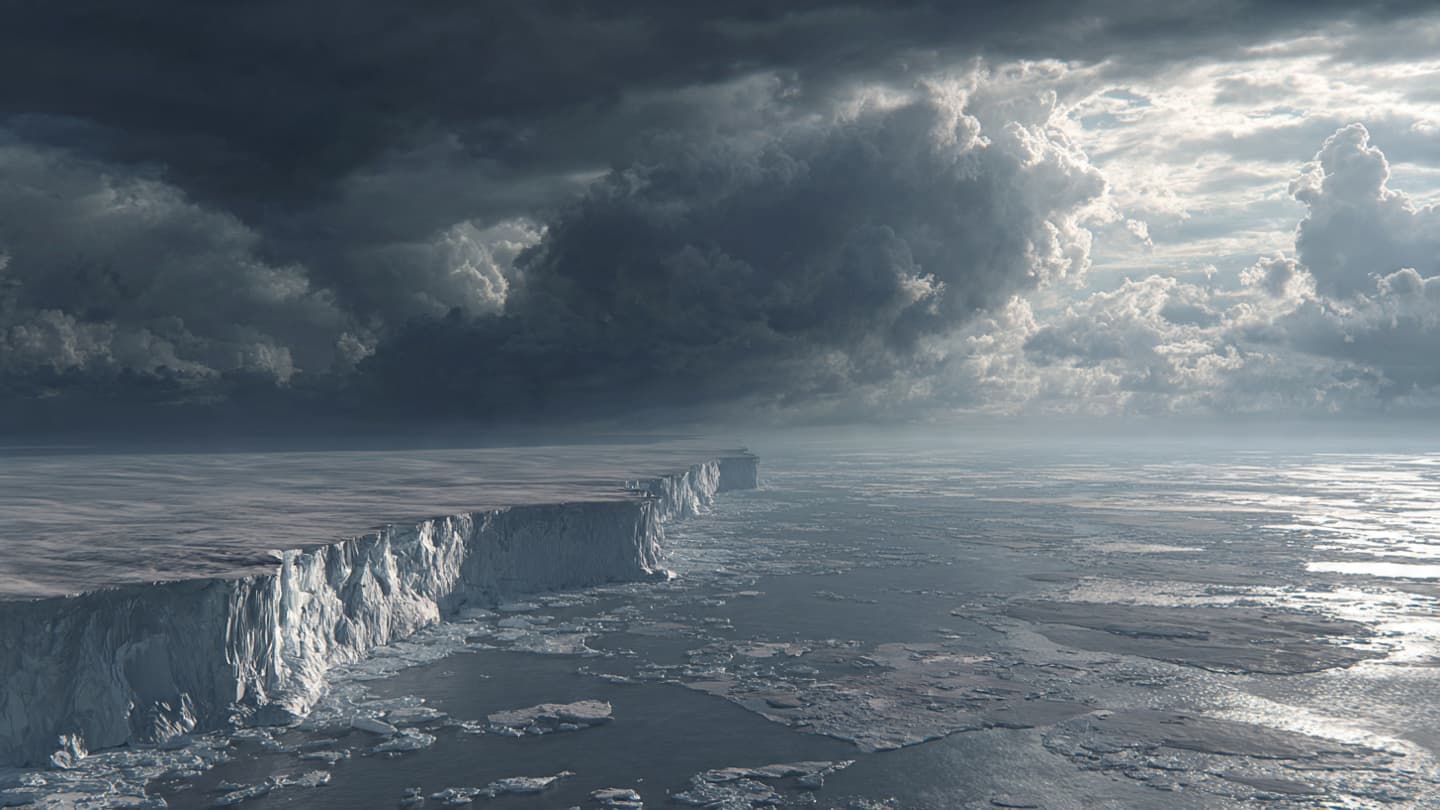
At the edge of Antarctica, where ice cliffs meet dark ocean waters under long stretches of pale sky, change often unfolds slowly enough to escape immediate notice. Yet scientists studying the frozen continent say the pace of transformation is no longer measured only in centuries or distant projections. In recent years, the movement of ice has begun telling a more urgent story about the future shape of coastlines around the world.
Researchers warn that rapidly melting Antarctic ice shelves could accelerate global sea level rise more quickly than earlier estimates suggested. Ice shelves, which extend from glaciers into surrounding oceans, act as natural barriers slowing the movement of land-based ice into the sea.
Scientists explained that as warming ocean temperatures weaken these floating ice structures, glaciers behind them can flow faster toward open water. This process contributes directly to rising sea levels because the land ice entering the ocean increases total water volume globally.
Several recent studies using satellite observations and climate modeling have identified concerning rates of thinning and retreat in parts of West Antarctica. Regions including the Thwaites and Pine Island glaciers have drawn particular attention from researchers monitoring long-term ice stability.
Climate scientists say predicting exact sea level outcomes remains difficult due to the complexity of Antarctic systems. However, evidence increasingly suggests that some models may have underestimated how rapidly ice shelf destabilization can influence glacier movement.
The implications extend far beyond Antarctica itself. Rising seas threaten coastal infrastructure, freshwater systems, agricultural land, and densely populated urban areas worldwide. Low-lying island nations remain especially vulnerable to long-term changes in ocean levels.
Governments and international climate agencies continue investing in satellite monitoring, polar expeditions, and climate research to better understand future risks. Scientists stress that even gradual increases in sea level can amplify storm surge damage and coastal flooding over time.
For many researchers working in polar environments, Antarctica represents both a scientific frontier and a warning written slowly across ice and water. The continent’s frozen landscapes, once viewed as distant and isolated, are increasingly understood as deeply connected to the future of cities and shorelines across the globe.
Researchers say continued climate monitoring and emissions reduction efforts will remain central to understanding and limiting future sea level rise linked to Antarctic ice loss.
AI Image Disclaimer: Some imagery connected to this report may include AI-generated visual interpretations of polar environments.
Sources: Nature Climate Change, BBC News, Reuters, National Geographic, Scientific American
Published by Banx Network. This article is part of the Banx decentralized media programme, powered by the BXE token on the XRP Ledger.