Key Highlights
- Disruption Duration:Nearly five hours of halted flights across the U.S.
- Cancellations:Over 10,000 flights canceled and 7,000 delayed.
- Infrastructure Concerns:Calls for $50 billion to upgrade air traffic control systems.
The skies over America are a system of extraordinary complexity, a web of routes, schedules, and crews that depends on a fragile chain of technology and trust. When that chain breaks, even for a few hours, the consequences do not end when the fix is applied. They ripple outward, through stranded passengers and displaced aircraft and crews who have run out of legal hours to work, for days afterward. Two days after the Federal Aviation Administration (FAA) issued a rare nationwide ground stop, the country's air travel system was still struggling to find its rhythm.
The original disruption began Friday afternoon when the FAA halted nearly all departing flights for almost five hours, marking the longest such nationwide stoppage since the September 11 attacks. The cause, according to Transportation Secretary Sean Duffy, was an overload of antiquated routers during a routine replacement of copper communication lines with fiber optics by a contractor. The instability spread, prompting the agency to ground flights as a precaution. By Friday night, the ground stop was lifted, but nearly 10,000 flights had already been canceled and more than 7,000 delayed.
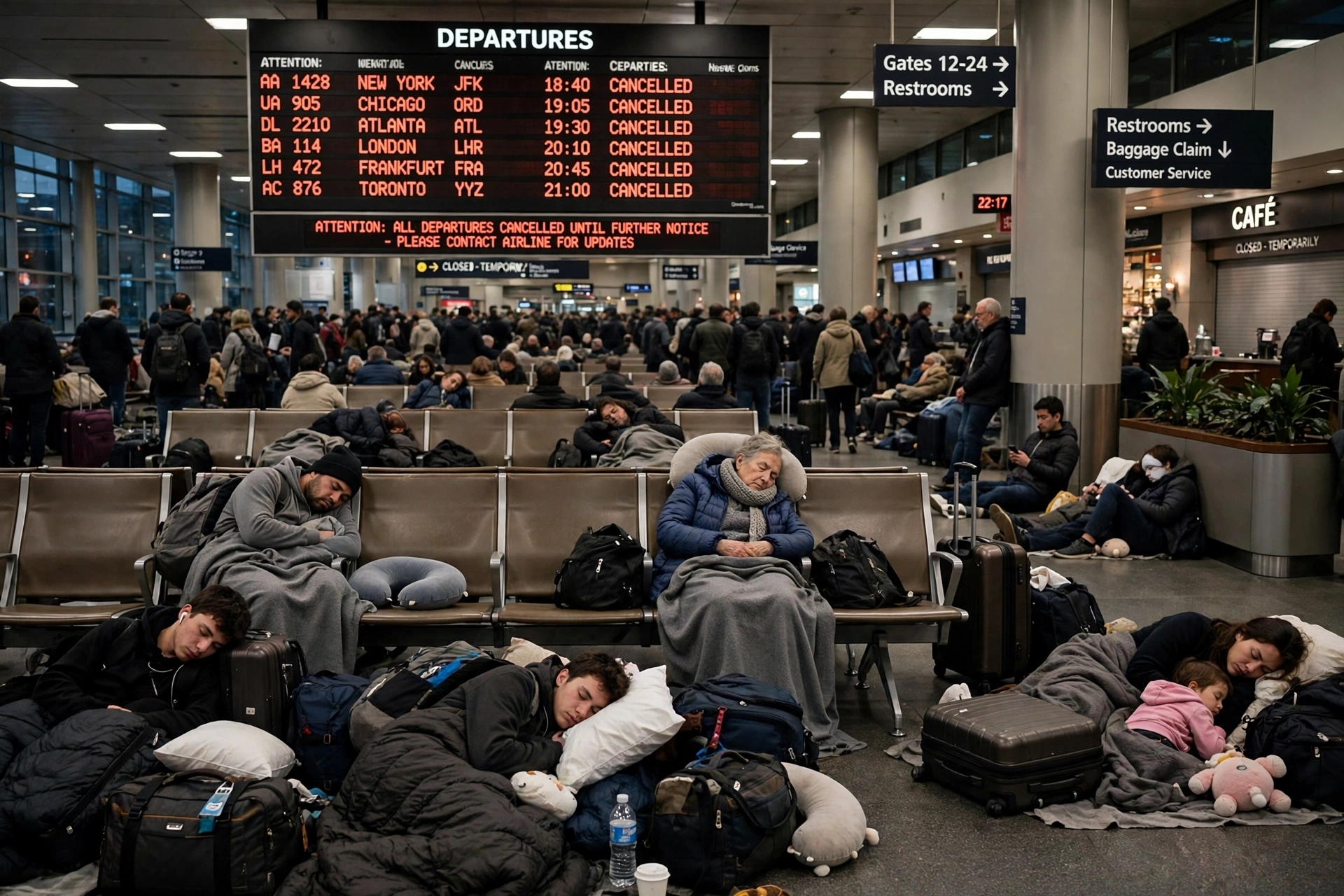
Saturday brought no immediate relief. Major airlines canceled more than 3,700 U.S. flights and delayed 2,000 more, according to reports. A Korean report put the figure higher, with more than 3,800 cancellations and 2,100 delays. United and Delta announced their own ground stops at Chicago O'Hare and New York LaGuardia to manage congestion. American Airlines prioritized international and smaller-city flights to reposition aircraft and crews. Passengers camped in terminals, lines stretched at customer service desks, and the departure boards filled with red.
By Sunday, FAA Administrator Bryan Bedford expressed optimism, stating he expected operations to be fully normalized by the end of the day, telling reporters that "the worst is behind us." However, the recovery is not a simple switch. Crews who were stranded in the wrong cities must be moved. Aircraft that sat at gates for hours must be inspected and repositioned. Passengers whose flights were canceled must be rebooked onto flights that are already full. While airlines waived change fees and offered flexible rebooking, the arithmetic of supply and demand does not bend to goodwill.
The disruption has also reopened a conversation about the state of American aviation infrastructure. Duffy, speaking Friday, called for $50 billion to upgrade air traffic control systems, up from the $30 billion he had sought earlier. "This is an emergency," he said. The system, he noted, is running on technology that in some cases predates the smartphones in passengers' pockets. The White House had asked Congress for $30.1 billion for infrastructure upgrades before the outage; the disruption made the request more urgent and, for some lawmakers, more complicated.
For the travelers caught in the system, the past two days have been a lesson in the limits of planning. A flight is not a single promise but a chain of them—crew, aircraft, gate, weather, and the invisible networks that connect them all. When one link fails, the whole chain must be rebuilt. The FAA has stated that flying is safe, and the investigation into the cause continues, with no evidence of a cyberattack so far. The question that remains, as the airports slowly empty and the schedules slowly reset, is whether the next outage will be prevented or merely survived.
The images in this article are AI-generated and do not depict the actual airports or passengers.
Published by Banx Network. This article is part of the Banx decentralized media programme, powered by the BXE token on the XRP Ledger.