The universe is filled with secrets, hidden in plain sight within the vast archives of data collected by our most powerful telescopes. Recently, an astronomer discovered a previously unknown object while sifting through the James Webb Space Telescope’s archival images. This finding invites reflection on the value of re-examining existing data and the potential for surprise in the digital age. It is a testament to the idea that discovery is not just about looking further, but also looking deeper.
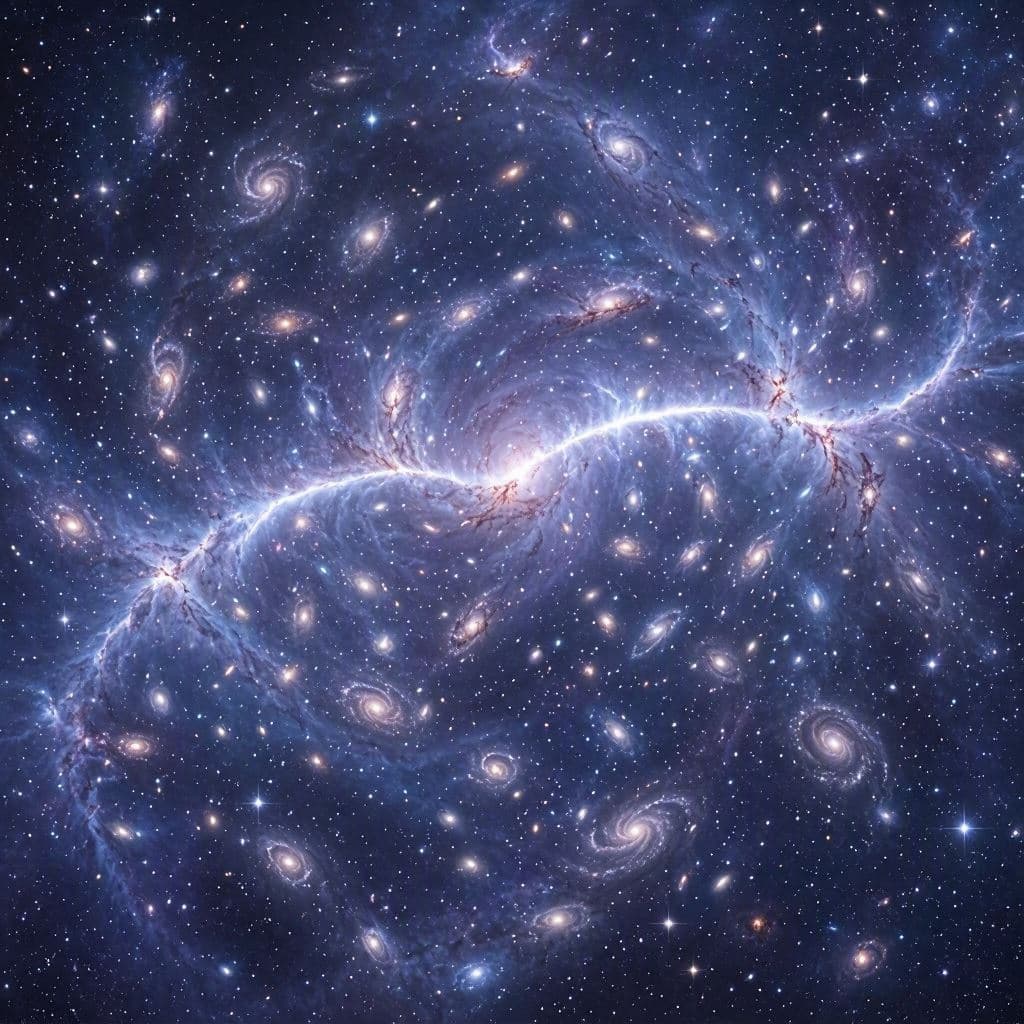
The object, identified by Homer Dávila Gutierrez of SKYCR.ORG, appears to be a gravitational arc candidate in the galaxy cluster MACS J0308.9+2645. Gravitational arcs are formed when the gravity of a massive object, like a galaxy cluster, bends the light from a more distant source. This phenomenon, predicted by Einstein’s theory of general relativity, allows astronomers to study objects that would otherwise be too faint to see. The archive holds many such treasures.
The discovery highlights the importance of public access to scientific data. By making JWST images available to the broader community, NASA and ESA enable amateur and professional astronomers alike to contribute to science. Citizen science plays a crucial role in processing the immense volume of data generated by modern telescopes. Collaboration expands capacity.
For the astronomical community, the find adds to the growing list of early-universe objects identified by Webb. Each new discovery helps refine models of galaxy formation and evolution. The telescope’s infrared capabilities allow it to peer back in time, revealing the cosmos as it was billions of years ago. History is written in light.
The identification process involved careful analysis of image artifacts and comparison with known catalogs. Ensuring that the object is not a glitch or a known star requires meticulous attention to detail. Verification is the backbone of scientific integrity. Rigor ensures reliability.
As more researchers explore the JWST archive, further discoveries are likely. The telescope continues to deliver data, offering endless opportunities for exploration. The next big find may be just a click away. Potential is infinite.
An astronomer has discovered a previously unknown object, likely a gravitational arc, in the James Webb Space Telescope’s archive. The find highlights the value of data re-analysis and citizen science. The hope is for continued discoveries from existing datasets.
AI Image Disclaimer: The images provided are AI-generated to visually represent the astronomical and archival aspects of the story.
Sources: Universe Magazine Universe Today NASA
Published by Banx Network. This article is part of the Banx decentralized media programme, powered by the BXE token on the XRP Ledger.