
Key Highlights
- India is the world's largest rice producer, controlling 40% of global trade.
- Groundwater levels in rice-growing states have plummeted due to excessive extraction.
- The environmental impact of rice cultivation poses risks to food security globally.
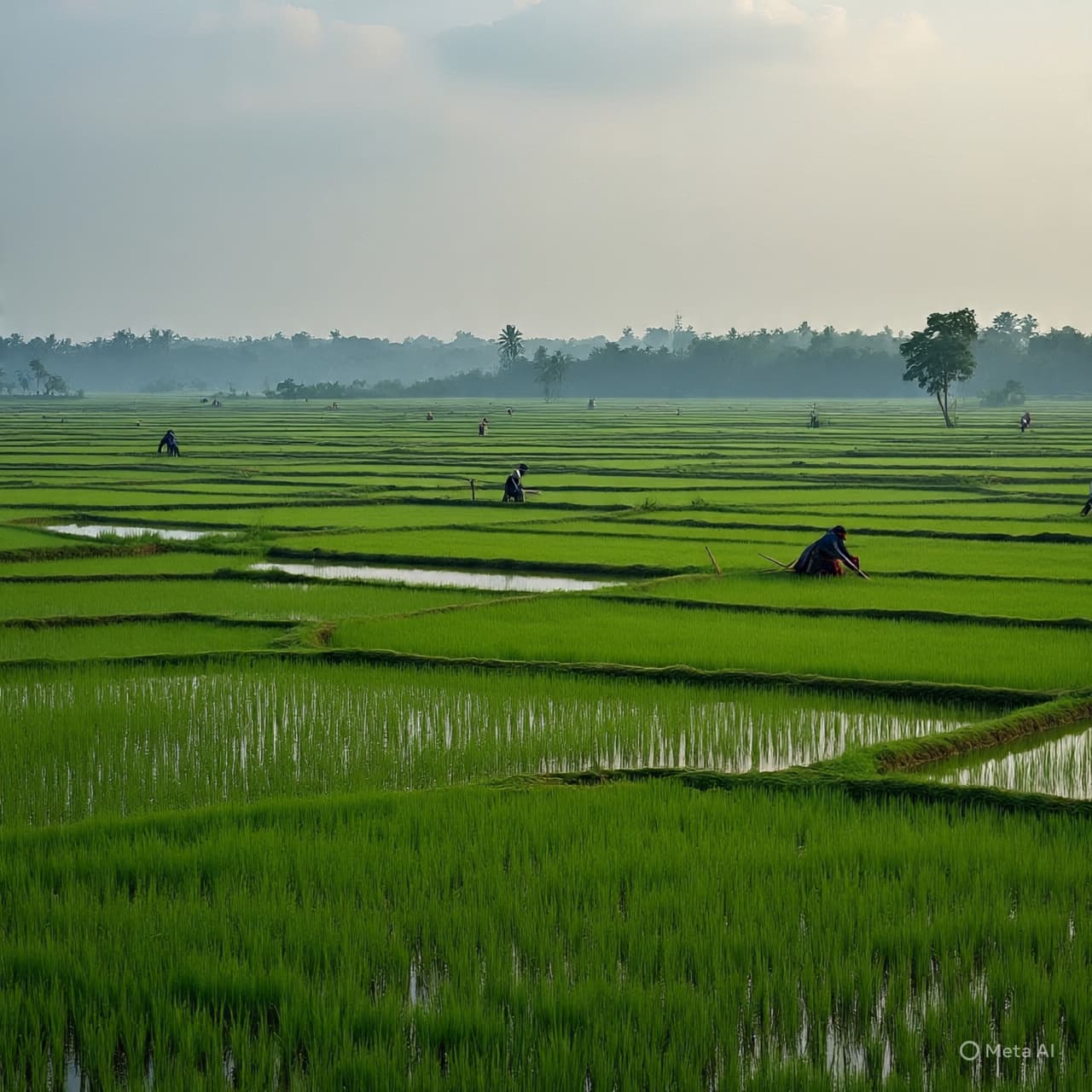
India's fertile plains, adorned with lush rice paddies, have positioned the nation as the world's leading producer and exporter of rice, surpassing even China. This agricultural success story, however, is accompanied by a troubling reality: the extensive water resources required for rice cultivation are being rapidly depleted, threatening both local livelihoods and global food security.
In regions like Punjab and Haryana, where rice farming is most prevalent, farmers have historically accessed groundwater from shallow depths. A decade ago, borewells typically reached around 30 feet, but today, many must drill between 80 and 200 feet to find water. This alarming trend is driven by the insatiable demand for irrigation in rice fields, which require an astonishing 3,000 to 4,000 liters of water to produce just one kilogram of rice, significantly higher than the global average.
The situation is exacerbated by government policies that favor rice cultivation through generous subsidies, including guaranteed minimum prices and low electricity costs. These incentives encourage farmers to prioritize rice over less water-intensive crops, leading to the over-exploitation of aquifers. In some districts, groundwater extraction rates exceed natural recharge by as much as 57% annually, leaving farmers to face the daunting task of drilling deeper and investing in more powerful equipment to sustain their crops.
For many smallholder farmers, the rising costs associated with deeper drilling and increased labor are becoming unsustainable. While wealthier farmers may navigate these challenges through subsidies and investments, subsistence farmers are particularly vulnerable, facing existential threats to their livelihoods. The political landscape complicates efforts to reform agricultural support systems, as past attempts to reduce dependency on grain procurement have sparked mass protests, forcing policymakers to retreat from unpopular reforms.
The implications of India's rice export boom extend beyond its borders. As the country supplies a significant portion of the world's rice, any shifts in production due to water scarcity could have far-reaching effects on global markets, impacting prices and food security in nations reliant on rice imports. The delicate balance between agricultural success and environmental sustainability is increasingly at risk.
As rivers recede and wells run dry, the question arises: must India recalibrate its approach to rice production to ensure long-term sustainability? Scientists and policymakers are calling for a reassessment of agricultural practices to prioritize water conservation and resilience in the face of climate change. The challenge lies in finding a path that allows India to maintain its role as a global rice supplier while safeguarding its vital water resources for future generations.
Published by Banx Network. This article is part of the Banx decentralized media programme, powered by the BXE token on the XRP Ledger.



