

Key Highlights
- Date of Incident:Heavy explosions occurred in Tehran on April 1, 2026.
- Target:The former U.S. Embassy compound was significantly damaged.
- Casualties:Initial reports indicate at least four fatalities in a nearby strike.
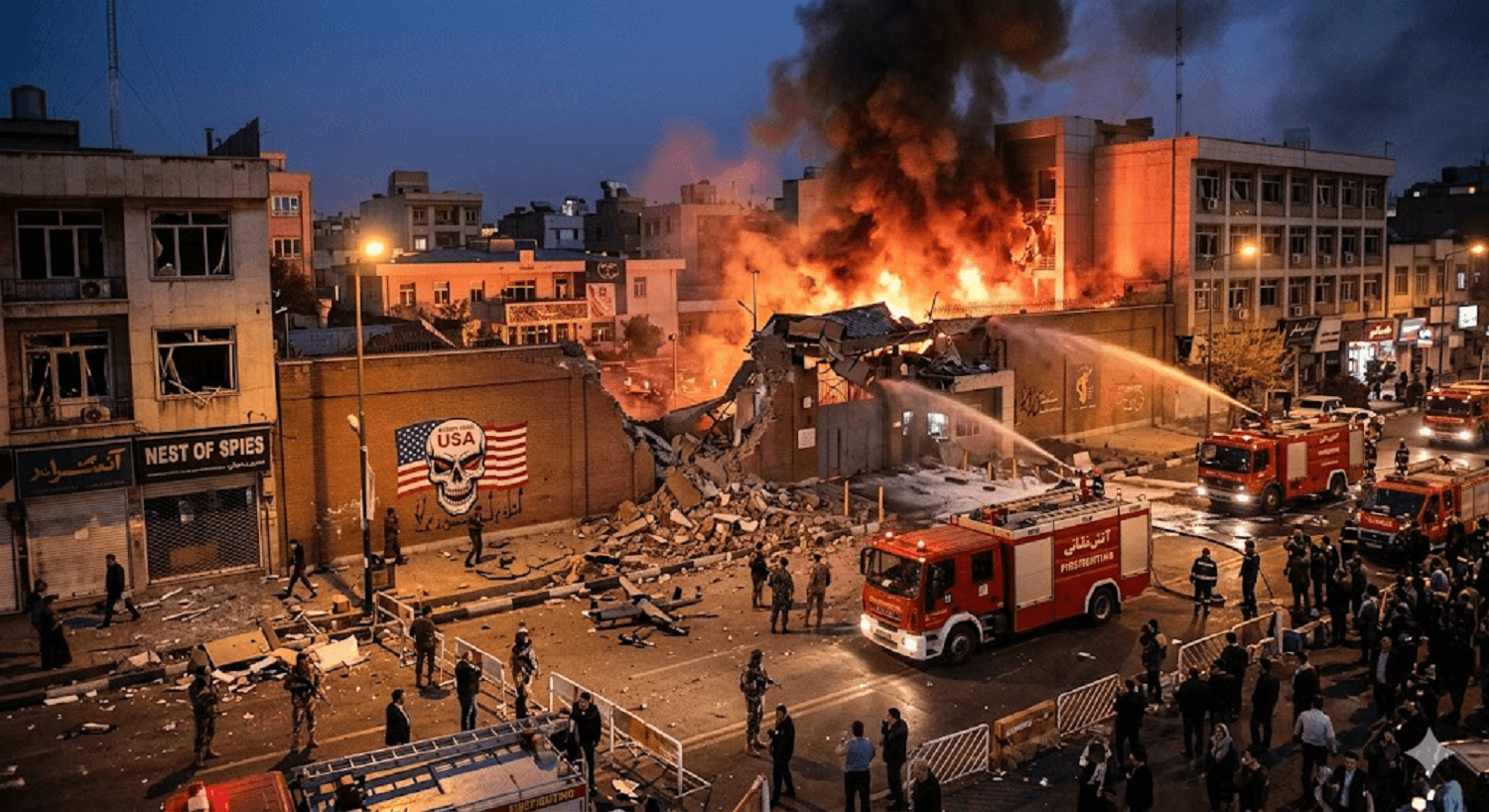
On April 1, 2026, Tehran experienced a series of heavy explosions as U.S. and Israeli airstrikes targeted the Iranian capital, marking a significant escalation in ongoing military operations. The strikes primarily focused on the historic compound of the former U.S. Embassy, a site that has been under the control of the Islamic Revolutionary Guard Corps (IRGC) since the 1979 hostage crisis. Witnesses reported hearing at least three massive blasts just before dawn, with the strikes causing shockwaves that shattered windows in nearby buildings.
Initial assessments indicate that the embassy's perimeter walls, known for their anti-American murals, sustained considerable damage, with portions crumbling under the force of the explosions. The compound, which serves as a museum and houses Basij paramilitary offices, reportedly suffered direct hits to newer administrative buildings constructed on the grounds. While Iranian state media acknowledged the strikes, they have yet to confirm the number of casualties at the embassy site, although four individuals were reported killed in a separate strike in Karaj.
This military action is part of a broader campaign dubbed Operation Epic Fury, which has seen nearly 1,000 strikes across Iran since late February. The U.S. and Israeli forces have targeted various sites, including missile installations and nuclear infrastructure, as part of their strategy to dismantle the command-and-control capabilities of the IRGC and Basij. Analysts suggest that the decision to strike so close to the former diplomatic compound represents a shift in tactics, aiming to disrupt the operational capabilities of these groups.
Residents of Tehran described a night filled with terror as fighter jets and drones flew over the city, with explosions reported far beyond the embassy district. In addition to the strikes on the embassy, military barracks and research centers in northeastern Tehran were targeted, and a four-story residential building in Karaj was leveled during an attempt to hit a nearby mobile missile launcher. The strikes also focused on industrial zones linked to Iran's drone production and critical fuel storage facilities.
As the situation escalates, U.S. President Donald Trump is scheduled to address the nation later on Wednesday. In previous remarks, he suggested that military operations could conclude within two to three weeks, even as the USS George H.W. Bush joins the Abraham Lincoln and Gerald R. Ford aircraft carrier strike groups in the region. The mood in Tehran is one of grim defiance mixed with panic, as the strikes on such a landmark site have disrupted any remaining sense of normalcy in the capital. With smoke rising from Taleghani Street, the international community remains vigilant, anticipating Iran's response in a conflict that continues to reshape the Middle East.
Published by Banx Network. This article is part of the Banx decentralized media programme, powered by the BXE token on the XRP Ledger.




