

Key Highlights
- AI System:New technology analyzes urban traffic patterns.
- Improved Planning:Helps urban planners enhance transportation efficiency.
- Data Privacy:Emphasizes responsible management of mobility data.
Artificial intelligence is transforming urban planning by providing innovative solutions to understand and manage traffic patterns. As cities grow and evolve, the complexity of transportation systems increases, making it essential for planners to have accurate data on how vehicles move through urban environments. A recent study has introduced an AI system designed to automatically identify these patterns by analyzing vast amounts of transportation data, offering a new tool for urban planners.
The AI model processes information collected from various sources, including traffic sensors, road networks, and historical transportation records. Unlike traditional methods that rely heavily on manual analysis, this system can detect recurring movement patterns that may not be immediately visible. By leveraging machine learning algorithms, the AI can analyze millions of traffic observations, identifying relationships and trends that would otherwise require extensive human effort.
Researchers believe that recognizing these traffic behaviors is crucial for transportation authorities. With better insights into how vehicles interact with urban infrastructure, planners can make informed decisions regarding road design, signal timing, and public transit planning. The ultimate goal is to reduce congestion and improve travel efficiency, particularly in rapidly growing urban areas where traffic issues are becoming increasingly prevalent.
Importantly, the AI system is intended to serve as a decision-support tool rather than a replacement for human expertise. Urban planners are still responsible for considering social, economic, and environmental factors alongside the recommendations generated by the AI analysis. This collaborative approach ensures that the human element remains central to the planning process, even as technology plays a more significant role.
As the availability of transportation data continues to grow, research into intelligent mobility solutions is accelerating. The integration of AI into urban planning represents a significant advancement, but it also raises important questions about data privacy and responsible management. Researchers emphasize the need for appropriate safeguards when handling mobility data collected from public infrastructure to protect citizens' privacy.
Traffic conditions vary widely between cities due to factors such as geography, population density, and local travel behavior. Therefore, AI models must be carefully adapted to suit different urban environments. The study highlights the importance of ongoing research and real-world testing to determine how these technologies can best support safer, more efficient, and sustainable transportation systems.
In conclusion, the integration of AI into urban traffic analysis marks a pivotal moment in the evolution of smart cities. As researchers continue to explore the capabilities of AI, the potential for improved urban planning and transportation efficiency becomes increasingly tangible, paving the way for a future where cities can better accommodate the needs of their residents.
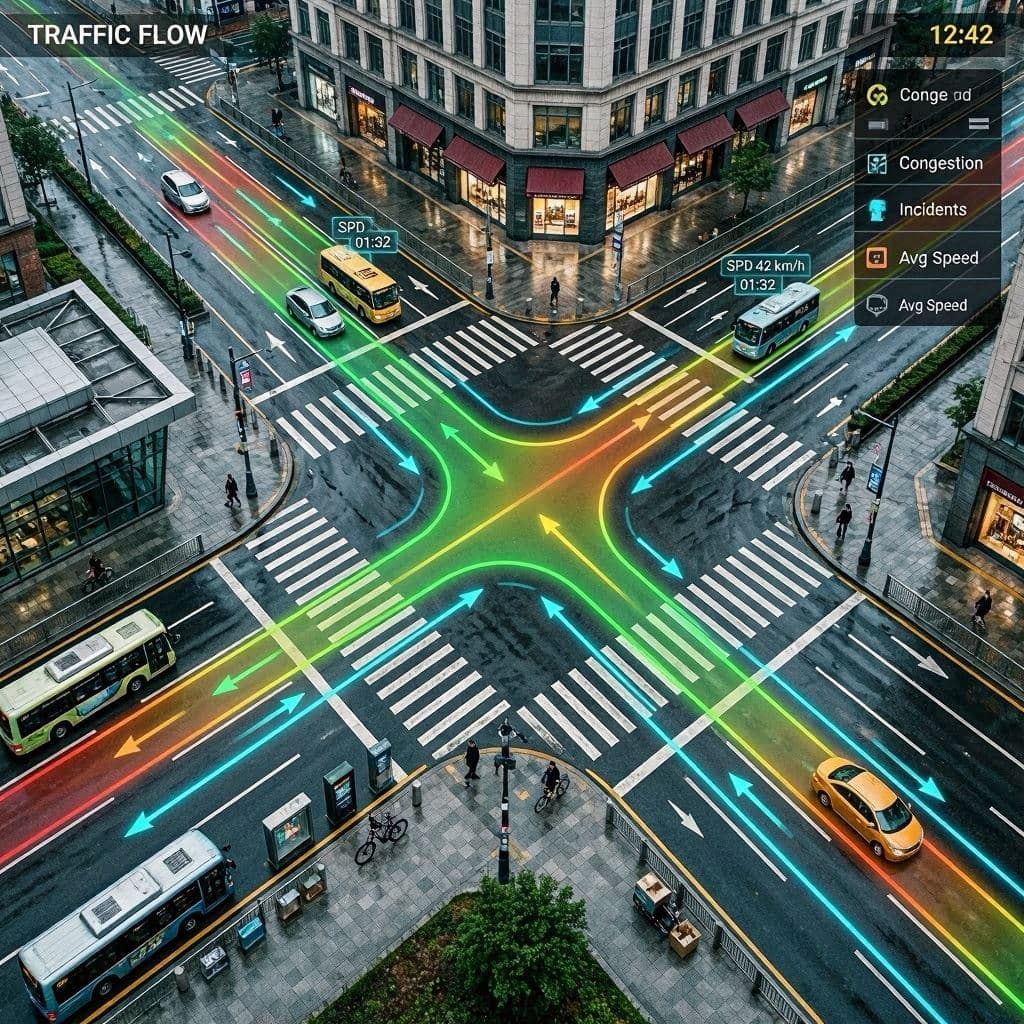
AI Image Disclaimer: This article features an AI-generated illustration created to visually represent the research topic described.
Published by Banx Network. This article is part of the Banx decentralized media programme, powered by the BXE token on the XRP Ledger.




