There is a particular weight to a number that crosses a threshold, a moment when an outbreak ceases to be a crisis in one place and becomes something larger. This week, the Ebola epidemic in the Democratic Republic of the Congo passed ten thousand confirmed cases. Nearly half of those infected have died. The virus has crossed borders, reaching Uganda, Kenya, Nigeria, and even France, carried by travelers who did not know they were carrying it. The outbreak is now the second-largest Ebola epidemic ever recorded, and it is not yet under control.
The numbers, released by Congo's Ministry of Health, are these: 10,060 confirmed cases since the outbreak was declared in May, with 4,887 deaths, a fatality rate of 48.6 percent . The virus has spread across 66 health zones in eight of the country's 26 provinces, with Ituri province in the east remaining the epicenter, accounting for more than 70 percent of all cases . What makes this outbreak particularly difficult is the strain: Bundibugyo, a rare type of Ebola for which no vaccine or specific treatment has been approved .
The spread beyond Congo's borders has alarmed health authorities across the continent. Uganda, Kenya, and Nigeria have all reported cases. France recorded a single imported case, though it is no longer active . Dr. Jean Kaseya, head of the Africa CDC, convened a virtual emergency summit of African health ministers on Wednesday. "Ebola is crossing borders," he said. "Our response must move faster, with stronger coordination, greater solidarity and decisive political leadership" .
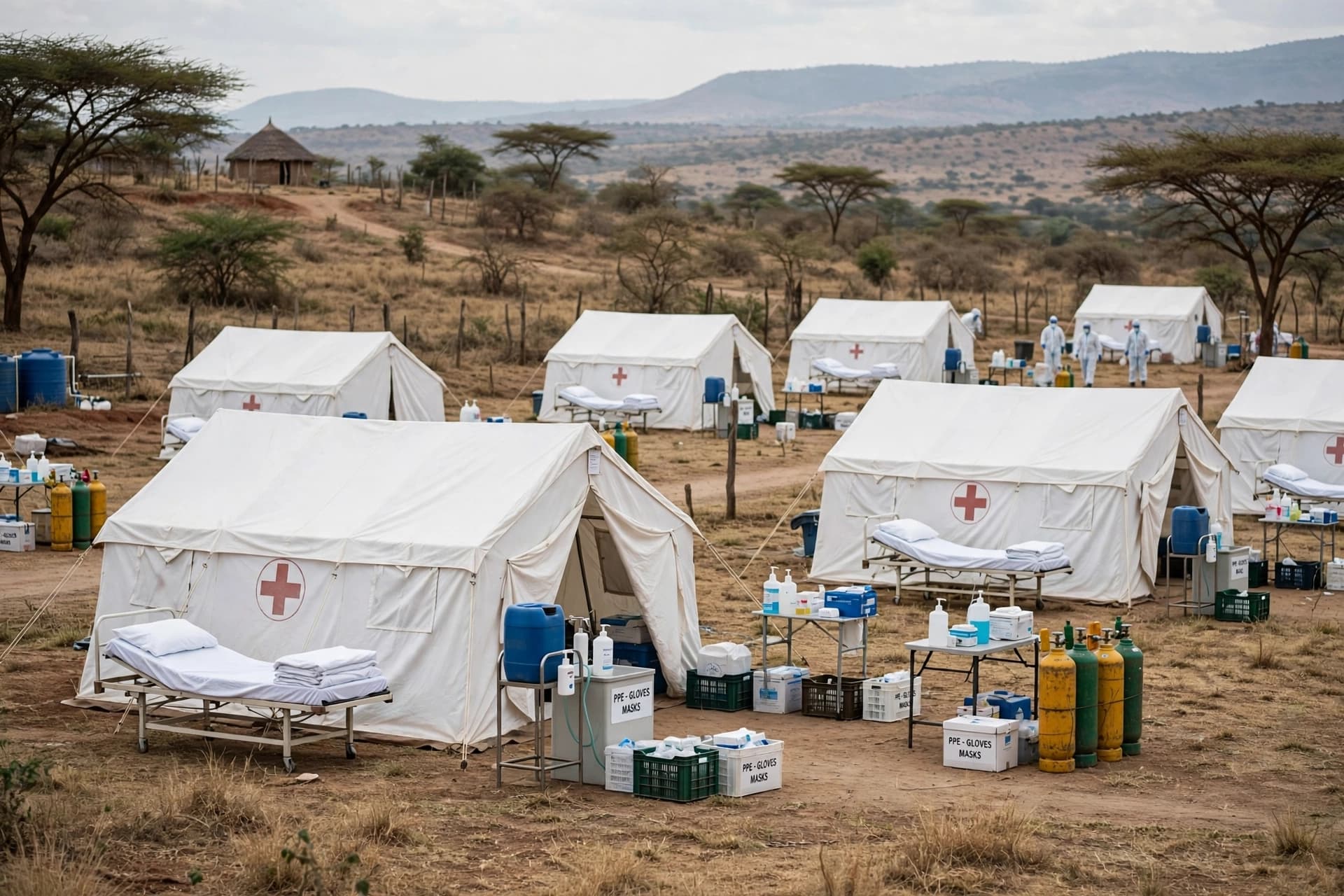
The structural challenges in Congo are severe and familiar. About 80 percent of recorded cases are coming from outside monitored contacts, meaning there are transmission chains that health authorities are not aware of. The Africa CDC benchmark for effective control requires at least 95 percent of new cases to stem from known contacts . At least half of recorded deaths occur outside treatment facilities, a sign that people are not seeking care until it is too late. Health workers face hostility and violence; a nurse was killed and another worker severely injured on Saturday during an emergency response trip in Tshopo province .
There are moments of hope, however fragile. At least 2,600 patients have recovered from the disease in Congo. A video this week showed health workers in full protective gear dancing as the last two patients were discharged from a treatment center in Mongbwalu, Ituri province. "The outbreak is far from over," said WHO Director-General Tedros Adhanom Ghebreyesus, "but every life saved is worth celebrating" .
Researchers are working on updated projections, and experts are hopeful that a vaccine could become available next year to help control the outbreak. But for now, the situation is described by those on the ground in stark terms. "This is very far from being controlled," said Dr. Wendy Armstrong, president of the Infectious Diseases Society of America . About 400 to 500 new confirmed cases are reported each week, a number that is holding steady rather than declining. "It's at a plateau," said Dr. Boghuma Titanji of Emory University. "And the plateau is at a very, very high set point" .
The epidemic is a reminder of how quickly a virus can move when health systems are fragile, when borders are porous, and when communities are mistrustful of the people trying to help them. The response requires not only medicine but trust, not only resources but coordination. Those are harder to supply than vaccines, and slower to take effect. For now, the numbers continue to climb, and the plateau remains high.
Image note: The visuals accompanying this article were generated using artificial intelligence and do not depict the actual individuals or locations described.
Sources: Xinhua, GBC Ghana Online, The Mirror, CP24, CBC News
Published by Banx Network. This article is part of the Banx decentralized media programme, powered by the BXE token on the XRP Ledger.