The universe often reveals its secrets one faint signal at a time. Hidden within the gentle glow of distant stars are subtle fingerprints of worlds too far away to visit, yet close enough for humanity's curiosity to reach through the eyes of powerful telescopes. Each new discovery is less like opening a door and more like lifting a corner of a vast curtain, offering another glimpse into the remarkable diversity of planets beyond our solar system.
Astronomers using the James Webb Space Telescope (JWST) have reported evidence that may indicate the presence of heavy water on a distant exoplanet. Heavy water contains deuterium, a naturally occurring isotope of hydrogen with an additional neutron, giving it different physical properties from ordinary water while remaining chemically similar. The finding could provide valuable clues about how the planet and its atmosphere formed over billions of years.
Scientists study the ratio of ordinary water to heavy water because it serves as a chemical record of a planetary system's history. Variations in deuterium abundance can reveal where water originated, how temperatures changed during planetary formation, and whether material migrated across different regions of a young star system before becoming part of a planet.
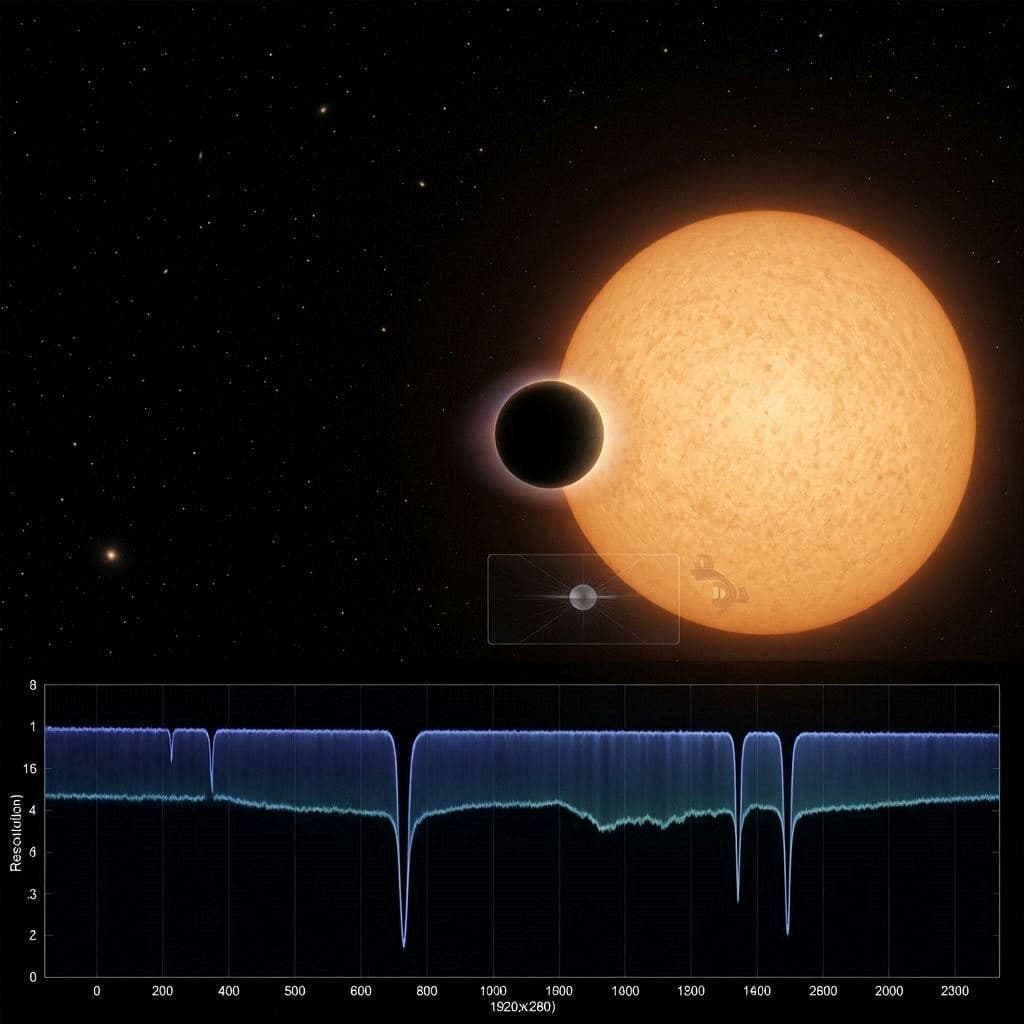
The observations were made using JWST's advanced infrared instruments, which analyze tiny changes in starlight as a planet passes in front of its host star. Molecules in the planet's atmosphere absorb specific wavelengths of light, allowing researchers to identify their chemical signatures. This technique has transformed the study of exoplanets by enabling increasingly detailed investigations of atmospheric composition.
Researchers caution that the results should not be interpreted as evidence of life. Heavy water is not itself a biosignature, nor does its presence confirm that a planet is habitable. Instead, it offers an important scientific tool for understanding planetary chemistry, atmospheric evolution, and the processes that shape worlds beyond our own. Additional observations will be needed to strengthen and refine the current findings.
The discovery also highlights the growing capabilities of the James Webb Space Telescope. Since beginning scientific operations, JWST has detected water vapor, carbon dioxide, methane, water ice, and other molecules in the atmospheres and environments of numerous distant worlds. Each observation adds another piece to the broader effort to understand how planetary systems develop throughout the galaxy.
Planetary scientists expect future JWST observations, together with upcoming ground-based observatories, to provide even more detailed measurements of exoplanet atmospheres. These studies may reveal how common water-bearing worlds are and whether planetary systems elsewhere follow evolutionary paths similar to those of our own solar system.
While many questions remain, the possible detection of heavy water represents another meaningful step in humanity's exploration of distant worlds. Rather than offering final answers, the findings expand the scientific conversation, demonstrating how careful observation continues to deepen our understanding of the universe one spectrum at a time.
AI Image Disclaimer:
The illustrations accompanying this article are AI-generated visual interpretations intended to represent astronomical concepts and do not depict actual telescope images.
Sources:
NASA European Space Agency (ESA) Space Telescope Science Institute (STScI) Peer-reviewed JWST research teams
Published by Banx Network. This article is part of the Banx decentralized media programme, powered by the BXE token on the XRP Ledger.