The universe often tells its stories across distances so vast that light itself requires years to deliver the message. Yet each new discovery reminds humanity that curiosity continues traveling farther than physical boundaries. Even distant planets, invisible to the naked eye, contribute new chapters to our understanding of planetary evolution.
An international team of researchers has published a study examining a class of exoplanets known as "Hot Neptunes." Their findings suggest that some of these planets may have originally been much larger gas giants before gradually losing a significant portion of their atmospheres.
Hot Neptunes orbit extremely close to their host stars, exposing them to intense radiation and heat. Scientists believe these harsh conditions can strip away atmospheric gases over millions or even billions of years, leaving behind smaller planetary bodies than originally formed.
The research combines observational evidence with computer simulations to evaluate how atmospheric escape may influence planetary evolution. By comparing different exoplanet systems, astronomers continue refining models that explain the remarkable diversity observed across the galaxy.
Since the discovery of the first exoplanets, thousands of worlds have been identified beyond our solar system. Each discovery has expanded scientific understanding while demonstrating that planetary systems can develop in many different ways.
Researchers note that no single model explains every planetary system. Instead, ongoing observations continue challenging previous assumptions while encouraging more detailed investigations into how planets are born, evolve, and interact with their surrounding environments.
Modern space telescopes and ground-based observatories have dramatically improved the quality of exoplanet observations. These technological advances allow astronomers to detect atmospheric composition, planetary size, orbital characteristics, and temperature with increasing precision.
International collaboration remains central to exoplanet research. Scientists across multiple institutions share observational data and analytical techniques to strengthen confidence in their findings while encouraging independent verification.
Although many questions remain unanswered, studies such as this continue refining scientific understanding of planetary formation. Each newly examined world offers another opportunity to better appreciate the complexity of our universe.
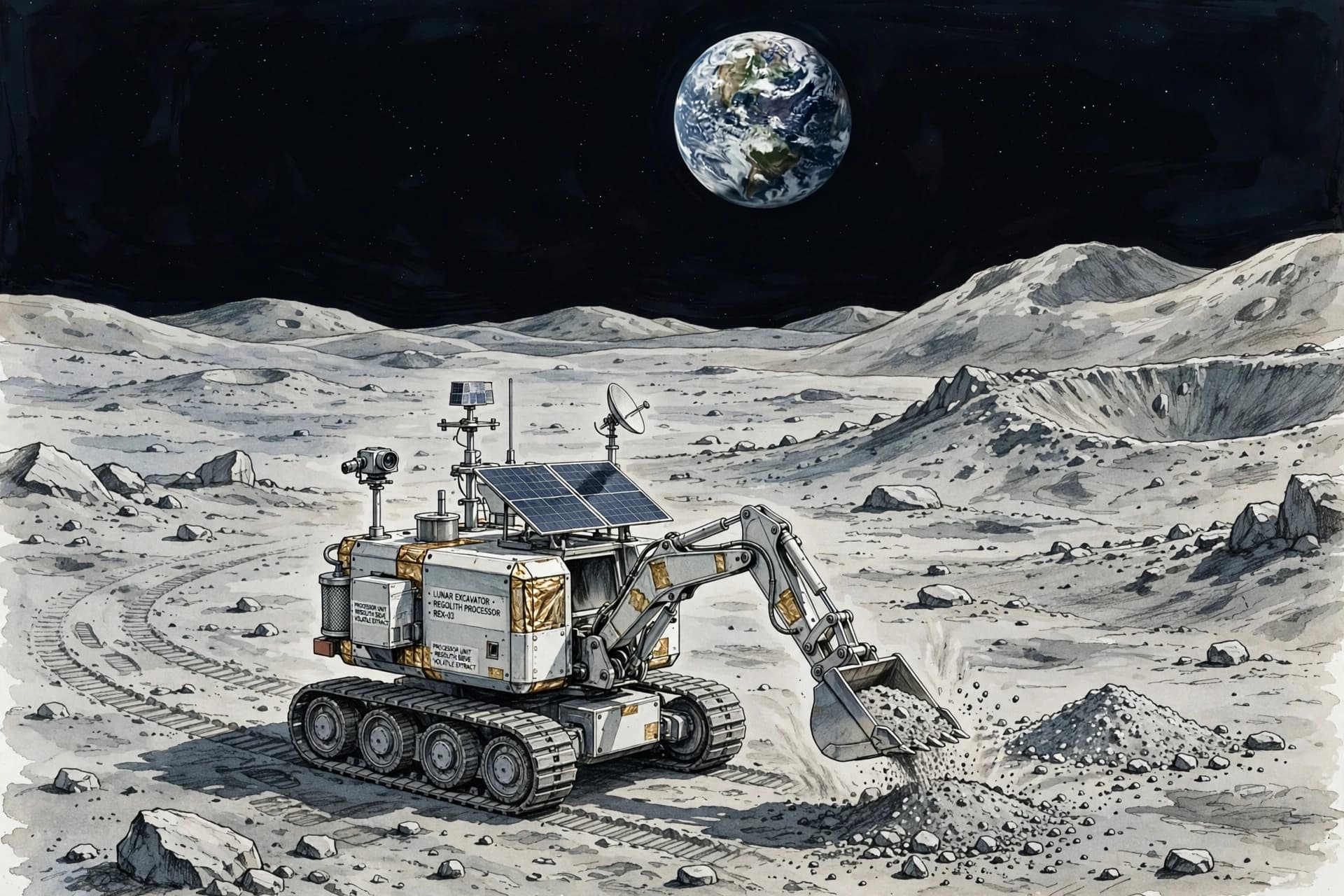
AI Image Disclaimer: This illustration was created with AI to represent the scientific concepts discussed in the article.
Source Verification Check: arXiv, European Southern Observatory, NASA Exoplanet Archive, Nature Astronomy
Published by Banx Network. This article is part of the Banx decentralized media programme, powered by the BXE token on the XRP Ledger.