
Key Highlights
- Thousands of protesters gathered in Brussels to oppose education reforms.
- Authorities deployed police to maintain order during the demonstrations.
- Teachers' organizations and unions are calling for more dialogue with policymakers.
Public debate often reflects a society's desire to shape its future. Education, perhaps more than any other institution, carries the hopes of generations yet to come. When proposed reforms touch classrooms, teachers, and students alike, discussion naturally extends beyond policy into questions about opportunity and national priorities.
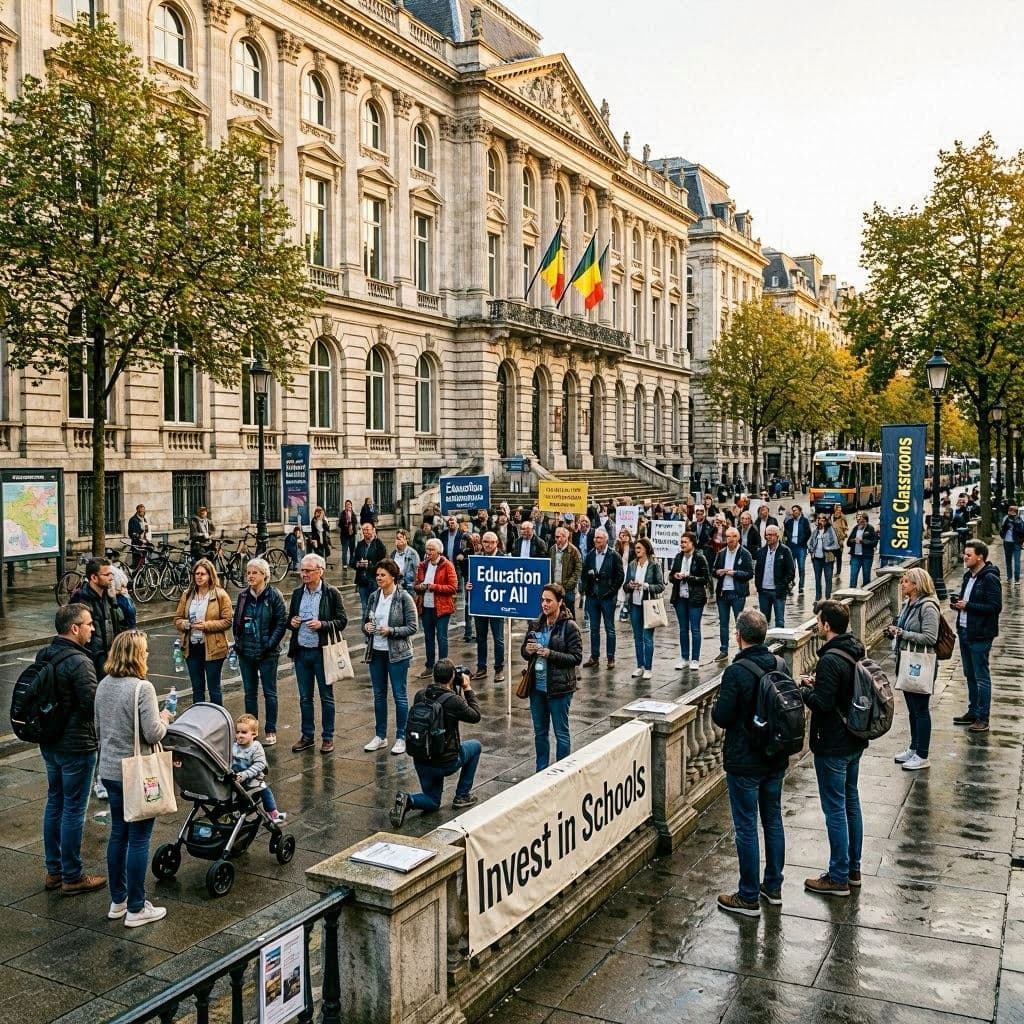
In Belgium, large public demonstrations have erupted in response to proposed education reforms introduced by the government. Thousands of participants gathered in Brussels, expressing their concerns over the planned changes. Organizers of the protests have called for greater consultation with stakeholders before any implementation of these reforms.
Authorities deployed police officers to oversee the demonstrations and maintain public order. While much of the protest remained peaceful, isolated confrontations occurred in certain areas, leading to temporary disruptions and several police interventions. The presence of law enforcement was a precautionary measure to ensure that the protests did not escalate into violence.
Government officials have stated that the proposed reforms aim to improve educational quality, resource allocation, and long-term sustainability. However, protest organizers argue that certain aspects of the plan could place additional pressure on students, educators, and public institutions. They contend that the reforms may not adequately address the needs of those directly affected by the changes.
Teachers' organizations, student representatives, and labor unions have played prominent roles in the demonstrations. These groups continue to request expanded dialogue with policymakers while encouraging peaceful civic participation throughout the consultation process. Their involvement highlights the collective concern for the future of education in Belgium and the importance of including diverse voices in the decision-making process.
Political observers note that education reforms frequently generate strong public interest because their effects extend across generations. Decisions regarding curriculum, funding, staffing, and accessibility often involve competing priorities that require careful public discussion. The ongoing protests serve as a reminder of the critical role education plays in shaping societal values and priorities.
Belgian authorities have indicated that conversations with stakeholders will continue in the coming weeks. Officials have emphasized that democratic institutions provide multiple avenues for consultation as legislative processes move forward. This commitment to dialogue is essential for fostering trust and collaboration between the government and the public.
The demonstrations illustrate the enduring importance of education in public life. While differing perspectives remain, both policymakers and participants acknowledge that the future of education deserves thoughtful discussion built upon respect, dialogue, and shared responsibility. As Belgium navigates these reforms, the voices of teachers, students, and parents will be crucial in shaping a system that meets the needs of all stakeholders.
Published by Banx Network. This article is part of the Banx decentralized media programme, powered by the BXE token on the XRP Ledger.



