The universe often tells its stories through quiet intervals rather than dramatic finales. A star may disappear in an instant as it wanders too close to a supermassive black hole, yet the aftermath can linger for years. Like echoes spreading across a distant valley, the consequences of that encounter continue unfolding long after the initial event has faded from view. Recent astronomical research suggests that some black holes experience an unexpected second act—one scientists have playfully described as "cosmic indigestion."
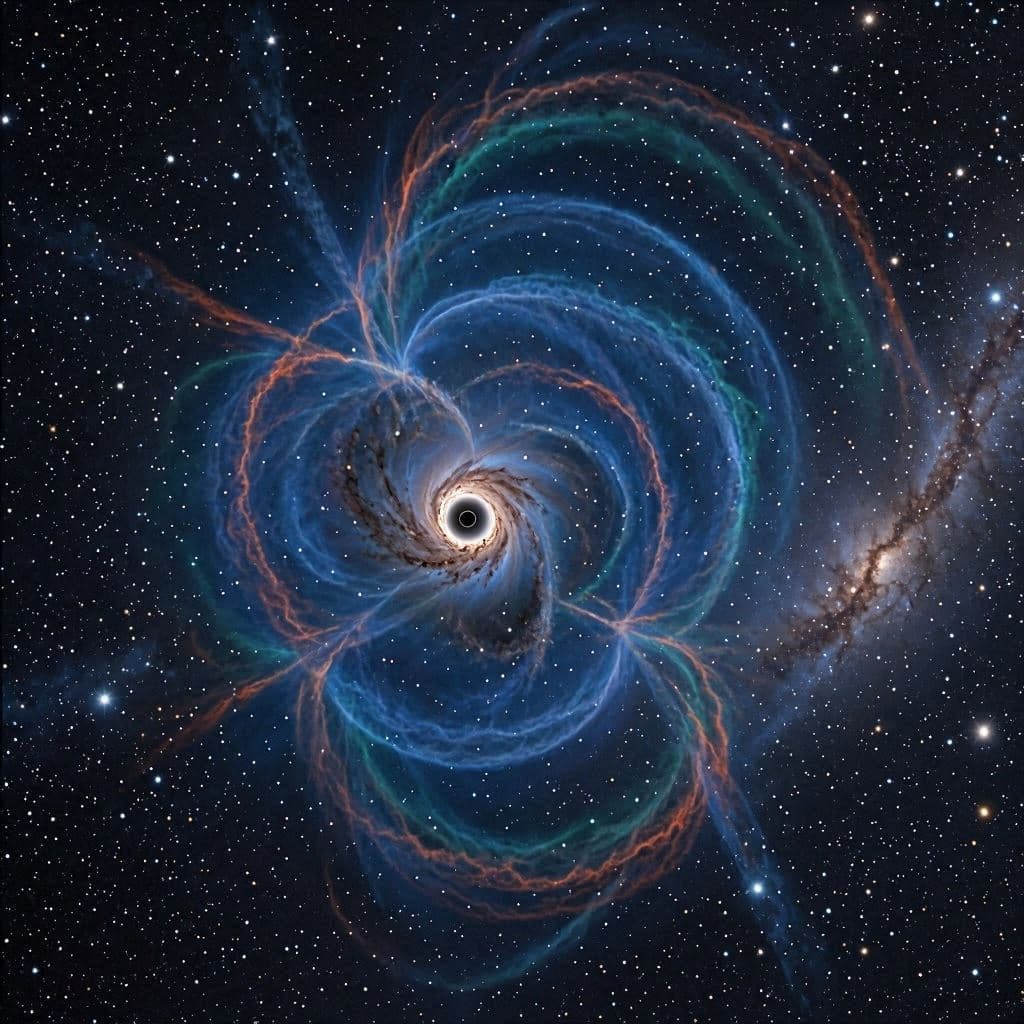
The phenomenon begins with a tidal disruption event, or TDE. When a star approaches too closely, the immense gravitational forces of a supermassive black hole stretch and tear it apart. Part of the stellar material spirals inward to form a rapidly rotating accretion disk, while the remaining debris is flung into surrounding space. The brilliant flash produced during this process has long served as one of astronomy's clearest signatures of an actively feeding black hole.
For years, astronomers believed that most observable activity concluded soon after the star's destruction. However, radio telescopes have detected powerful emissions emerging months or even several years later from some tidal disruption events. These delayed outbursts resemble what researchers informally call "burps" because they occur well after the initial feeding episode, indicating that the black hole's environment remains active long after the brightest flare has disappeared.
To investigate this unusual behavior, scientists analyzed dozens of tidal disruption events using the Karl G. Jansky Very Large Array and complementary observations across multiple wavelengths. They found that roughly forty percent of the studied events produced these delayed radio signals. The emissions arise when matter expelled from the black hole collides with surrounding gas, generating powerful shock waves that accelerate charged particles and produce radio radiation detectable from Earth.
Researchers also identified an important clue that may help predict which black holes will produce delayed outbursts. Early optical observations showing strong helium emission lines appear to indicate a slowly evolving accretion disk. Systems displaying this chemical signature are more likely to generate late-time radio emission, allowing astronomers to plan follow-up observations more efficiently during the two- to six-year period after the initial stellar disruption.
The discovery extends scientists' understanding of how black holes grow and interact with their host galaxies. Rather than behaving as simple one-time consumers of matter, some black holes continue reshaping their surroundings long after the original feeding event. These delayed interactions influence nearby gas and provide new opportunities to study extreme gravity under conditions that cannot be recreated in laboratories on Earth.
Beyond explaining an intriguing astronomical phenomenon, the findings demonstrate the importance of long-term observation. Many discoveries emerge not from a single dramatic image but from patiently revisiting familiar objects over months and years. By following these systems long after the initial flare has faded, astronomers are uncovering behaviors that were previously hidden within the universe's slower rhythms.
The study suggests that a black hole's "feeding frenzy" is not always the end of the story. Instead, the delayed radio emissions reveal that the aftermath of stellar destruction can continue unfolding long after the feast itself has ended. As observatories monitor additional tidal disruption events, researchers expect these lingering cosmic echoes to deepen our understanding of how black holes evolve and influence the galaxies that surround them.
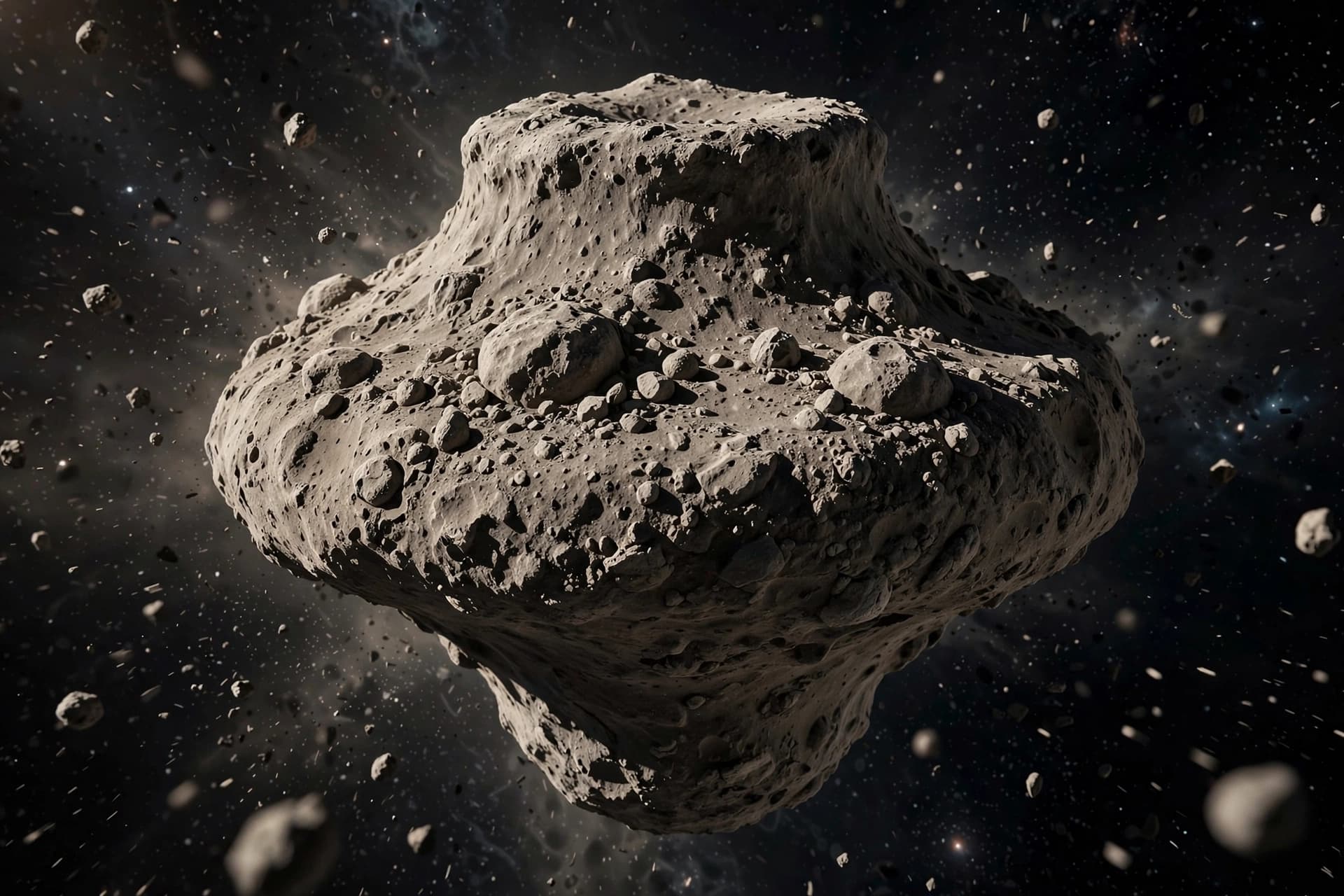
AI Image Disclaimer: The accompanying illustrations are AI-generated visual interpretations inspired by published astronomical research and are intended to represent the scientific concepts discussed rather than actual telescope imagery.
Sources (Verified):
Monthly Notices of the Royal Astronomical Society (MNRAS) National Radio Astronomy Observatory (NRAO) American Astronomical Society (AAS) Scientific American Space.com
Published by Banx Network. This article is part of the Banx decentralized media programme, powered by the BXE token on the XRP Ledger.